As an engineer and the founder of Dongxin Electronic Technology, my days are filled with deep technical dives. I often speak with process engineers like Marcus in Germany, individuals whose primary concern isn't the cost of a single component, but the multi-million dollar impact of a production line stoppage caused by a faulty microscopic interconnection. They understand that the reliability of a complex semiconductor device or a high-power automotive module often comes down to the integrity of a single, hair-thin wire. This guide is for them. It’s not a sales brochure; it’s an in-depth exploration of the wire bond and the critical wire bonding technologies that form the backbone of modern electronics manufacturing. We will unravel the science behind the bond, compare the different techniques, and discuss the factors that lead to a robust and repeatable bond process.
What is the Wire Bonding Process Fundamentally?
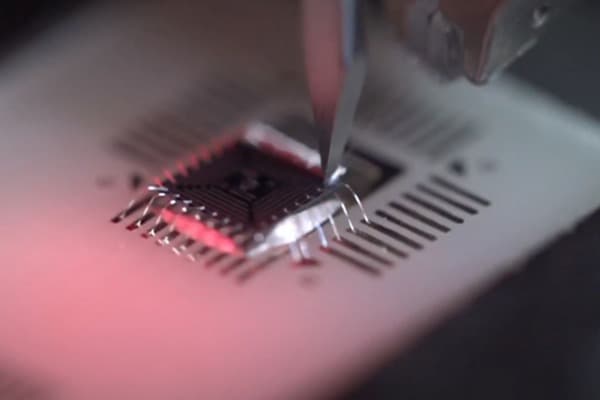
At its core, wire bonding is the process of creating an electrical interconnection between two points, typically a semiconductor chip and its packaging (bond pad), or between a chip and a PCB. It is the most widely used and cost-effective interconnect technology, responsible for trillions of connections made every year. Unlike soldering, which melts a filler material, wire bonding involves a solid-state welding process. This means the bond is formed without melting the wire or the bond pad.
The goal is to create a strong, reliable metallurgical bond—a true weld at the atomic level—that provides a stable electrical and mechanical connection. This is achieved by applying a combination of force, heat, and/or ultrasonic energy to press a very fine wire against a substrate. The resulting wire bond forms a complete electrical circuit, allowing the semiconductor device to connect to the outside world. The quality of this single bond is paramount to the device's function and longevity.
What Are the Main Types of Wire Bonding Techniques?
While the goal of creating a wire bond is always the same, there are two primary bonding methods used in the industry: ball bonding and wedge bonding. The choice between them depends on the wire material, application, cost, and specific geometric requirements. For an engineer, understanding the nuances of each bonding technique is crucial for process optimization.
| Feature |
Ball Bonding |
Wedge Bonding |
| Primary Technique |
Thermosonic Bonding (Heat, Force, Ultrasonic) |
Ultrasonic Bonding (Force, Ultrasonic) |
| Common Wire Material |
Gold wire, Copper wire |
Aluminum wire, Gold wire, Ribbon |
| Speed |
Faster (up to 20+ bonds per second) |
Slower |
| First Bond Shape |
Ball-shaped bond |
Wedge-shaped (stitch) bond |
| Looping Control |
Excellent, allows for long, high loops |
Ideal for low-profile, short loops |
| Directionality |
Omni-directional (ball can be placed anywhere) |
Directional (tool must be aligned for the second bond) |
These two types of wire bonding processes dominate the semiconductor packaging industry, and each has a distinct set of advantages that makes it the preferred wire bonding method for different applications.
How Does the Thermosonic Ball Bond Process Work?
The ball bonding technique is the most common wire bonding process, prized for its speed and flexibility. It almost exclusively uses gold wire or copper wire. The process is called thermosonic bonding because it combines thermal energy (heat), force, and ultrasonic energy.
The step-by-step bond process is a marvel of precision engineering:
- Ball Formation: The process begins with the wire fed through a hollow ceramic tool called a capillary. An "electronic flame-off" (EFO) wand fires a high-voltage spark at the tip of the wire, melting it and allowing surface tension to form a perfect sphere, or ball.
- First Bond: The capillary moves down to the heated bond pad (typically 125-150°C). It applies a precise force, pressing the ball against the pad while simultaneously applying ultrasonic energy. This combination of heat, force, and vibration creates the first bond, a strong ball bond.
- Loop Formation: The wire bonder then moves the capillary to the location of the second bond (e.g., a leadframe finger), creating a calculated wire loop in the process. The shape of this wire loop is critical for performance and preventing shorts.
- Second Bond: At the second location, the tool presses the wire against the surface and applies another burst of ultrasonic energy to form a "stitch" or wedge bond.
- Wire Tail-off: Finally, the machine clamps the wire and raises the capillary, breaking the wire at the heel of the second bond and preparing the EFO to form a new ball for the next wire bond.
What Makes the Ultrasonic Wedge Bond Process Different?
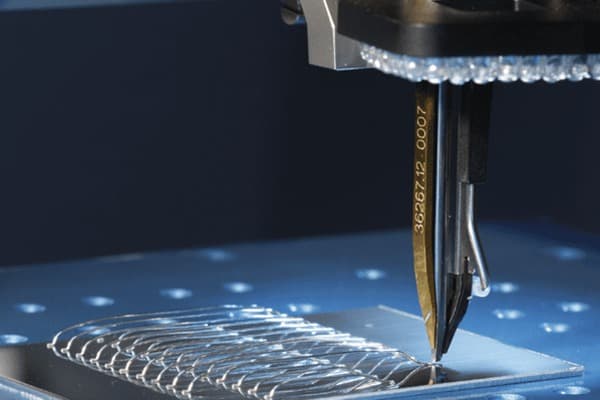
Wedge bonding, or more specifically wedge-wedge bonding, is a different yet equally important wire bonding process. This technique is the go-to method for aluminum wire bonding and is often performed at room temperature, relying solely on ultrasonic energy and force for bond formation. It is also the primary method used for ribbon bonding.
In this process, the wire is fed under a flat-bottomed bonding tool called a wedge. The tool descends, presses the wire against the first bond pad, and applies ultrasonic energy to create the initial wedge bond. The tool then rises and moves to the second location, forming a lower-profile, shorter wire loop than is typical with wire ball bonding. At the second bond pad, the process is repeated to form the second bond. Because both the first and second bond are wedge-shaped, this technique offers superior performance in high-frequency applications and allows for extremely fine-pitch (closely spaced) bonding. Heavy aluminum wire bonding for power devices also relies exclusively on the wedge bond process to create a robust bond.
What Wire Material Is Best for My Application?
The selection of wire is one of the most critical decisions in the wire bond process. The three primary materials used are gold, copper, and aluminum. Each bonding material has a unique set of properties that makes it suitable for different bonding applications.
- Gold Wire (Au): The original standard for wire bonding uses gold. It is extremely resistant to oxidation, making it easy to bond and highly reliable. Bonding of gold is straightforward. Its softness also prevents damage to the sensitive semiconductor substrate. The main drawback of gold wire is its high cost. Thermosonic bonding is the standard for a gold bond.
- Copper Wire (Cu): Copper wire has become a popular alternative to gold due to its much lower cost and superior electrical and thermal conductivity. However, copper oxidizes easily, which makes the bond process more challenging and requires an inert atmosphere in the wire bonder. Its hardness also requires tighter bonding parameters to avoid chip damage.
- Aluminum Wire (Al): Aluminum wire is the softest wire material and is ideal for ultrasonic bonding. It is excellent for creating a stable bond at room temperature. Heavy aluminum bonding wire is the industry standard for power electronics and automotive applications due to its reliability and ability to form a strong, durable bond. We see many clients switching to high-purity aluminum bonding wire for its consistent performance.
How Do Wire Diameters and Ribbon Bonding Compare?
The physical form of the interconnection—whether it's a round wire or a flat ribbon—also plays a huge role. The choice depends on the electrical requirements of the application.
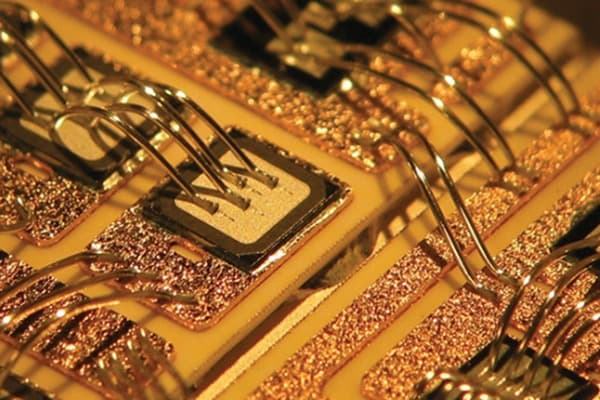
Wire diameters can be broadly categorized into two groups. Thin wire bonding typically uses wire with diameters ranging from 15 to 75 microns (µm). This is the standard for signal interconnection in standard semiconductor packages, connecting the chip's I/O to the leadframe. Heavy wire bonding uses wire diameters from 100 to 500 µm. This robust wire is used in power devices and automotive modules to handle high currents. Specialized heavy aluminum wire bonders are required for this process.
Ribbon bonding is an alternative to heavy wire bonding. Instead of a round wire, it uses a flat, rectangular ribbon made of aluminum or gold. Ribbons have a higher surface area-to-volume ratio, which is advantageous for high-frequency applications (reducing skin effect) and for power applications where better heat dissipation and lower inductance are needed. The bond process for a ribbon is identical to a wedge bond.
What Key Factors Influence Bond Strength and Reliability?
For an engineer overseeing a production line, achieving a high bond strength and consistent bonding yield is the ultimate goal. The success of a wire bond is not accidental; it is the result of carefully controlling a set of critical bonding parameters and variables.
- Bonding Parameters: The "big three" parameters are Force (how hard the tool presses), Ultrasonic Energy (the amount and duration of scrubbing), and Temperature (for thermosonic bonding). These must be perfectly dialed in for the specific wire and bond pad combination.
- Bond Pad Quality: The surface of the bond pad must be clean, free of oxides and contaminants, and have the right metallurgy and thickness. A poorly prepared bond pad is a leading cause of bond failures.
- Bonding Tool Condition: The capillary or wedge is the only thing that touches the wire bond. These tools are precision consumables that wear out over time. A worn or cracked tool will produce weak or inconsistent bonds. That is why we specialize in manufacturing custom-designed wedge bonding tools made from ultra-hard materials to ensure a longer lifespan and a more reliable bond.
- Wire Quality: The bonding wire itself must be of the highest quality, with consistent diameter, purity, and mechanical properties. Any variation in the wire can disrupt the entire bond process.
What Role Does a Modern Wire Bonder Play in the Process?
The modern wire bonder is a highly sophisticated piece of robotic equipment that has transformed wire bonding from a manual art into a precise, automated science. A state-of-the-art wire bonder is responsible for executing the bond process with incredible speed and repeatability.
These machines integrate several key technologies. High-resolution vision systems automatically recognize the bond pad locations and provide feedback to the motion control system. Advanced software allows engineers to program complex and precise wire loop shapes to avoid shorts and optimize signal integrity. Most importantly, modern wire bonders provide real-time process monitoring and data logging. They can detect a faulty bond as it happens and stop the process, preventing defective units from moving down the line. This level of automation and control is essential for the high-volume manufacturing of today's complex electronics and is the only way to achieve the required parts-per-million quality levels.
Where Else Are Wire Bonding Techniques Applied?
While the wire bond is most famously associated with semiconductor chips, its application extends far beyond traditional IC packaging. The flexibility and reliability of wire bonding technologies have made them indispensable in many other areas of electronics manufacturing.
- Power Electronics: IGBTs, MOSFETs, and other power devices rely on heavy aluminum wire and ribbon bonding to handle high currents and effectively dissipate heat.
- Automotive Electronics: Wire bonding in automotive is widespread, used in sensors, control units (ECUs), and lighting systems where reliability under harsh temperature and vibration conditions is non-negotiable.
- PCB Manufacturing: Wire bonding is used to connect bare die directly to a PCB (Chip-on-Board), eliminating the need for bulky packaging and enabling smaller, more compact product designs.
- RF and Microwave Devices: The fine control over wire geometry makes gold bonding and ribbon bonding ideal for high-frequency applications where impedance matching is critical.
- LED Modules: Wire bonding is the standard method for connecting the tiny LED die to the package substrate, found in everything from phone screens to stadium lighting.
How Can We Ensure a High-Yield Bond Process in Manufacturing?
Achieving a near-perfect yield in a high-volume wire bonding operation is a holistic challenge. It's not about having the best wire bonder or the best wire; it's about optimizing the entire system. As a manufacturer of precision-engineered consumables, we see this every day.
Success rests on three pillars. First is using the highest quality materials, from the semiconductor wafer and bond pad plating to the bonding wire itself. Second is utilizing precision tools and a well-maintained wire bonder programmed with optimized bonding parameters. The third, and arguably most important, pillar is deep process knowledge. This means having engineers and technicians who understand the physics of the bond, who can troubleshoot issues effectively, and who work with their suppliers as partners. A successful wire bond is the result of a symbiotic relationship between the machine, the materials, and the expert running the process.
Key Takeaways
The wire bond is a small but mighty component, the unsung hero of the electronics world. Mastering the technology is essential for any engineer serious about manufacturing reliability. Here are the most important things to remember:
- Two Main Methods: The industry relies on two primary wire bonding techniques: thermosonic ball bonding (fast, flexible, uses gold/copper) and ultrasonic wedge bonding (precise, low-profile, uses aluminum).
- Material Matters: The choice of wire material—gold, copper, or aluminum—is a critical decision based on cost, conductivity, and the specific requirements of the bond process.
- It's a System: A successful wire bond is not just about the wire or the machine. It's a complex interplay between the bonding parameters, bond pad quality, tool condition, and operator expertise.
- Beyond the Chip: Wire bonding is a versatile interconnection technology used extensively in automotive, power electronics, PCB, and LED manufacturing.
- Precision is Paramount: The entire wire bonding process, from ball formation to loop control, is a game of microns and milliseconds, demanding the highest level of precision from both machines and consumables.