The best capacitor company is not always the supplier with the lowest price or the largest product catalog. The right supplier is the one that can provide a suitable capacitor for your application, with reliable quality, clear technical data, stable supply, and responsive support.
Capacitors are used in power supplies, inverters, motor drives, consumer electronics, lighting, telecommunications, automotive electronics, industrial automation, renewable-energy systems, and many other products. Different applications require different capacitor technologies, voltage ratings, capacitance values, temperature ranges, service-life expectations, and safety requirements.
For this reason, buyers should evaluate a capacitor company based on product suitability and proven manufacturing capability—not brand claims alone.
What Makes a Good Capacitor Company?
A reliable capacitor supplier should offer more than a basic product list. It should be able to support customers from product selection through production and after-sales service.
Key evaluation factors include:
- Product range
- Capacitor technology
- Voltage range
- Capacitance range
- Temperature rating
- ESR performance
- Ripple-current capability
- Service-life information
- Quality-control system
- Product traceability
- Test reports
- Certification support
- Sample availability
- Customization capability
- Production capacity
- Delivery reliability
- Technical support
- After-sales response
The best capacitor company for a low-voltage LED driver may not be the best supplier for an industrial inverter, EV charger, high-frequency power supply, or automotive-control module.
Types of Capacitors a Reliable Supplier May Offer
A professional capacitor company may provide several capacitor categories for different electrical and electronic applications.
| Capacitor Type |
Typical Applications |
Key Consideration |
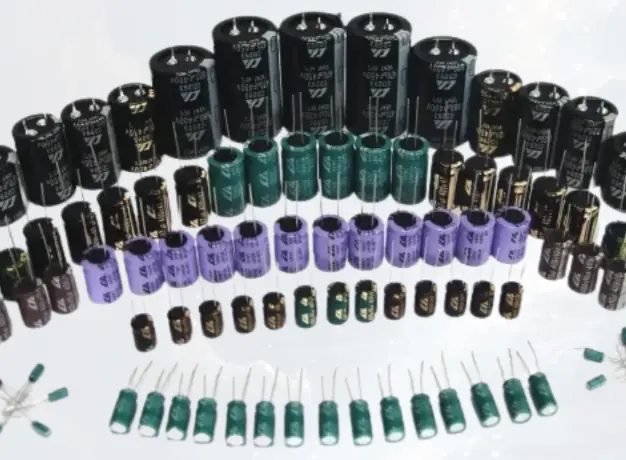
| Aluminum electrolytic capacitor |
Power supplies, LED drivers, inverters |
Ripple current and service life |
| Film capacitor |
Motor drives, AC applications, DC links |
Voltage, pulse capability, stability |
| Ceramic capacitor |
PCB circuits, filtering, decoupling |
Capacitance behavior and voltage rating |
| Tantalum capacitor |
Compact electronic devices |
Polarity, surge conditions, application limits |
| Supercapacitor |
Energy storage and backup |
Voltage balancing and system design |
| Safety capacitor |
AC mains and filtering circuits |
Required safety category and certification |
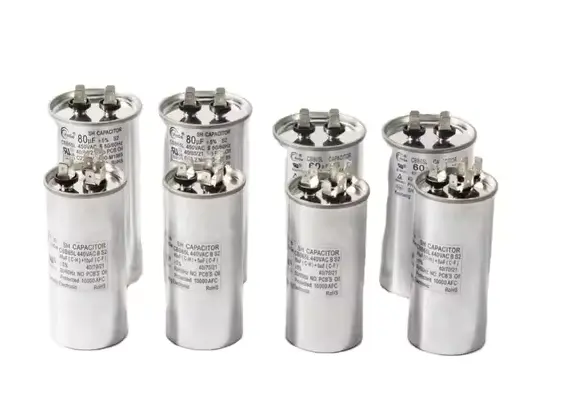
| Motor-run capacitor |
Motors, fans, pumps, HVAC systems |
AC voltage, frequency, and duty requirement |
A supplier with a broad product range can be useful for customers who need multiple capacitor solutions. However, a specialized supplier may be more suitable for applications that require a specific capacitor technology or demanding electrical performance.
How to Choose the Right Capacitor for Your Product
Before selecting a capacitor company, define the technical requirements of your application.
Important specifications include:
- Capacitance value
- Rated voltage
- Tolerance
- Operating temperature
- Ripple-current requirement
- ESR requirement
- Frequency range
- Expected service life
- Physical dimensions
- Lead type or mounting style
- Polarity requirement
- Safety standard requirement
- Humidity and environmental condition
- Application load profile
A capacitor that appears similar in size may perform very differently under high temperature, high ripple current, high voltage, frequent switching, or continuous-duty conditions.
Why Quality Control Matters
Capacitor quality directly affects equipment reliability. A failed capacitor can lead to unstable voltage, excessive heat, equipment shutdown, reduced service life, or damage to other components.
A dependable capacitor company should maintain clear quality-control processes, such as:
- Incoming-material inspection
- Production-process control
- Electrical testing
- Capacitance verification
- Voltage testing
- Leakage-current testing
- ESR testing, where applicable
- Aging or burn-in testing
- Appearance inspection
- Lot traceability
- Final quality inspection
- Packaging inspection
For industrial, automotive, medical, telecommunications, and power-electronics applications, buyers should request relevant quality documentation and qualification information before approving a supplier.
Reliability Is More Important Than Unit Price
The cheapest capacitor is not always the lowest-cost solution.
A low-priced component may create higher costs if it causes:
- Product failure
- Warranty claims
- Field repairs
- Production downtime
- Rework
- Customer complaints
- Safety concerns
- Delayed shipments
- Brand damage
A better purchasing strategy is to compare total value, including component reliability, expected lifetime, technical support, delivery performance, quality consistency, and risk of supply interruption.
For high-volume production, even a small difference in failure rate can have a major effect on total operating cost.
How to Evaluate Capacitor Reliability
When evaluating capacitor reliability, ask the supplier for application-relevant information.
Useful questions include:
- What temperature range is supported?
- What is the expected life under stated conditions?
- What ripple-current level can the capacitor handle?
- What voltage derating is recommended?
- Is the part suitable for continuous operation?
- What test methods are used?
- Is lot traceability available?
- Can the supplier provide samples for validation?
- Are there recommended installation and storage conditions?
- What happens if the product is discontinued or changed?
The supplier should be able to explain how the capacitor performs in the intended application instead of only providing a basic catalog value.
Capacitor Company Selection for Industrial Applications
Industrial applications often require capacitors that can operate in demanding conditions.
Examples include:
- Variable-frequency drives
- Solar inverters
- Energy-storage systems
- UPS systems
- EV charging stations
- Welding equipment
- Power-conversion systems
- Industrial automation panels
- Motor controls
- Telecom power systems
For these applications, buyers should pay close attention to voltage margin, ripple current, heat dissipation, vibration resistance, service life, and replacement availability.
A capacitor designed for consumer electronics may not be suitable for continuous-duty industrial power equipment.
Capacitor Company Selection for Consumer Electronics
Consumer-electronics projects often require compact size, stable performance, cost control, and large-volume supply.
Typical applications include:
- Chargers
- Adapters
- Smart-home devices
- LED lighting
- Audio products
- Mobile accessories
- Home appliances
- Computer peripherals
- Control boards
For consumer products, the best capacitor supplier is often one that can balance quality, cost, consistent production, fast lead times, and flexible packaging requirements.
Can a Capacitor Company Provide Custom Solutions?
Many projects require capacitors with non-standard specifications. A capable manufacturer may provide customization based on:
- Capacitance
- Voltage
- Case size
- Lead length
- Terminal type
- Sleeve color
- Label printing
- Packaging quantity
- Temperature rating
- Application-specific testing
- Private labeling
Custom solutions should be supported by samples, drawings, specification approval, and production validation before large-volume orders begin.
What Documents Should You Request?
Before placing a production order, ask for relevant technical and quality documents.
These may include:
- Product datasheet
- Dimension drawing
- Material declaration
- Test report
- Quality certificate
- Reliability information
- RoHS or other applicable compliance information
- Packaging specification
- Storage guidance
- Product-change notification process
- Lot traceability information
For safety-critical or high-reliability products, customers may also need additional application-specific qualification records.
Common Mistakes When Choosing a Capacitor Supplier
Avoid these common mistakes:
- Choosing only by price
- Ignoring operating temperature
- Ignoring ripple-current requirements
- Using an incorrect voltage rating
- Assuming all capacitors with the same capacitance are equal
- Selecting a product without reviewing the datasheet
- Ignoring physical-size limitations
- Failing to validate samples
- Overlooking delivery lead time
- Using a consumer-grade capacitor in a demanding industrial application
- Purchasing from a supplier without traceability or quality support
A capacitor should be selected as part of the complete electrical design, not as a generic replacement component.
Conclusion
The best capacitor company is the supplier that can provide the right capacitor technology, reliable quality, technical documentation, stable delivery, and support for your specific application.
Whether you need aluminum electrolytic capacitors, film capacitors, ceramic capacitors, safety capacitors, motor capacitors, or custom capacitor solutions, the selection should be based on electrical requirements, operating environment, reliability targets, and supply-chain needs.
For capacitor sourcing, custom specifications, and application-focused technical support, please contact DGDX Electronics.
FAQ
How do I choose the best capacitor company?
Choose a supplier based on product suitability, technical support, quality-control capability, documentation, reliability, production capacity, delivery performance, and after-sales service.
Is a higher-voltage capacitor always better?
Not necessarily. The capacitor should have an appropriate voltage margin for the circuit, but physical size, cost, electrical characteristics, and application requirements must also be considered.
What is the most common capacitor type?
Aluminum electrolytic capacitors, ceramic capacitors, and film capacitors are widely used, but the best type depends on the circuit and operating conditions.
What should I check before ordering capacitors in bulk?
Check capacitance, voltage rating, tolerance, temperature range, ripple-current capability, dimensions, service-life information, compliance documents, packaging, samples, and supplier traceability.