The best automatic cone winder is not simply the machine with the highest advertised winding speed. It is the machine that produces stable, clean, uniformly wound yarn packages while matching the yarn type, cone format, production volume, quality target, labour availability, and downstream process requirements.
For most textile producers, a high-quality automatic cone winder should provide reliable yarn clearing, stable tension control, anti-patterning performance, efficient piecing, automatic doffing, production monitoring, and practical maintenance access. The right configuration depends on whether the mill processes cotton, polyester, blended yarn, wool, sewing thread, technical yarn, or another specialty material.
Quick guide: what makes an automatic cone winder the best choice?
| Selection factor |
Why it matters |
| Yarn type and count |
Determines suitable winding tension, yarn clearing, splicing, and package settings |
| Winding quality |
Affects package density, unwinding performance, dyeing, weaving, knitting, and sewing |
| Electronic yarn clearer |
Helps remove selected yarn faults and improve package consistency |
| Tension control |
Supports stable yarn tension and uniform package formation |
| Automatic doffing |
Reduces operator handling and improves production continuity |
| Splicing system |
Influences yarn-joint quality and downstream performance |
| Winding speed |
Affects output, but must be balanced with yarn quality |
| Anti-patterning control |
Helps reduce ribboning and unstable package structure |
| Energy consumption |
Affects long-term operating cost |
| Digital monitoring |
Supports production tracking, fault analysis, and maintenance planning |
| Service and spare parts |
Important for uptime and lifecycle value |
What is an automatic cone winder?
An automatic cone winder is a textile machine that rewinds yarn from source packages, such as ring-spinning bobbins, onto cones or cylindrical packages. During winding, the machine can control yarn tension, remove selected faults, join broken ends, build the required package shape, and automatically doff completed cones.
Automatic cone winding is widely used before downstream processes such as:
- Weaving
- Knitting
- Dyeing
- Sewing-thread production
- Yarn doubling
- Technical-textile production
- Packaging and distribution
The goal is not only to transfer yarn from one package to another. A properly wound cone should unwind smoothly, maintain stable density, minimise faults, and perform consistently in the next textile process.
Why winding quality matters
A cone may look acceptable from the outside while still causing problems during weaving, knitting, dyeing, or sewing. Inconsistent package density, poor tension, weak splices, yarn faults, and ribboning can create downstream interruptions and quality claims.
A reliable automatic cone winder helps control:
- Yarn tension
- Package density
- Cone build
- Yarn-fault removal
- Splice consistency
- Tail length
- Winding speed
- Package hardness
- Anti-patterning performance
- Bobbin change and doffing consistency
The best machine should deliver repeatable package quality from spindle to spindle and batch to batch.
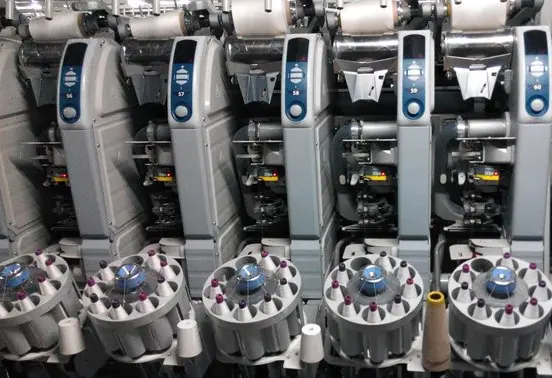
Key features to look for in an automatic cone winder
Electronic yarn clearing
An electronic yarn clearer monitors yarn during winding and can identify selected faults according to programmed settings. Depending on the system and configuration, it may detect issues such as thick places, thin places, neps, foreign matter, knots, or other yarn irregularities.
The clearer settings should match the yarn quality target. Overly aggressive clearing can increase yarn waste and reduce production efficiency. Clearing that is too loose may allow faults to pass into the final package.
Before purchasing, confirm:
- Supported clearer type
- Available clearing functions
- Setting flexibility
- Fault-data recording
- Integration with mill quality systems
- Compatibility with the intended yarn type
Electronic tension control
Stable tension is essential for uniform package formation. An automatic cone winder with electronic or closed-loop tension control can help maintain more consistent tension as the supply bobbin changes during unwinding.
Good tension control can support:
- Uniform cone density
- Better yarn appearance
- Stable unwinding
- Reduced yarn breakage
- Improved dye-package consistency
- More predictable downstream performance
Tension requirements vary by yarn count, fibre, twist level, finish, and end use. A machine should allow operators to adjust settings according to the actual process.
Splicing system
When yarn breaks or a fault is removed, the machine must join the yarn ends. The splicer quality can strongly affect downstream performance.
Common options may include:
- Air splicing
- Water splicing
- Mechanical knotting
- Specialty joining systems for technical yarns
For many modern yarn applications, splicing is preferred over conventional knotting because it can create a smoother joint. However, the best joining method depends on fibre type, yarn structure, wax level, twist, strength, and final application.
Automatic doffing
Automatic doffing removes a completed cone and prepares the winding position for the next package. This feature can reduce manual handling, improve production continuity, and support more consistent package changes.
When comparing machines, ask about:
- Doffing reliability
- Empty-cone feeding
- Package transfer method
- Yarn-tail management
- Fault recovery
- Operator intervention requirements
- Cone storage capacity
Anti-patterning control
Ribboning or patterning can occur when yarn layers build in repeated positions. This can affect package stability and unwinding behaviour.
A suitable automatic cone winder should include an effective anti-patterning system or controlled yarn-guide function. The correct settings depend on package shape, yarn type, winding speed, traverse ratio, and density target.
Production monitoring
Modern automatic winding systems may provide machine-level or mill-level monitoring. This can help managers review output, spindle efficiency, yarn breaks, clearer cuts, doffing performance, energy use, and maintenance needs.
Useful data may include:
- Production per spindle
- Winding efficiency
- Number of yarn breaks
- Clearer cuts
- Splicer performance
- Doffing cycles
- Machine stoppages
- Operator interventions
- Package quality data
The value of monitoring depends on whether the mill can use the data to improve settings, reduce waste, and schedule maintenance.
Choosing a machine by yarn application
| Yarn application |
Important automatic cone winder features |
| Cotton yarn |
Yarn clearer, consistent tension, quality package build, efficient splicing |
| Polyester filament |
Controlled tension, suitable yarn guide, clean package formation |
| Blended yarn |
Adjustable clearing and tension settings for fibre variation |
| Wool yarn |
Gentle yarn handling, suitable splicing, controlled winding tension |
| Sewing thread |
Precise tension, clean winding, cone consistency, controlled package density |
| Technical yarn |
Custom tension system, specialised guide path, suitable splicer, process validation |
| Dyed yarn |
Uniform density, careful handling, reliable package formation |
| High-value specialty yarn |
Low waste, controlled faults, traceability, gentle yarn handling |
A machine suitable for coarse industrial yarn may not be appropriate for fine sewing thread. Likewise, a winder designed for high-output spinning mills may not be the best choice for small-batch specialty yarn production.
Winding speed: why faster is not always better
Winding speed is important, but it should not be considered in isolation. A higher speed may increase output only if yarn breakage, package quality, splicing performance, and waste remain under control.
The effective production result depends on:
- Actual winding speed
- Yarn count
- Yarn strength
- Yarn hairiness
- Break frequency
- Clearer settings
- Splicer cycle time
- Doffing efficiency
- Operator response time
- Machine stoppages
- Package acceptance rate
The best automatic cone winder delivers stable output at the highest speed that preserves the required package quality.
Questions to ask before purchasing
Before selecting an automatic cone winder, prepare a clear technical requirement list.
Ask the supplier:
- Which yarn types and counts can the machine process?
- What cone shapes and cone angles are supported?
- What is the recommended winding-speed range for the target yarn?
- Which yarn-clearer systems are compatible?
- Which splicing methods are available?
- Does the machine provide electronic or closed-loop tension control?
- How does the machine control ribboning and package density?
- Is automatic doffing included or optional?
- What is the actual power requirement and compressed-air requirement?
- What vacuum or suction system is required?
- What production data can be monitored?
- Which spare parts require regular replacement?
- What training, installation, and remote-support options are available?
- What package-quality tests are recommended before final acceptance?
A supplier should be able to provide layout drawings, yarn-application guidance, utility requirements, technical specifications, spare-parts recommendations, and commissioning support.
Installation and factory-planning considerations
An automatic cone winder should be planned as part of the complete production system.
Important preparation items include:
- Available factory space
- Machine layout
- Operator access
- Material flow
- Yarn-bobbin supply
- Empty-cone supply
- Finished-package collection
- Electrical supply
- Compressed air
- Vacuum or suction requirements
- Temperature and humidity control
- Dust management
- Maintenance access
- Safety guarding and emergency-stop access
The surrounding environment can affect winding quality. Excessive dust, unstable humidity, poor lighting, irregular supply packages, or insufficient maintenance can reduce machine efficiency.
Maintenance practices that protect winding quality
Regular maintenance supports stable winding performance.
Key tasks may include:
- Cleaning yarn paths and sensors
- Checking tension devices
- Inspecting splicer components
- Monitoring clearer operation
- Checking drive-system condition
- Cleaning suction channels
- Inspecting package holders and cone adapters
- Checking guide movement
- Replacing worn consumable parts
- Verifying safety interlocks and emergency-stop functions
Maintenance intervals should follow the machine supplier’s recommendations and be adjusted according to yarn type, operating hours, dust level, and production intensity.
Conclusion
The best automatic cone winder is the one that matches your yarn, production target, package requirements, quality standard, and operating environment. High winding speed is valuable, but consistent tension, reliable yarn clearing, strong splicing performance, effective anti-patterning control, automatic doffing, and practical service support are equally important.
For spinning mills, sewing-thread producers, technical-yarn processors, and textile manufacturers, the right automatic cone winder can improve package consistency, reduce manual handling, support downstream efficiency, and strengthen overall yarn quality.
For automatic cone winder specifications, project consultation, or purchasing enquiries, contact DGDX Electric.
FAQ
What is an automatic cone winder used for?
An automatic cone winder rewinds yarn from supply packages onto cones or cylindrical packages while controlling tension, removing selected yarn faults, joining yarn ends, building the package, and doffing completed cones.
What features should the best automatic cone winder have?
Important features include electronic yarn clearing, stable tension control, suitable splicing, anti-patterning control, automatic doffing, production monitoring, reliable safety systems, and support for the required yarn type.
Why is yarn tension important in cone winding?
Stable yarn tension helps create a uniform package density and improves unwinding performance in later processes such as weaving, knitting, dyeing, and sewing.
Is the fastest automatic cone winder always the best option?
No. The best machine balances speed with yarn quality, break rate, clearing settings, splicing performance, package formation, waste level, and maintenance requirements.