My name is Kevin, and as a part of the team at Dongxin Electronic Technology, I've spent years deep in the world of micro-machining and advanced materials. I've had countless conversations with meticulous engineers like Marcus in Germany, who demand absolute precision. They know that a single, microscopic wire bond can be the difference between a cutting-edge automotive sensor and a costly production line failure. This article is for them and for anyone who wants to understand the incredible technology of wire bonding. We will explore the entire wire bonding process, from the fundamental science to the advanced machinery that makes it possible, giving you the insights needed to master this critical manufacturing step.
What Exactly is the Wire Bonding Process in Microelectronics?
At its core, wire bonding is the process of creating tiny electrical connections using a very fine wire. Imagine a complex computer chip, a semiconductor device no bigger than your fingernail. This chip needs to communicate with the outside world. Wire bonding is the bridge that makes this communication happen. It connects the microscopic circuits on the chip (on a spot called a bond pad) to the larger electrical terminals on a substrate or leadframe. This process is the most widely used method for interconnection in the semiconductor industry.
The process itself is a marvel of engineering. A specialized machine uses a combination of force, heat, and sometimes ultrasonic energy to create a solid-state weld between the wire and the bond pad. This isn't like traditional soldering; there's no filler material. Instead, the atoms of the wire and the pad are brought so close together that they form a strong, permanent metallurgical bond. This creates a highly reliable electrical and mechanical connection that can withstand the harsh conditions inside an electronic device.
Think of it as microscopic blacksmithing. A bonding tool precisely places and presses a thin wire with a diameter often measured in microns (millionths of a meter). The goal is to create a seamless path for electricity to flow. Every smartphone, car, and computer relies on billions of these perfect, tiny connections. The integrity of each wire bond is paramount to the function of the electronic components they connect.
Why is the Wire Bond So Critical for Semiconductor Device Fabrication?
The importance of the wire bond in semiconductor device fabrication cannot be overstated. It is the final, crucial step in making an integrated circuit (IC) functional. After countless hours and millions of dollars are spent designing and fabricating a complex silicon wafer, it is the humble wire that brings it to life. Without a reliable method of interconnection, the most powerful IC is nothing more than a useless piece of silicon.
A high-quality wire bond ensures two things: excellent electrical conductivity and robust mechanical strength. The electrical properties are vital for performance. Any resistance or inconsistency in the weld can degrade the signal, generate unwanted heat, or cause the device to fail. This is especially true in high-frequency applications where signal integrity is everything. The bond between the wire and the pad must have the lowest possible resistance to ensure efficient power and data transmission.
Furthermore, these connections must be incredibly durable. They have to survive thermal cycling (expanding and contracting with heat), vibration, and physical shock over the lifetime of the product. An automotive-grade semiconductor, for instance, must function flawlessly for years under the hood of a car, enduring extreme temperatures and constant shaking. A weak wire bond would fracture, leading to device failure. This is why process engineers focus so intensely on achieving a perfect, void-free weld every single time. It's the foundation of reliability for all modern electronics.
What are the Main Types of Wire Bonding? A Look at Ball vs. Wedge Bonding
There are two primary methods used in the industry: ball bonding and wedge bonding. While both achieve the same goal of creating a wire connection, they do so in different ways and are suited for different applications. Understanding their distinctions is key to optimizing any production line.
Ball Bonding:
This is the most common and fastest method, typically using gold or copper wire. The process starts by melting the end of the wire with an electric spark, which forms a tiny ball due to surface tension. This ball is then pressed onto the bond pad using a combination of heat and pressure, and often ultrasonic energy, in a process called thermosonic bonding. This creates the first bond. The machine then loops the wire to the second connection point and creates a stitch-like second bond before tearing the wire off to start again.
- Advantages: High speed, ability to bond in any direction from the first point.
- Disadvantages: Requires more space on the chip due to the ball shape, higher heat can be an issue for sensitive components.
Wedge Bonding:
Wedge bonding, or wedge wire bonding, uses a wedge-shaped tool instead of a capillary. The wire is pressed flat against the bond pad, and ultrasonic energy is applied to create a friction weld. This forms a neat, stitch-like bond. The process is repeated for the second bond. This method is often used with aluminium wire, especially in high-power applications, but can also be used for gold wire and ribbon.
- Advantages: Creates a smaller, lower-profile bond, ideal for fine-pitch (closely spaced) applications. It generally requires less heat, making it suitable for temperature-sensitive devices.
- Disadvantages: Typically slower than ball bonding, and the direction of bonding is limited by the orientation of the wedge tool.
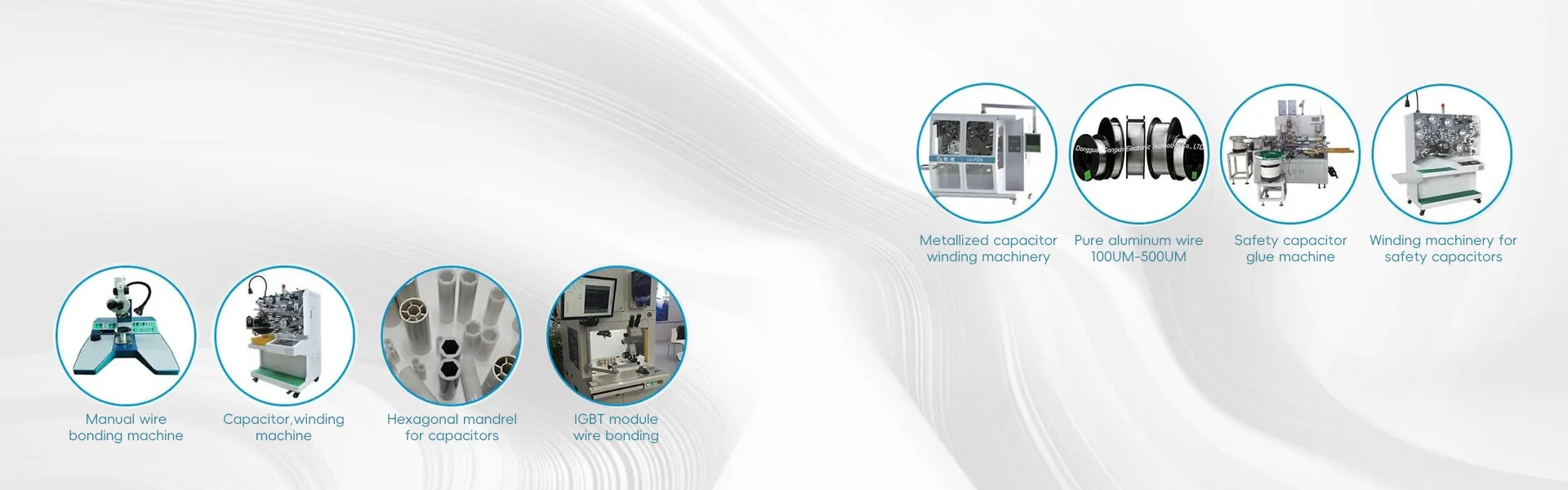
At Dongxin, we specialize in creating the ultra-precise tools for both processes, from capillaries for ball bonders to the robust wedge tools needed for heavy aluminum bonding. The choice between ball bond and wedge bond often comes down to the specific requirements of the device—cost, density, power, and the type of bonding wire being used.
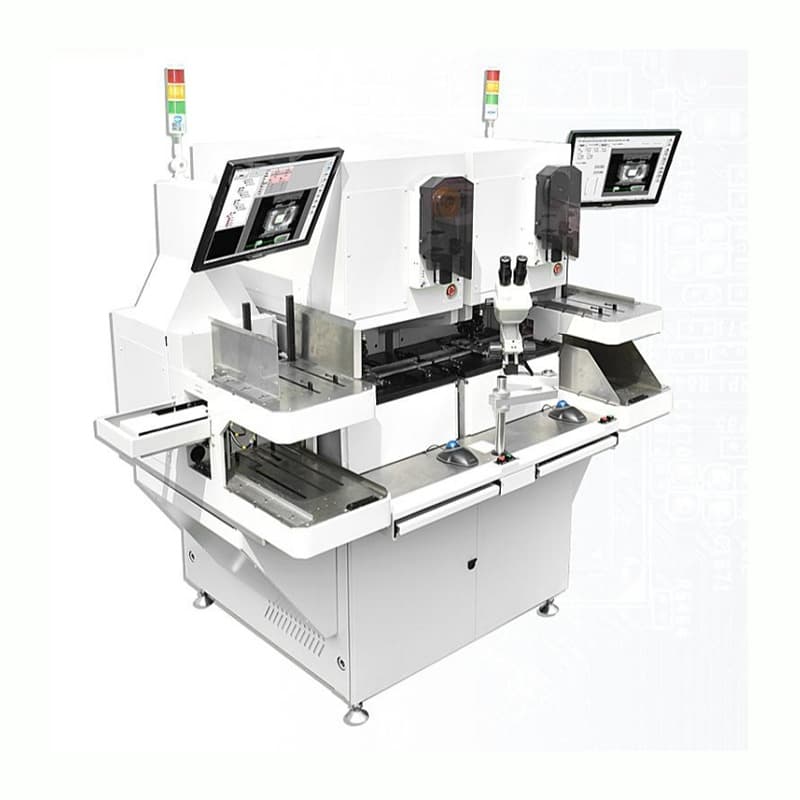
How Does a Modern Automatic Wire Bonding Machine Work?
A modern automatic wire bonder is a masterpiece of robotics and control systems. It's designed to perform thousands of bonds per hour with sub-micron accuracy. The core of the machine is a sophisticated motion control system that moves a bond head over the semiconductor device. This bond head holds the bonding tool (either a capillary for ball bonding or a wedge for wedge bonding) and the spool of bonding wire.
The process begins when an IC or substrate is loaded into the machine. A powerful vision system identifies the exact locations of the bond pads and the corresponding points on the leadframe or PCB. The machine's software then calculates the optimal path for each wire. For each wire bond, the machine executes a precise sequence:
- Positioning: The bond head moves the tool directly over the first bond site.
- Bonding: The tool lowers, and the machine applies a programmed combination of force, temperature, and/or ultrasonic energy to form the weld.
- Looping: The machine raises the tool and pays out the wire, forming a specific loop shape to control height and prevent shorting.
- Second Bonding: The head moves to the second site, and the second bond is made.
- Termination: The wire is broken by a clamp and tearing motion, preparing the machine for the next wire bond.
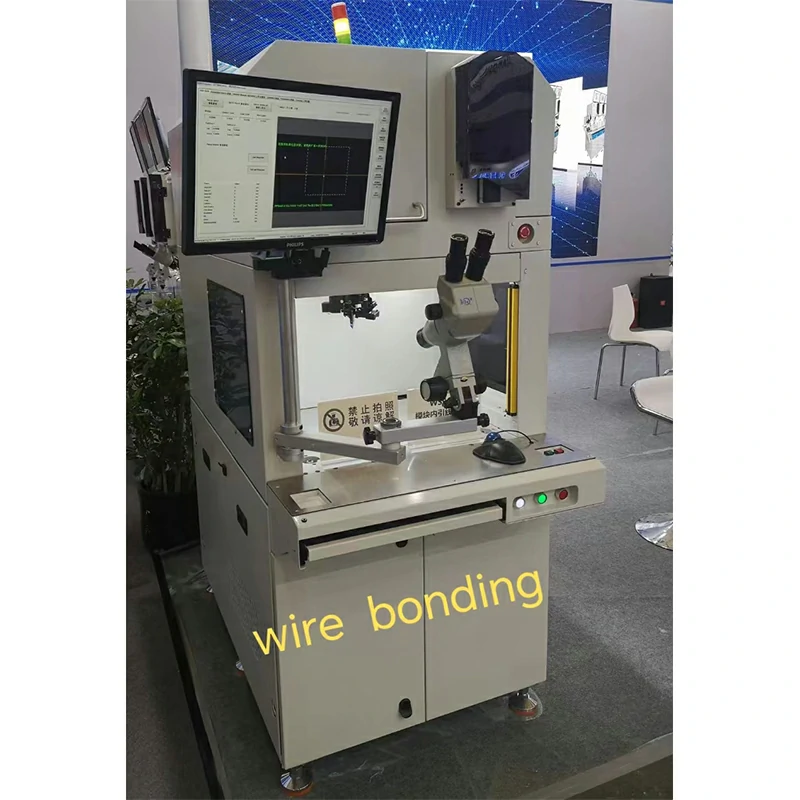
This entire cycle happens in milliseconds. The welding machine constantly monitors factors like bond force and ultrasonic power to ensure every connection meets strict quality standards. These machines, like our own WS9820 Automatic Thick Aluminum Wire Wedge Bonder, are the engines of modern microelectronics assembly, enabling the mass production of complex electronic components.
What Are the Most Common Types of Wire Used for Bonding?
The choice of bonding wire is a critical decision based on cost, performance, and application requirements. Each material has unique properties that make it suitable for different situations. The three main types of wire used today are gold, copper, and aluminum.
| Wire Material |
Key Properties |
Common Applications |
| Gold (Au) |
Excellent conductivity, corrosion resistant, ductile |
High-reliability devices, fine-pitch bonding |
| Copper (Cu) |
High conductivity, good strength, lower cost |
Cost-sensitive devices, power electronics |
| Aluminum (Al) |
Low cost, bonds well to aluminum pads, soft |
High-power devices, large diameter wire bonding |
Gold Wire: For decades, gold was the standard for wire bonding due to its superior reliability. It doesn't oxideize, making it easy to create a good bonding connection. Its softness allows for gold wire bonding at lower forces, reducing stress on the fragile silicon chip. However, the high cost of gold has driven many manufacturers to seek alternatives.
Copper Wire: Copper wire has become a popular alternative. Its electrical conductivity is even higher than gold's, and it's much cheaper. However, copper is harder and prone to oxidation, which makes the bonding requires a more controlled environment (often using an inert gas shield) and more robust process parameters to prevent damage to the bond pad.
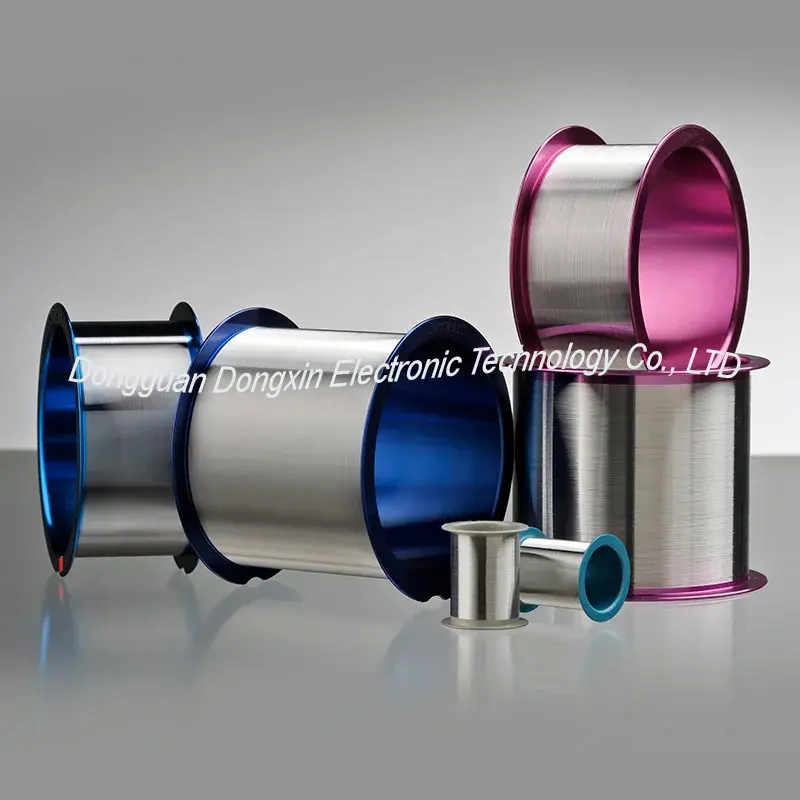
Aluminium Wire: Aluminium wire is very common in wedge bonding, especially for power devices where large diameter wires are needed to carry high currents. It forms a very strong mono-metallic weld with the aluminum bond pads on the chip, avoiding the formation of brittle gold-aluminium intermetallics (known as "purple plague") that can cause bond failures over time. We supply a range of pure aluminum wire specifically engineered for these demanding applications.
Can You Explain the Science Behind an Ultrasonic Weld?
An ultrasonic weld is a fascinating process that joins two metal surfaces without melting them. It's a form of solid-state welding, which is central to ultrasonic wire bonding. The magic happens when high-frequency vibrations are introduced to the bonding interface under pressure.
Here’s how it works: A wire bonding machine uses a transducer to generate high-frequency acoustic vibrations, typically in the range of 20-120 kHz. This vibration energy is transferred through the bonding tool to the wire. The wire is pressed against the bond pad, and the rapid, scrubbing motion of the ultrasonic energy accomplishes several things:
- Cleans the Surface: The vibrations break up and disperse surface contaminants and thin oxide layers on both the wire and the bond pad. This exposes pure, clean metal, which is essential to form a bond.
- Softens the Metal: The intense friction generates localized heat, causing plastic deformation in the metal at the interface. This softening allows the two surfaces to conform to each other intimately.
- Promotes Atomic Diffusion: With the surfaces cleaned and pressed together, the atoms from the wire and the pad can diffuse across the boundary, creating a true metallurgical bond.
The entire ultrasonic bonding process takes only a few milliseconds. By using pressure and ultrasonic vibration instead of bulk melting, it avoids the problems associated with high heat, making it perfect for delicate electronic components. This combination of heat and ultrasonic energy is the cornerstone of modern thermosonic bonding.
What Factors Affect the Quality of a Wire Bond?
Achieving a perfect wire bond consistently across millions of connections is a complex challenge. As an engineer, you know that quality is determined by a delicate balance of many variables. A slight deviation in any one of them can lead to a weak or failed bond.
Key Quality Factors:
- Material Purity: The quality of the bonding wire and the cleanliness of the bond pad are foundational. Any impurities or contamination can inhibit the formation of a strong weld. This includes the metal plating on the substrate.
- Bonding Parameters: These are the machine settings that an engineer must optimize. They include:
- Force: How hard the tool presses the wire. Too little force results in a weak bond; too much can damage the chip.
- Ultrasonic Power: The amount of ultrasonic energy applied. This needs to be tuned perfectly to clean the surface without causing micro-cracks.
- Time: The duration for which force and energy are applied.
- Temperature: The heat applied to the substrate, which helps soften the materials.
- Tool Condition: The bonding tool—the wedge or capillary—is a consumable part that wears out over time. A worn or contaminated tool will produce inconsistent bonds. We've seen firsthand how a high-quality, long-lasting tool, such as our custom bonding machine consumables, can dramatically improve yield and reduce downtime on production lines.
- Loop Geometry: The shape of the wire loop is also critical. An incorrect loop height can lead to short-circuits with other wires or be susceptible to damage during subsequent manufacturing steps like mold encapsulation.
Mastering these factors requires deep process knowledge, high-quality materials, and a robust welding machine. It's a continuous process of monitoring, testing, and refining.
How Does Laser Welding Compare to Traditional Wire Bonding?
While wire bonding is the dominant technology for chip-level interconnection, laser welding is emerging as a powerful alternative for different types of connections in electronics assembly, particularly for larger components like battery tabs and busbars.
Laser welding uses a highly focused beam of light to melt and fuse various metal parts together. Unlike the solid-state weld of ultrasonic bonding, laser welding creates a fusion weld by melting the material.
Comparison:
| Feature |
Ultrasonic Wire Bonding |
Laser Welding |
| Mechanism |
Solid-state weld (heat and ultrasonic) |
Fusion weld (melting) |
| Scale |
Microscopic (fine wire to chip pads) |
Micro to Macro (battery tabs, connectors) |
| Heat Input |
Localized, low overall heat |
Highly concentrated, but can create a larger heat-affected zone |
| Materials |
Specific pairs (Au-Au, Al-Al, Au-Al) |
Wide range of similar and dissimilar metals |
| Mechanical Contact |
Requires direct physical contact and pressure |
Non-contact process, allowing for welding in hard-to-reach areas |
Wire bonding excels at creating thousands of tiny, precise connections on a delicate semiconductor die. The low heat input prevents damage to the sensitive circuitry. Laser welding, on the other hand, is better for creating strong, structural welds on larger parts where higher heat is acceptable. You wouldn't use laser welding to connect a 25-micron wire to an IC, but it's perfect for welding a thick copper tab to a battery terminal. They are complementary technologies that solve different challenges in the broader world of electronics manufacturing.
What Are the Key Challenges in the Wire Bonding Process Today?
The wire bonding process is mature, but it is constantly being pushed to its limits by the relentless pace of innovation in the electronics industry. Engineers are facing several major challenges that require new solutions and better materials.
One of the biggest hurdles is miniaturization. As chips become more powerful, they require more and more I/O connections in a smaller space. This leads to ultra-fine pitch bonding, where bond pads are placed incredibly close together. This demands exceptional accuracy from the wire bonding machine and smaller, more precise bonding uses a special wedge-shaped tool. Any slight misalignment can cause a short circuit.
Another challenge is the rise of new materials and complex device structures. For example, bonding to new types of substrates or dealing with stacked-die packages (3D-ICs) introduces new variables. The coefficient of thermal expansion mismatch between different materials can put stress on the wire bond during operation, leading to reliability issues. Furthermore, the transition to copper wire to save costs introduced challenges related to oxidation and hardness, requiring tighter process controls.
Finally, for power electronics, such as those in electric vehicles and IGBT bonding machines, the challenge is different. Here, heavy diameter aluminum wire or ribbons are used to handle high currents. The difficulty lies in delivering enough ultrasonic power to create a robust weld without damaging the large, expensive power device. This is where the quality of the bonding tools and the power of the welding machine are truly put to the test.
How Do You Choose the Right Bonding Wire and Tools for Your Application?
Selecting the correct bonding wire and tools is not just a purchasing decision; it's a critical engineering choice that directly impacts yield, reliability, and cost. For a process engineer, this decision requires a systematic approach that considers the device's unique requirements.
First, analyze the application. Is it a high-power device that requires a large diameter aluminium wire to manage current? Or is it a high-density digital IC that needs ultra-fine gold or copper wire for fine-pitch bonding? The choice of wire material—gold, copper, or aluminum—is the starting point. This decision will be influenced by cost targets (copper vs. gold), reliability needs (gold's resistance to corrosion), and the metallization of the bond pad (aluminum wire on aluminum pads to prevent gold-aluminium intermetallics).
Once the wire is used, the next step is selecting the bonding tool. The geometry of the wedge or capillary must match the wire diameter and the bond pad dimensions perfectly. A tool with the wrong dimensions can lead to poor bond formation, wire damage, or inconsistent results. For example, a wedge bond in a tight space may require a tool with a very thin profile. The material of the tool itself—like tungsten carbide or titanium—is also crucial for its lifespan and performance. Investing in high-quality tools from a specialized manufacturer ensures tool-to-tool consistency, which is a key concern for engineers who cannot tolerate process variations. The right combination of various wire types and precision tools is the formula for a successful and repeatable wire bonding operation.
Key Takeaways
- Wire bonding is fundamental: It's the primary method for creating the electrical connections that make semiconductor devices function.
- Two main types exist: Ball bonding is fast and versatile, while wedge bonding is precise and ideal for fine-pitch or low-profile applications.
- It's a science of precision: The process relies on a controlled application of force, temperature, and ultrasonic energy to create a strong, solid-state weld.
- Material choice is crucial: The selection of gold, copper, or aluminum wire depends on a trade-off between cost, performance, and reliability requirements.
- Quality depends on many factors: Achieving a perfect wire bond requires high-purity materials, optimized machine parameters, and high-quality, durable bonding tools.
- The technology is still evolving: Miniaturization, new materials, and high-power applications continue to push the boundaries of what the wire bonding process can achieve.