As a specialist in micro-machining and materials science, my days are filled with deep technical discussions with engineers like Marcus in Germany. They are the ones on the front lines, pushing the boundaries of what's possible in semiconductor and power electronics manufacturing. A topic that comes up with surprising frequency is the humble bonding wire. This tiny strand of metal, often thinner than a human hair, is frequently overlooked, yet it is arguably one of the most critical components in any integrated circuit (IC). A failure in this microscopic interconnect can render a complex and expensive device useless. This article isn't a sales pitch; it's a deep dive into the material science and engineering that goes into creating a high-reliability bonding wire. We'll explore the different materials, their unique properties, and why the right choice of wire is fundamental to the success of your final product.
What is the fundamental purpose of a bonding wire?
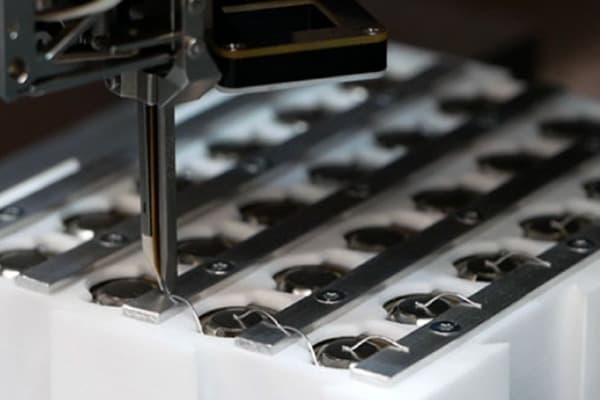
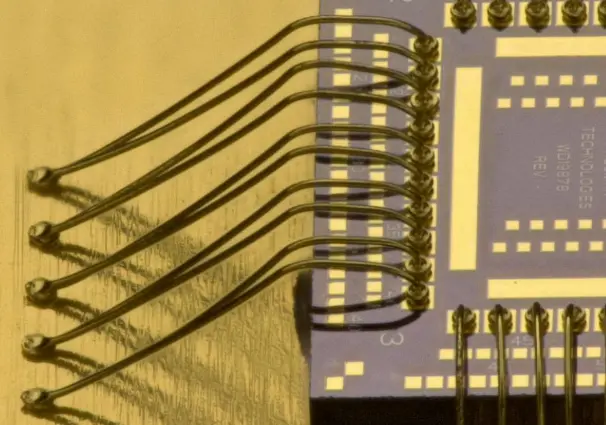
At its most basic level, a bonding wire is a very fine, high-purity wire used to create electrical connections inside a semiconductor device. It serves as a flexible bridge, carrying power and signals between the silicon chip (IC) and the metallic leads of its protective package. Think of it as the nervous system of the chip. Unlike using solder, which involves melting and can't be done at such a fine scale without damaging the delicate chip, wire bonding is a solid-state process. A specialized bonding machine uses ultrasonic energy, force, and sometimes heat to create a metallurgical weld, or bond, at both ends of the wire.
This tiny interconnection must be incredibly robust. It needs to withstand mechanical stress, thermal cycling, and carry electrical current without degrading over the device's lifespan. The choice of wire material, its diameter, and its specific material properties all play a crucial role in creating a successful and reliable wire bond. Every single bond must be perfect.
Why are different types of bonding wire necessary?
There is no "one-size-fits-all" solution when it comes to bonding wire. The choice of material is a critical engineering decision driven by the application's specific demands, including cost, performance, and long-term reliability. The three primary materials used are gold (Au), copper (Cu), and aluminium (Al). Each has a distinct set of properties that make it suitable for different types of bonding and different end products.
An engineer must consider several factors:
- The Bonding Process: Is it a high-speed ball bond process or a precision wedge bond? Gold and copper are ideal for ball bonding, while aluminium is the standard for ultrasonic wedge bonding.
- Performance Requirements: Does the device operate at high frequencies or carry high currents? Copper has superior electrical conductivity, but gold wire offers excellent resistance to corrosion.
- Cost Constraints: Gold wire bonding is a mature but expensive process. Copper wire provides a lower-cost alternative with excellent performance, while aluminium wire is also very cost-effective.
- Long-Term Reliability: How will the wire interact with the bond pad metallurgy over time and at operating temperature? Preventing brittle intermetallic formation is a key concern.
| Wire Material |
Primary Bonding Method |
Key Advantages |
Key Challenges |
| Gold (Au) |
Thermosonic Ball Bond |
Excellent corrosion resistance, very malleable, mature process. |
High material cost, potential for brittle intermetallics on Al pads. |
| Copper (Cu) |
Thermosonic Ball Bond |
Excellent electrical & thermal conductivity, low cost, high strength. |
Prone to oxide formation, requires tighter process control. |
| Aluminium (Al) |
Ultrasonic Wedge Bond |
Excellent for wedge bonding, low cost, forms a stable bond on aluminium pads. |
Lower conductivity than copper, not typically used for ball bonding. |
How is gold wire engineered for high-speed ball bonding?
Gold wire is the original and most well-understood bonding wire. While it seems straightforward, the pure gold used in this application is actually a highly engineered material. Gold bonding wire is almost never 99.99% pure gold. It is intentionally "doped" with tiny, controlled amounts of other elements to fine-tune its properties for the demanding ball bonding process.
These dopants, which can include elements like beryllium (Be) or palladium (Pd), are added for several reasons. They help to control the grain structure of the metal as it solidifies after creating the free air ball. A stable, consistent grain structure is crucial for forming a strong and repeatable bond. The dopants also increase the hardness of the wire, which helps it support a clean loop shape without sagging. A well-engineered gold wire provides the perfect balance of softness for creating the bond and stiffness for maintaining the loop formation. The ability to form a perfect, spherical ball is a unique property of gold wire and is central to the ball bonding process.
What are the trade-offs of using copper as a bonding wire?
Copper wire has become a very popular alternative to gold wire, primarily driven by the significant cost savings. From a performance perspective, copper is an excellent choice. It has about 40% higher electrical conductivity and significantly better thermal conductivity than gold. This makes it ideal for power devices that need to manage high currents and dissipate heat. However, working with copper wire presents a unique set of challenges that engineers must manage.
The biggest challenge is oxidation. Copper readily forms an oxide layer when exposed to air, especially at the elevated temperatures of thermosonic bonding. This oxide can interfere with the formation of a good bond. To overcome this, wire bonding machines that use copper must operate in an inert environment, typically shrouded in nitrogen gas. Furthermore, copper is much harder than gold. This means higher bond forces and ultrasonic energy are required, which increases the risk of damaging the delicate silicon die underneath the bond pad. To mitigate this, many applications now use palladium coated copper wire. The thin layer of palladium protects the copper from oxidation and improves the bond reliability.
When is aluminium wire the superior choice for reliability?
While gold and copper dominate the ball bond market, aluminium wire is the king of ultrasonic wedge bonding. This is especially true for power semiconductors, automotive electronics, and RF modules. The primary reason for this is metallurgical compatibility. The bond pads on a semiconductor die are almost always made of aluminium. When you bond an aluminium wire to an aluminium pad, you create a mono-metallic system. This is inherently more stable and reliable over time, especially at high temperatures.
When a gold wire is bonded to an aluminium pad, a process of solid-state diffusion begins, forming gold-aluminium intermetallic compounds at the interface. Some of these compounds are brittle and can lead to bond failures over the life of the product, a phenomenon known as "purple plague." By using aluminium wire, this major failure mechanism is completely avoided. For applications demanding the highest level of long-term reliability, a heavy diameter Pure aluminum wire connected via a robust wedge bond is the gold standard. This is the type of wire we see used most often in demanding automotive and industrial applications.
How do mechanical properties like elongation and tensile strength impact the wire bond?
When an engineer receives a spool of bonding wire, the specification sheet will list mechanical properties like tensile strength and elongation. These are not just numbers; they are critical indicators of how the wire will behave in a high-speed bonding machine.
- Tensile Strength (or Breaking Load): This measures the force required to break the wire. A wire must be strong enough to withstand the stresses of the bonding process, including the final "tear" after the second bond in a wedge bond process. However, a wire that is too strong can be difficult to bond and may require excessive force.
- Elongation: This measures how much the wire can stretch before it breaks, expressed as a percentage. This is arguably the more critical parameter. A wire with good elongation is more malleable and forgiving during bond formation. It is also essential for creating consistent, stable loops. A wire with low elongation is brittle and can lead to cracks at the heel of the bond, while a wire with excessively high elongation can be too soft, leading to loop sagging or wire sway. The elongation is carefully controlled during the wire manufacturing process through a combination of drawing and annealing steps.
What does "doping" a bonding wire actually do to improve its performance?
"Doping" is the process of adding very small, highly controlled amounts of other elements to the primary metal to enhance its properties. We're talking about parts-per-million (ppm) levels. This isn't just a simple alloy; it's a precise science. The purpose of these dopants is to manipulate the metallurgical structure of the wire.
For example, in gold wire, dopants help to refine the grain structure. In its pure form, the metal has large, soft grains. Adding dopants creates nucleation sites, resulting in a finer, more uniform grain structure. This makes the wire stronger and, more importantly, ensures that the heat-affected zone above the ball after ball formation is strong and stable. This prevents a common defect known as "heat-affected zone (HAZ) sag," which can cause the wire to short against the edge of the die. Similarly, in aluminium wire, adding 1% silicon significantly strengthens the wire and prevents it from being too soft, which is critical for ultrasonic wedge bonding. The decision to dope a wire is always a balance to achieve the desired mechanical properties of the wire.
How do you ensure the quality and reliability of a spool of bonding wire?
For an engineer like Marcus, consistency is everything. A process that works perfectly with one spool of wire must work just as well with the next. The quality control for bonding wire is therefore incredibly stringent. It starts with the raw material, which must be of the highest purity (e.g., 99.99% or "4N" purity).
Throughout the drawing and annealing process, the wire diameter must be kept within incredibly tight tolerances. Even a tiny variation can affect the bonding parameters and lead to inconsistent results. The final wire is then subjected to a battery of tests according to standards like ASTM test method F72. This includes measuring its breaking load and elongation. The surface of the wire must also be pristine, free of any contamination or scratches that could interfere with the bond. Finally, the wire is wound onto a specially designed spool under controlled tension to prevent any mechanical damage. Proper storage and handling are also critical, as is observing the recommended shelf life. The bond quality is a direct reflection of the quality of the wire.
What are the common failure modes related to the bonding wire itself?
When a wire bond fails, the wire itself can be the root cause. Understanding these failures is key to troubleshooting a process.
- Wire Sag/Sway: The wire loop deforms and touches an adjacent wire or the edge of the die, causing a short circuit. This is often due to the wire being too soft (improper alloy or annealing).
- Heel Cracking: A crack forms at the base of the wedge bond. This can be caused by a wire that is too brittle (low elongation) or by excessive deformation during the bond.
- Bond Lift: The bond fails to stick. While often a parameter issue, it can be caused by contamination on the wire surface.
- Broken Wire in HAZ: In a ball bond, the wire breaks just above the ball. This points to an improperly controlled grain structure in the wire's heat-affected zone.
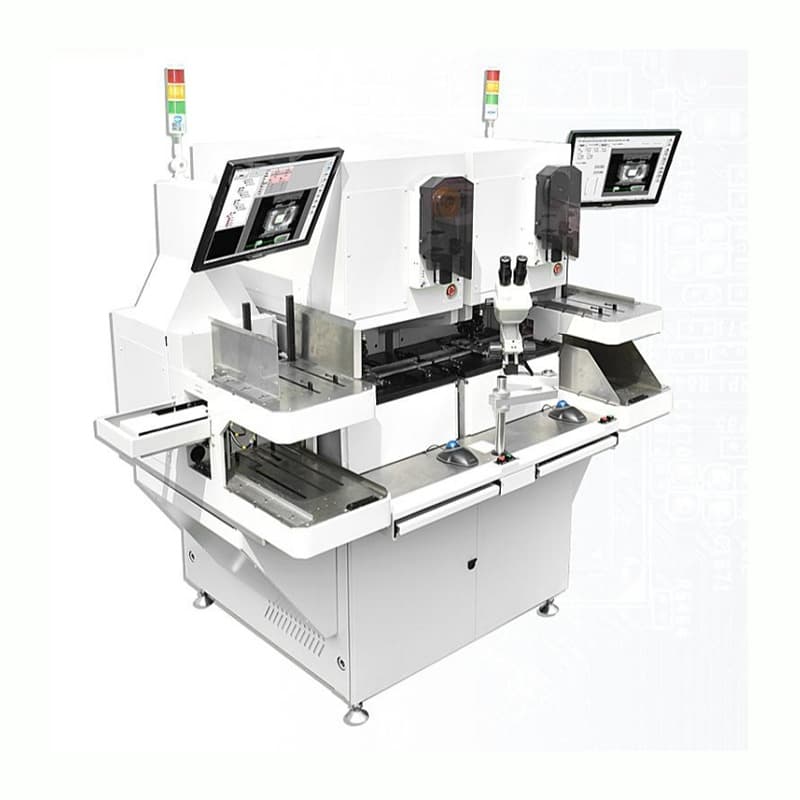
These issues highlight why a deep partnership between the device manufacturer and the wire supplier is so important. Often, solving a complex bonding problem requires a collaborative analysis of both the bonding process and the wire's material science. We often help our clients who use our automatic wire bonders to diagnose and solve these very issues.
How does the right wire selection enhance long-term device reliability?
The choice of bonding wire has a profound impact on the long-term reliability of an integrated circuit. The initial bond quality is just the beginning of the story. The wire and its bond must survive years of operation in often harsh environments. The correct material selection is crucial for preventing failures that only appear after thousands of hours of thermal cycling.
As mentioned, using aluminium wire on aluminium pads eliminates the risk of brittle gold-aluminium intermetallics. For copper wire, using a palladium coating can prevent oxidation and ensure the stability of the bond. The current carrying capacity of the wire must also be considered. Using a wire with an insufficient wire diameter for the current it needs to carry will cause it to overheat, accelerating aging and potentially leading to failure. The thermal expansion coefficient of the wire relative to the rest of the package materials is another factor that must be taken into account. The right bonding wire is not just a component; it is a foundational element of a device's designed reliability.