Hello, I'm Kevin, and at Dongxin Electronic Technology, my days are spent discussing the microscopic world with engineers like Marcus from Germany's automotive industry or leading researchers from Japan's semiconductor sector. We talk about tolerances measured in microns and the material science that underpins the entire digital world. One of the most critical, yet often overlooked, components in this world is the humble wire bond. These tiny threads of wire are the lifelines inside every microchip, every LED, and every power module. Understanding the different types of wire bonding and choosing the right type of wire isn't just an academic exercise; it's fundamental to creating reliable, high-performance electronics. This article is for the curious engineer and the manufacturing professional who wants to look deeper into this essential technology. We'll explore the world of wire bonding, from the core processes to the materials that make it all possible.
What is the Wire Bonding Process in Semiconductor Packaging?
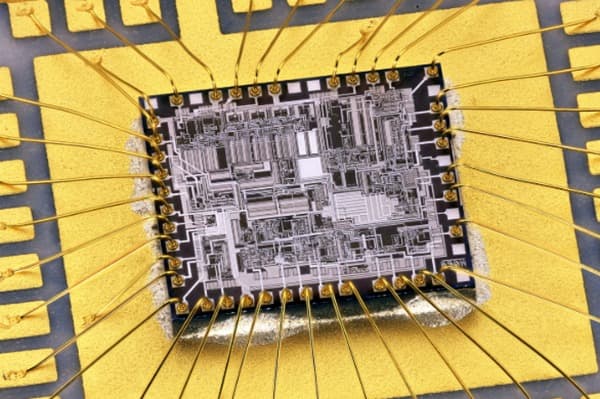
Wire bonding is a crucial technique used to make electrical connections between a semiconductor die (the microchip) and its packaging, or between multiple chips. Think of it as the final step in making a chip functional. The wire bonding process uses a tiny, highly pure wire to create these links, connecting the microscopic bond pad on the chip to the larger leads of the package frame that will eventually connect to a circuit board. These connections are essential for transmitting power and data into and out of the semiconductor device.
The process involves using a specialized machine—a wire bonder—that uses a combination of heat, pressure, and ultrasonic energy to form a solid-state weld at both ends of the wire. This creates a strong, reliable connection without melting the delicate components. The goal of the wire bonding process is to create thousands of these connections on a single device, each one perfect, to ensure the final product works flawlessly. Wire bonding is a critical process in the vast majority of semiconductor packaging done today.
What are the Main Types of Wire Bonding Techniques?
While the goal is always the same—to create a solid electrical connection—there are two primary types of wire bonding techniques used in the industry: ball bonding and wedge bonding. The choice between them depends on the application, the materials involved, and the required form factor.
- Ball Bonding: This is the most widely used bonding technique, accounting for over 90% of all wire bond connections. It is faster and more flexible in terms of bonding direction. The process starts by melting the end of the wire to form a small ball, which is then attached to the chip's bond pad.
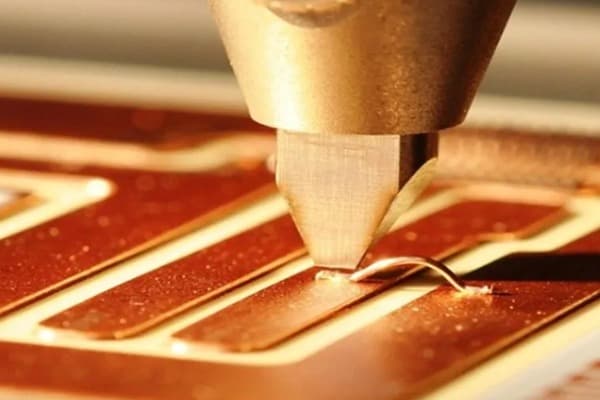
- Wedge Bonding: This technique uses a wedge-shaped bonding tool to press the wire against the bond pad and form a stitch-like bond. It does not form a ball. Wedge bonding is often used for applications requiring a lower profile (less wire loop height) or for bonding with aluminum wire, which does not form a ball as easily as gold.
Both techniques have their place in modern electronics manufacturing. Ball bonding is the workhorse for high-volume production, while wedge bonding is a specialized solution for specific challenges, especially in power devices and fine-pitch applications. These two types of wire bonding methods dominate the industry.
Which Key Materials are Used in Wire Bonding and Why?
The selection of the wire material is a critical aspect of the wire bonding process. The materials used in wire bonding must have excellent electrical and thermal conductivity, be resistant to corrosion, and be workable enough to form a reliable bond. Three materials dominate the landscape.
| Material |
Key Advantages |
Common Applications |
| Gold (Au) |
Excellent corrosion resistance, high electrical conductivity, and great ease of bonding. |
High-reliability devices (aerospace, medical), complex ICs. |
| Copper (Cu) |
Excellent electrical and thermal conductivity (better than gold), lower cost. |
Power devices, automotive electronics, LEDs. |
| Aluminum (Al) |
Low cost, good for wedge bonding, forms a strong intermetallic bond with silicon pads. |
Power modules (IGBTs), RF devices, some consumer electronics. |
Gold wire is widely recognized as the premium choice and was the original material used in wire bonding due to its reliability. However, the high cost of gold has driven the industry toward copper wire, which offers superior performance in some respects but is more challenging to bond because it oxidizes easily. Aluminum wire is the go-to for heavy wire applications in power electronics. The choice of wire ultimately depends on a trade-off between cost, performance, and the specific requirements of the semiconductor device.
How Does the Ball Bonding Process Actually Work?
The ball bonding technique is a fascinating display of high-speed precision. The wire bonding process involves a capillary tool through which a very thin wire (often gold wire or copper wire) is fed.
- Ball Formation: The process begins with an "electronic flame-off" (EFO) wand that sends a spark to the tip of the wire, melting it and allowing surface tension to form a perfect sphere, or ball. This ball is typically 1.5 to 2.5 times the wire diameter.
- First Bond: The capillary tool brings the ball down onto the heated bond pad of the semiconductor die. The machine applies a combination of force and ultrasonic energy, causing the ball to deform and create a strong, intermetallic bond with the pad. This is often called a thermosonic bond.
- Loop Formation: The machine then moves to the second bond location on the package lead frame, shaping the wire into a specific wire loop geometry as it travels.
- Second Bond (Stitch Bond): At the second location, the machine performs a stitch bond. It presses the wire against the lead frame with the edge of the capillary tool and applies ultrasonic energy, creating another weld.
- Wire Tail: Finally, the machine clamps the wire and raises the capillary, breaking the wire at the heel of the stitch bond and leaving it ready to form the next ball.
This entire cycle happens in milliseconds, allowing wire bonding machines to create hundreds of connections per second. It's a highly efficient process commonly used in consumer electronics.
What Makes Wedge Bonding a Unique Bonding Technique?
Wedge bonding is a distinct bonding method that operates differently from ball bonding. As the name suggests, it uses a wedge-shaped bonding tool instead of a capillary. The wire is fed under the front of the wedge. The bonding involves pressing the wire flat against the bond pad and applying ultrasonic energy to create the weld.
Unlike ball bonding, the first bond is a stitch bond, not a ball bond. After the first bond is made, the machine moves to the second bond location and makes another stitch bond. A key difference is that wedge bonding is a unidirectional process; the machine must move in line with the wire feed, making it slightly less flexible than ball bonding.
However, wedge bonding offers significant advantages. It produces a much lower-profile wire connection, which is crucial for vertically stacked chips or devices with tight clearance requirements. It is also the preferred method for aluminum wire bonding, especially with large-diameter wire used in power devices. The process can also be done at room temperature (ultrasonic bonding without added heat), which is essential for temperature-sensitive devices.
Why is the Choice of Bonding Wire Critical for Quality?
The bonding wire is not just a simple conductor; it is a highly engineered component that directly impacts the performance and reliability of the final electronic device. The selection of wire material and its quality are paramount. A high-quality wire must have several key characteristics to ensure reliable and high-quality wire bonds.
Firstly, the wire must have exceptional purity. Impurities can lead to inconsistent bond formation and can be a source of long-term reliability issues. Secondly, the wire must have consistent mechanical properties, including tensile strength and elongation. This ensures that the wire doesn't break during the high-speed bonding process and that the loop shape is repeatable every time. The wire diameter must also be controlled to within incredibly tight tolerances.
At Dongxin, when we supply Pure aluminum wire to our customers, we provide detailed material certifications. Engineers like Marcus depend on this data because they know that even a small deviation in the wire can shut down a multi-million dollar production line. The wire is truly the foundation of a good wire bond.
What are the Main Factors that Influence Wire Bonding Quality?
Achieving a perfect wire bond every single time, millions of times over, is the ultimate goal. The wire bonding quality depends on a finely tuned interplay of several factors. A process engineer must meticulously control this "recipe" to get consistent results.
The main factors influencing bonding quality include:
- Bonding Parameters: This is the set of machine instructions, including the force applied, the amount of ultrasonic energy, the temperature of the die, and the duration of the bond. These bonding parameters must be optimized for the specific wire and substrate materials.
- Material Quality: This includes both the bonding wire and the bond pad surfaces. The wire must be of high purity and consistent dimensions, and the pads must be clean and free of oxides or contamination.
- Bonding Tool Condition: The bonding tool (capillary or wedge) is a consumable part that wears out over time. A worn or dirty tool can lead to poor bond quality or damage to the die. We manufacture precision tools like our Customized wedge bonding tool of aluminium wire welding auto equipment to ensure longevity and consistency.
- Machine Calibration: The wire bonding equipment must be precisely calibrated to ensure it is delivering the correct forces and movements.
Mastering these elements is essential to optimize the wire bonding process and achieve the highest possible yield and reliability.
What are the Most Common Applications of Wire Bonding Today?
While its roots are in the semiconductor industry, the applications of wire bonding have expanded dramatically. Wire bonding is widely used across the entire spectrum of electronics manufacturing. You can find a wire bond in almost any electronic device you own.
Some key wire bonding applications include:
- Integrated Circuits (ICs): This is the classic application, connecting the silicon die to the package leads in CPUs, memory chips, and virtually all other microchips.
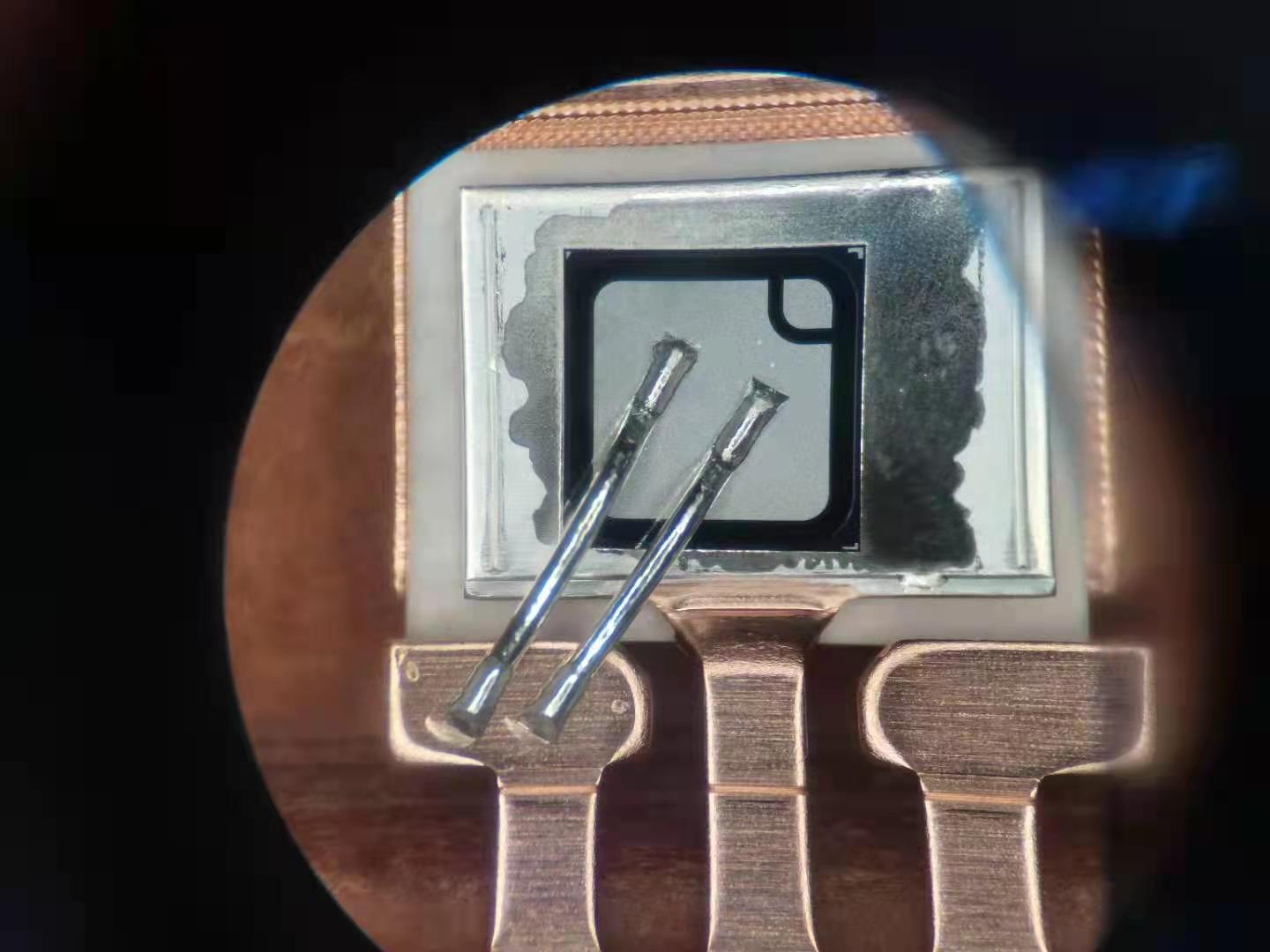
- Power Devices: IGBTs, MOSFETs, and other power semiconductors rely on heavy aluminum wire bonding to handle high currents.
- LEDs: A tiny gold wire is used to connect the LED chip to its contacts, powering everything from your phone screen to stadium lighting.
- Automotive Electronics: Engine control units, sensors, and infotainment systems all rely on robust wire bond connections to withstand the harsh automotive environment.
- Medical Devices: Pacemakers, defibrillators, and diagnostic equipment use high-quality wire bonds for ultimate reliability.
Essentially, anywhere a microchip needs to connect to the outside world, you will likely find that engineers have used wire bonding.
How Does Wire Bonding Compare to Flip-Chip Bonding?
Wire bonding is the dominant interconnection technology, but it's not the only one. Its main alternative is flip-chip bonding. In the flip-chip method, the chip is flipped upside down, and tiny solder bumps on its surface are used for bonding directly to the substrate. This is a very different approach from using a wire to create connections.
Flip-chip bonding offers some significant advantages, primarily a much higher I/O density (more connections in a smaller area) and shorter electrical paths, which improves performance for very high-frequency applications. However, the process is more complex and expensive. It also presents challenges with thermal management and inspection.
Wire bonding, on the other hand, is a more mature, flexible, and cost-effective technology. It's easier to implement and is suitable for a wider range of applications. For many devices, especially in consumer electronics, automotive, and power electronics, wire bonding provides the perfect balance of performance, reliability, and cost. The two technologies are not mutually exclusive; they are different tools for different engineering challenges.
How Do You Choose the Right Wire Bonding Equipment?
Selecting the right wire bonding equipment is a major decision that impacts production efficiency and product quality. The choice depends entirely on the specific application needs. An R&D lab might need a flexible manual bonder, while a high-volume assembly line requires a fully automatic machine capable of running 24/7.
When evaluating wire bonding equipment, consider these points:
- Bonding Technology: Do you need a ball bonding or wedge bonding machine? Some advanced machines, like our WS9820 Automatic Thick Aluminum Wire Wedge Bonder, are specialized for heavy aluminum wire, a common need in the EV and power semiconductor industries.
- Throughput: How many bonds per hour can the machine produce? This is a critical factor for calculating your return on investment.
- Accuracy and Repeatability: The machine must be able to place bonds with micron-level accuracy, time after time.
- Flexibility: Can the machine handle different die and package sizes? How easy is it to change over to a new product?
- Supplier Support: Does the supplier provide expert training, application support, and readily available spare parts like a Cutter knife for semiconductor aluminium wire welding machine FNK? A machine is only as good as the support behind it.
Choosing the right partner is just as important as choosing the right machine to ensure consistent bonding results.
Key Takeaways
The intricate wire bond is the unsung hero that powers our digital lives. To summarize our exploration of this critical technology:
- Core Function: Wire bonding is a process that creates the essential electrical connections between a microchip and its package, enabling it to function.
- Two Main Techniques: The industry relies on two primary methods: ball bonding, which is fast and flexible, and wedge bonding, which is ideal for low-profile and heavy wire applications.
- Key Materials: The most commonly used materials for bonding wire are gold (high reliability), copper (excellent conductivity and lower cost), and aluminum (ideal for power devices).
- Quality is Paramount: A successful wire bond depends on a precise combination of optimized bonding parameters, high-purity materials, and well-maintained equipment.
- Ubiquitous Application: From the CPU in your laptop to the power modules in an electric vehicle, wire bond technology is a fundamental building block of modern electronics.
- Choosing Wisely: Selecting the right bonding technique, wire material, and equipment is a critical engineering decision that directly impacts product performance, cost, and reliability.