As an engineer and the founder of Dongxin Electronic Technology, I, Kevin, have spent years in deep technical discussions with professionals like Marcus, a senior process engineer in Germany's competitive automotive sector. The conversations are rarely about price; they're about precision, reliability, and the fundamental science behind manufacturing. A recurring and critical topic is the challenge of creating the perfect electrical connection inside a modern battery pack. The choice of how to join hundreds, or even thousands, of individual battery cells is not trivial—it dictates the safety, longevity, and performance of the entire system, from an EV to a grid storage unit. This article will explore why ultrasonic wire bonding has emerged as a superior method for this task. We'll break down the technology, compare it to alternatives, and explain how this precise bond process offers unparalleled flexibility and safety for battery manufacturing.
What Exactly is Ultrasonic Wire Bonding for a Battery?
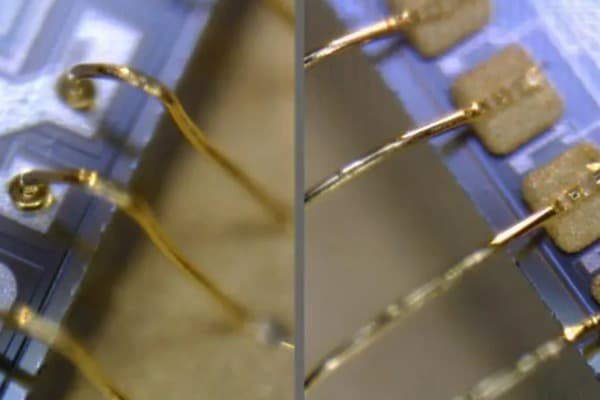
At its heart, ultrasonic wire bonding is a solid-state welding process. Unlike traditional welding that uses heat to melt materials, this technique uses high-frequency vibrations to create a robust metallurgical bond. Here’s how it works in the context of a battery pack: a specialized tool called a bond head presses a wire (typically aluminum or copper) against the surface of a battery cell terminal. The tool then vibrates at an ultrasonic frequency, typically between 60 and 120 kHz.
This rapid, microscopic scrubbing action does two things. First, it clears away oxides and contaminants from the contact surfaces. Second, it causes plastic deformation of the wire and the terminal surface, bringing the atoms of both materials into such close contact that they share electrons and form a true, permanent weld. No external heat is used in ultrasonic bonding, which is a massive advantage when working with sensitive battery cells. The entire bond is formed in milliseconds, creating a durable and highly conductive connection without introducing thermal stress to the cell. This is the core of battery bonding technology.
Why is a Strong Bond So Critical in a Battery Pack?
A battery pack is an unforgiving environment. It's subject to constant vibrational stress from vehicle movement, as well as expansion and contraction due to thermal cycling (charging and discharging). A weak or inconsistent bond is a recipe for disaster. If a connection fails, the entire string of cells it supports goes dead, crippling the pack. Even a poor-quality bond that doesn't completely fail will introduce unwanted electrical resistance.
This resistance generates heat, reduces the pack's overall efficiency, and can lead to premature aging of the cell. In a worst-case scenario, excessive heat at a faulty bond point can trigger a thermal runaway event. Therefore, the mechanical and electrical integrity of every single bond is paramount. Each bond must be strong, repeatable, and able to withstand the harsh operating conditions for the life of the battery pack. This is why the quality requirements for the bond process are so stringent in the EV industry.
How Does Wire Bonding Compare to Other Battery Connection Methods?
Engineers have several methods of interconnecting battery cells, primarily spot welding, laser welding, and wire bonding. Each has its place, but wire bonding offers a unique combination of advantages, especially for modern battery pack designs.
| Feature |
Ultrasonic Wire Bonding |
Laser Welding |
Spot Welding |
| Bond Type |
Solid-state metallurgical bond |
Fusion weld (melts material) |
Resistance weld (melts material) |
| Thermal Stress |
Very low; no external heat |
High localized heat |
High localized heat |
| Flexibility |
High; can create 3D loop shapes |
Moderate; limited to line-of-sight |
Low; requires direct electrode access |
| Built-in Safety |
Yes; the wire acts as a fuse |
No; creates a very rigid connection |
No; tab acts as a conductor only |
| Material Joining |
Excellent for dissimilar metals (e.g., Al wire to Ni surface) |
Good, but can form brittle intermetallics |
Possible, but can be challenging |
While laser welding can be faster for certain geometries, it introduces significant heat and creates a very rigid bond that can be susceptible to failure from vibration or thermal expansion. Spot welding is a mature technology but also carries the risk of overheating the cell. Wire bonding, by contrast, provides a flexible, low-stress bond that doubles as a critical safety feature.
What are the Key Requirements for a Successful Battery Bond?
Achieving a perfect bond every time requires careful control over several factors. It's a science that combines materials, machinery, and process expertise. As a manufacturer of bonding equipment, we work with our clients to optimize these elements.
- Surface Bondability: The surface of the battery cell terminal and any connecting busbars must be clean and bondable. Oxides, oils, and other contaminants can prevent a strong metallurgical bond from forming. Materials like nickel-plated steel or clean aluminum are excellent for bonding.
- Correct Bonding Parameters: The wire bonder must be programmed with the precise bonding parameters for the specific application. This includes the clamping force, the amount of ultrasonic energy, and the duration of the bond. These parameters change based on the wire material, diameter, and the substrate materials.
- High-Quality Wire: The bonding wire itself is a critical component. It must have a consistent diameter, purity, and tensile strength. Both aluminum and copper wire are used, with aluminum being more common for its excellent bond characteristics and cost-effectiveness.
- Precision Tooling: The bond head and the bonding tool (wedge) must be manufactured to exacting tolerances. Any wear or damage to the tool can result in a poor-quality bond.
Getting these four elements right is the key to a repeatable and reliable bond process.
Can You Connect Any Wire to Any Battery Cell Surface?
The short answer is no. Bondability is a critical requirement. The success of a wire bond depends heavily on the material pairing. Ultrasonic wire bonding excels at joining dissimilar materials that are difficult to weld using other methods. The most common scenario in battery pack assembly is bonding an aluminum wire to a nickel-plated terminal on a battery cell. This combination forms an exceptionally reliable and strong bond.
However, attempting to bond to a contaminated or non-ideal surface, such as raw steel or certain types of plastics, will fail. Before beginning production, an engineer must perform bondability studies, often including a pull test, which is a destructive test that measures the force required to pull the wire off the pad. This data validates the chosen materials and bonding parameters, ensuring the connection meets the required mechanical strength. At Dongxin, we provide extensive process support to help our clients validate their materials and optimize the bond process for the highest reliability.
How Does the Wire Itself Act as a Fuse in a Battery Pack?
This is perhaps the most compelling advantage of using wire bonding for battery connections. Every single wire used to connect a cell also functions as a highly precise fuse. This concept is known as "fusible bonding." The diameter and length of the bonding wire are carefully chosen so that if a single cell shorts out or experiences an overcurrent event, the wire connecting it will heat up and melt in a controlled manner.
This action instantly isolates the faulty cell from the rest of the pack, preventing a cascading failure that could otherwise lead to a fire. It provides protection at the individual cell level, which is something that larger, conventional fuses cannot do. A single wire acting as a fuse per cell is a revolutionary safety feature. Wire bonding allows manufacturers to design and build battery packs that are not only powerful and efficient but also inherently safer. A single bond wire becomes both the conductor and the protector.
What Makes Wire Bonding a Flexible Manufacturing Solution?
Modern battery pack designs are complex. They often involve connecting cells at different heights, angles, and orientations. Wire bonding technology offers incredible geometric flexibility to accommodate these designs. Unlike rigid busbars or tabs, a bonding wire can be shaped into a calculated loop to bridge gaps and provide clearance over other components.
This bonding allows for a variety of interconnection schemes:
- Cell to cell connections within a module.
- Cell to busbar connections for combining strings of cells.
- Cell to PCB connections for integrating sensing and management electronics.
Furthermore, the technology can easily adapt to different battery formats, including cylindrical cells (like 18650s or 21700s), pouch cells, and prismatic cells. This adaptability makes wire bonding an ideal choice for a flexible manufacturing line that may need to produce different battery pack designs. It is a highly flexible method of creating a bond.
How Do You Automate the Wire Bonding Process for Battery Packs?
For the large-scale production of battery packs, manual handling is not an option. The process must be fully automated to ensure consistency, speed, and quality. This is where automated wire bonders come in. These sophisticated machines are designed for high-volume assembly and integrate several key technologies.
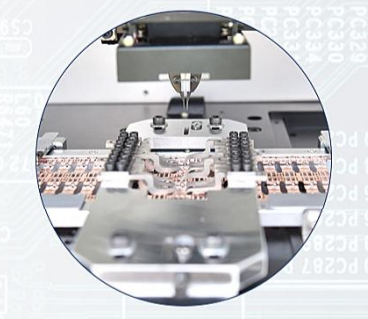
A modern wire bonder for battery production, such as the WS9820 Automatic Thick Aluminum Wire Wedge Bonder, uses advanced robotics to position the bond head with micron-level accuracy. An integrated vision system identifies the exact location of the bond targets on each cell and busbar, compensating for any slight variations in pack assembly. The machine then performs the bond cycle—feeding the wire, forming the first bond, shaping the loop, creating the second bond, and tearing the wire—all in a fraction of a second. This level of automation is essential to automate the thousands of individual wire bonds required for a single EV battery pack.
How Do I Choose the Right Wire Bonder for My Battery Connections?
Selecting the right wire bonder for your battery involves more than just looking at a spec sheet. It's about finding a solution that meets your specific individual process requirements. An engineer like Marcus would evaluate several key factors:
- Wire Capability: Can the machine handle the required wire diameter and material? For battery applications, this often means thick aluminum wire (e.g., 200-500 microns).
- Throughput and Speed: How many bonds can the machine make per minute? This directly impacts your production capacity.
- Accessibility: Can the bond head reach all the required bond locations within the complex geometry of your battery pack? This includes Z-axis travel and rotational capability.
- Software and Control: Is the software intuitive? Does it provide real-time process monitoring and data logging for quality control?
- Supplier Support: Does the manufacturer offer robust installation, training, and ongoing process support? This is often the most critical factor. Choosing the right bonder for your battery connections is about choosing a long-term partner.
What Kind of Process Support Should an Engineer Expect?
This is where a supplier transitions from being a vendor to a true partner. As an engineer, you should expect comprehensive process support. At Dongxin, we see this as a core part of our offering, built on our years of experience. When you invest in a bonding system, you should receive support in several areas.
First is application development. This involves working with the supplier's engineers to determine the optimal bonding parameters for your specific materials and product design. This includes bond testing and validation. Second is training. Your technicians and engineers need to be fully trained on how to operate, maintain, and troubleshoot the equipment. Finally, you need ongoing support. When a process issue arises, you need access to an expert who can help you diagnose the problem, whether it's related to the machine, the materials, or the bond process itself. This collaborative relationship ensures you achieve the highest quality and yield from your bonded battery packs. Companies like Hesse are known for this, and it is a standard we strive to exceed. We work to find the suitable solution for every unique requirement.
Key Takeaways
Ultrasonic wire bonding has become a cornerstone technology in the assembly of advanced battery packs. Here are the most important things to remember:
- Low-Heat Process: It creates a strong, reliable metallurgical bond without applying external heat, protecting the sensitive battery cells from thermal damage.
- Inherent Safety: The bonding wire acts as a precise, individual fuse for each cell, dramatically increasing the safety and reliability of the entire battery pack.
- Design Flexibility: Wire bonding allows for complex, 3D interconnections, making it ideal for modern, high-density pack designs and various cell formats.
- Superior for Dissimilar Materials: It excels at creating a durable bond between common battery materials like aluminum wire and nickel-plated terminals.
- Automation is Key: High-volume production relies on fully automated wire bonders that provide the speed, precision, and repeatability necessary for connecting thousands of cells.
- Partnership is Crucial: Choosing the right equipment is about finding a supplier who provides deep expertise and ongoing process support to help you succeed.