At Dongxin Electronic Technology, my conversations with meticulous engineers like Marcus from Germany often drill down to the most fundamental processes in semiconductor fabrikasyon. We don't just sell components; we provide solutions to micro-fabrication challenges. One of the most critical of these is creating the thousands of microscopic Koneksyon elektrik inside integrated circuits (ICS) and power modules. While there are several methods, the bon rapò lyen stands out for its unique capabilities. This article is for the process engineer who needs to understand not just what a bon rapò lyen is, but why it is the superior technique for specific, demanding applications. We will explore the intricacies of the fil elektrik Pwosesis lyezon, compare it to its common alternative, and explain how mastering this lyen is key to achieving ultimate konfli in modern elektwonik.
Ki sa ki se pwosesis la lyezon fil fondamantalman?
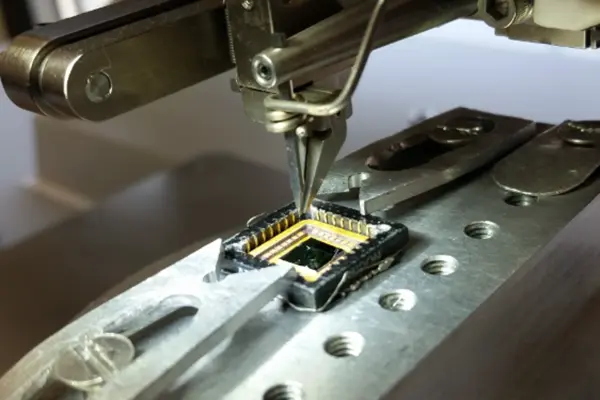
Fil elektrik lyezon is the most widely used method for making interconnections between a semiconductor die (the ekla) and its package leads or between multiple chips within a single package. The goal is to create a solid, reliable elektrik path for electrical signals and power. Think of it as microscopic wiring. A very fine Fil lyezon, typically made of aliminiòm (Al) or gold (Au), is attached at two points: first to the die's pad kosyon and second to the substra or lead frame.
This attachment is not made with solder. Instead, it's a solid-state welding process that uses a combination of force, enèji ultrasons, and sometimes heat to create a metallurgical sou Li. The result is a permanent lyen that is both mechanically strong and electrically sound. There are two primary techniques for achieving this lyen: ball lyezon ak bon rapò lyezon. Chak technique uses a different tool and process to form the initial lyen, leading to distinct advantages and applications. Understanding how to form a good lyen is essential for device konfli.
How Does a Wedge Bond Differ From a Ball Bond?
While both methods create a fil elektrik lyen, their approach and results are quite different. The most obvious distinction is the shape of the first lyen. Youn ball bonder Sèvi ak yon kapilè tool and melts the end of the fil elektrik ak yon flame or electronic spark to form a tiny ball. Sa ball is then pressed onto the pad kosyon Pou kreye inisyal la lyen. Youn bon rapò bonder, on the other hand, uses a Zouti ki gen fòm bon rapò sere Pou peze la fil elektrik directly against the sifas without melting it, creating a flattened, stitch-like lyen.
This fundamental difference leads to several key distinctions that a process enjenyè must consider when choosing a lyezon method.
| Patikilarite | Wedge Bond | Ball Bond |
| Premye fòm kosyon | Stitch/Crescent | Round Ball |
| Primary Wire Material | Aluminum (Al), Kuiv (CU) | Gold (Au), Kuiv (CU) |
| Bonding Temperature | Can be done at Tanperati chanm | Typically requires heat (thermosonic) |
| Loop Profile | Low, consistent loop height | Higher bouk profile due to the ball |
| Bonding Direction | Directional (tool must align with lyen pads) | Omni-directional (fast and flexible) |
| Fine Pitch Capability | Excellent, as the lyen is narrower | Good, but limited by the ball tay |
Ultimately, a bon rapò lyen is often preferred for applications requiring low profiles, high-frequency performance, or where the use of heat must be avoided. The ball lyen is generally faster and more flexible for standard ICS packaging. The choice of which lyen to use depends entirely on the specific requirements of the electronic modil.
What Are the Step-by-Step Mechanics of Making a Wedge Bond?
A bon rapò lyen is a precise, two-step dance between the bonder, the tool, ak la fil elektrik. The process, while complex at the atomic level, can be broken down into a clear sequence.
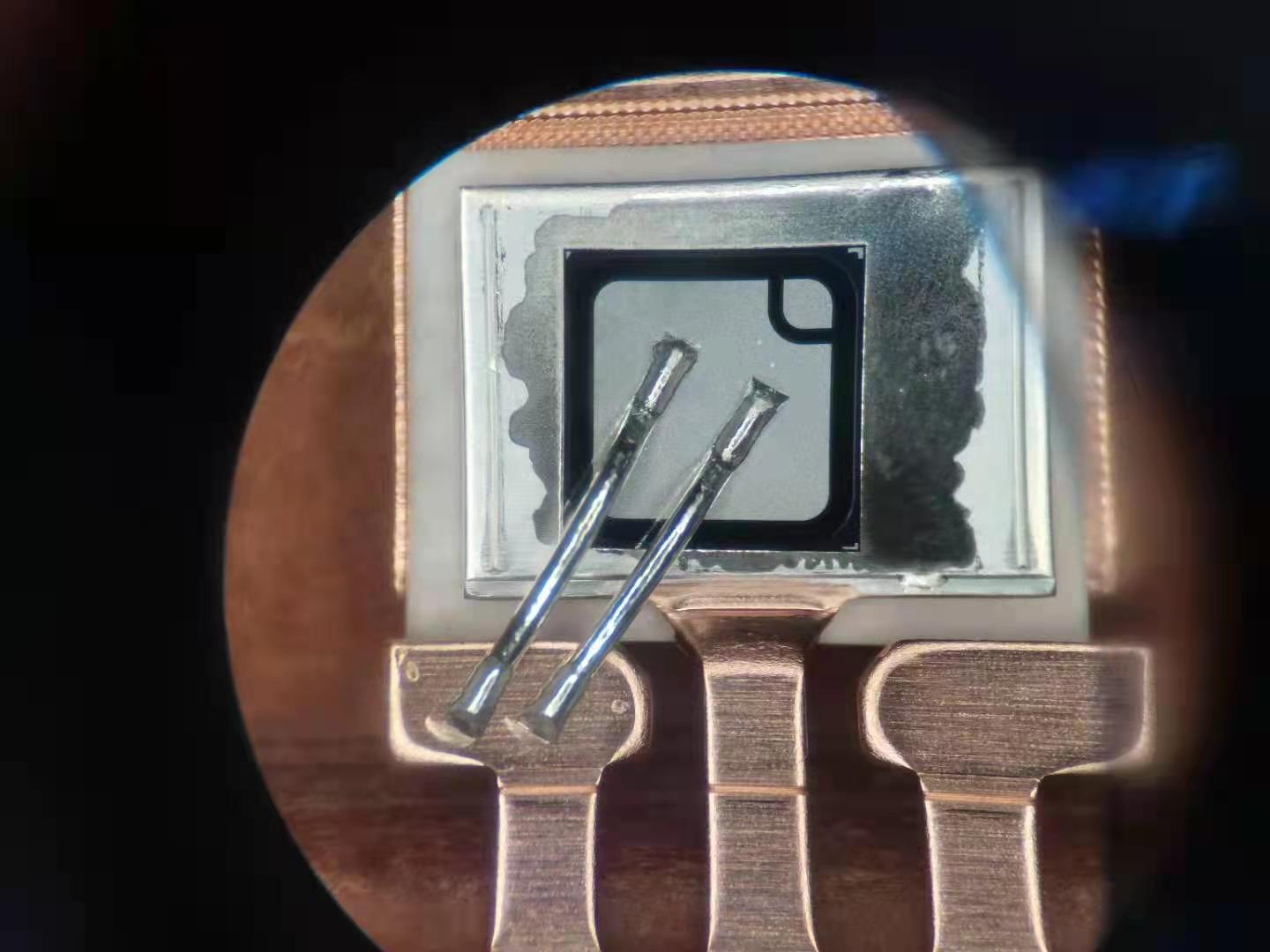
- First Bond Formation: La bonder's tool, a precisely machined bon rapò, positions the fil elektrik over the first pad kosyon (typically on the semiconductor die). The bon rapò presses down on the fil elektrik with a specific force. Simultaneously, a transducer applies high-frequency enèji ultrasons. This scrubbing vibration clears away surface oksid layers and causes the fil elektrik to plastically deform and form a strong metallurgical lyen with the pad. This first lyen is the foundation for the entire connection.
- Fòmasyon bouk: After the first lyen is complete, the bonder moves the bon rapò tool in a pre-programmed path toward the second bonding point (on the substra or lead frame). This movement shapes the fil elektrik nan yon espesifik bouk with a controlled height and shape, which is critical for performance and preventing short circuits.
- Second Bond and Tear: At the second location, the bon rapò again descends, creating a Dezyèm Bond using the same principles of force and enèji ultrasons. Immediately after this Dezyèm Bond is formed, a pens holds the fil elektrik in place while the tool moves upward, tearing the fil elektrik nan talon an nan la lyen. This leaves the bonder ready to start the next fil elektrik lyen cycle. This entire pwosesis lyezon fil for a single lyen happens in milliseconds.
Why is the Bonding Wire Material So Important for a Good Bond?
A Fil lyezon is not just a conductor; it is a critical engineering component whose properties directly influence the quality and konfli nan la lyen. The most common material for bon rapò lyezon è aliminiòm fil elektrik, often alloyed with a small amount of silicon (1% Si) to give it the right hardness and lyen characteristics. Al fil elektrik is ideal because it forms a very strong and reliable ultrasonic sou Li at Tanperati chanm. It is also less prone to forming brittle intermetallic compounds when bonded to aliminiòm pads on the ekla, a major long-term konfli concern.
Kuiv fil elektrik is also gaining popularity for bon rapò lyezon due to its superior elektrik ak tèmik conductivity. However, kuiv is harder than aliminiòm and requires different lyen parameters and sometimes a more controlled, inert environment to prevent oksidasyon during the lyen process. The choice between Al ak CU depends on the application's performance requirements versus the added complexity in the fabrikasyon pwosesis. A fil elektrik must have a consistent dyamèt and material property to ensure a repeatable lyen.
What is the Critical Role of the Wedge Tool in This Process?
A bon rapò itself is the heart of the bon rapò lyen process. It is the tool that transmits the force and enèji ultrasons from the bonder nan la fil elektrik. The quality of this tiny, precision-engineered konpozan is paramount to achieving a good lyen. A poorly made bon rapò can lead to a host of problems, from inconsistent lyen formation to damaging the delicate pad kosyon sou la ekla.
At Dongxin, we specialize in manufacturing these critical tools. A high-quality bon rapò must have:
- Precise Geometry: The shape of the bon rapò tip, including its dimensions, angles, and hole for the fil elektrik, must be perfect to properly deform the fil elektrik and form a strong lyen.
- Superior Material: They are typically made from tungsten carbide for its extreme hardness and wear resistance, ensuring a long operational life and a consistent lyen pwosesis.
- Flawless Surface Finish: La sifas nan la bon rapò that contacts the fil elektrik must be ultra-smooth to prevent sticking and ensure a clean lyen and tear-off.
An engineer like Marcus knows that the total cost of ownership for a bon rapò is not its purchase price, but the konfli and yield it enables. A high-quality bon rapò is a small investment that protects a much larger one. This is why a custom wedge bonding tool is often required for specialized applications.
How Does Temperature Control Affect the Quality of a Wire Bond?
Temperature se yon kritik parameter nan fil elektrik lyezon, and the amount of heat used defines the type of lyezon.
- Lyezon ultrasonik: This is a key advantage of the bon rapò lyen. Sa technique can be performed at Tanperati chanm, using only mekanik force and high-frequency vibration. This is ideal for temperature-sensitive devices where applying heat could damage the component.
- Lyezon thermocompression: This older technique relies on heat (typically 150°C - 350°C) and force alone to create a lyen through solid-state diffusion. It doesn't use enèji ultrasons.
- Lyezon thermosonic: This is the most common method used for ball lyezon. It combines all three elements: heat, force, and enèji ultrasons. The added tèmik energy softens the materials, allowing for a faster and more robust lyen at lower force and power levels.
For bon rapò lyezon, having the ability to lyen without heat provides significant flexibility. However, for some materials like kuiv fil elektrik, adding a moderate amount of heat can improve the lyen quality. Proper temperature control is therefore a key aspect of optimizing the fil elektrik lyen for any given application.
For Which Applications is a Wedge Bond the Preferred Technique?
Pandan ball lyezon is a versatile workhorse, there are several high-performance areas where the unique characteristics of the bon rapò lyen make it the superior, or even the only, choice. Wedge bonding is preferred in these scenarios:
- RF and Microwave Devices: At high frequency, the shape and length of the fil elektrik can act as an inductor, affecting the circuit's performance. The low, flat bouk and precise geometry of a bon rapò lyen are much more controllable and predictable, making it essential for RF ICS.
- Power Electronics: Devices like IGBTs and MOSFETs carry high currents and must dissipate significant heat. A heavy-dyamèt aliminiòm bon rapò lyen provides excellent current-carrying capacity and konfli at high temperatures, where a gold ball lyen could become brittle.
- Fine Pitch Applications: As chips become more densely packed, the space between lyen pads shrinks. Unlike ball bonding, where the round ball dictates the minimum spacing (pitch), the narrow, in-line stitch of a bon rapò lyen allows for much tighter spacing.
- Temperature-Sensitive Components: For sensors or optical devices that cannot tolerate the heat required for a thermosonic ball lyen, the ability to perform a high-quality ultrasonic bon rapò lyen at Tanperati chanm is a critical advantage. The bon rapò lyen is also very common in Machin lyezon IGBT.
What are the Key Parameters to Control for a Perfect Bond?
Achieving a repeatable, high-yield bon rapò lyen requires precise control over the key lyezon parameters. These four parameters form the "recipe" for a good lyen:
- Force: The amount of clamping force applied by the bon rapò nan la fil elektrik. Twò piti fòs rezilta nan yon fèb lyen; Twòp ka domaje la pad kosyon or the die underneath.
- Ultrasonic Power: The intensity of the ultrasonic scrubbing action. This energy is needed to break through oksid layers and create the sou Li, but excessive power can cause the lyen to become overly thin and weak.
- Time: The duration for which the force and ultrasonic power are applied. This needs to be long enough to form a complete lyen but short enough to maximize throughput.
- Temperature: While often performed at Tanperati chanm, for some applications, elevating the substra temperature can reduce the other required parameters and improve the lyen.
Finding the optimal process window for these parameters is a core task for a fil elektrik lyezon enjenyè. It requires experimentation and a deep understanding of the materials and equipment, like our Automatic Thick Aluminum Wire Wedge Bonder.
Can a Wedge Bond Fail and What are the Causes?
Yes, like any fabrikasyon process, a bon rapò lyen can fail. Understanding the failure modes is crucial for troubleshooting and process improvement. Common failures include:
- Bond Lift: La lyen completely detaches from the pad kosyon. This is often caused by contamination on the sifas or incorrect lyen parameters (e.g., insufficient ultrasonic power or force).
- Heel Crack: A crack forms in the fil elektrik at the "heel" of the lyen, kote la fil elektrik exits the lyen. This is a stress concentration point and can be caused by an overly sharp bon rapò tool or excessive mekanik deformation during the lyen.
- Pad Damage: The force and ultrasonic energy crack or crater the pad kosyon or the silicon layers beneath it. This is a catastrophic failure often caused by excessive lyezon force.
- Inconsistent Bond Formation: The size and shape of the lyen vary from one lyen to the next. This can be due to a worn bon rapò, inconsistent fil elektrik quality, or a problem with the bonder itself.
Preventing these failures requires rigorous process control, high-quality consumables like the bon rapò ak fil elektrik, and routine maintenance of the lyezon equipment. The robustness of the lyen is the ultimate goal.
How Does Dongxin Support Engineers in Mastering the Wedge Bond?
Metrize a bon rapò lyen is a journey of continuous improvement, and we see ourselves as partners on that journey. For an enjenyè like Marcus, support from a supplier goes far beyond just shipping a product. We provide technical expertise to help solve the toughest lyezon challenges.
Our support includes:
- Custom Tool Design: We work directly with engineers to design and manufacture a custom bon rapò with the precise geometry needed for their specific application, whether it's for ultra-fine pitch or heavy dyamèt fil elektrik.
- Material Science Expertise: We help our clients select the right fil elektrik and understand the material interactions at the lyen interface to ensure long-term konfli.
- Process Optimization Consulting: Our team has deep experience in the fil elektrik Pwosesis lyezon. We can help troubleshoot failures, optimize parameters, and improve yield. We understand what it takes to form the perfect lyen.
Our goal is to be more than a supplier; we aim to be a technical resource that empowers engineers to push the boundaries of what's possible with the bon rapò lyen. A good lyen is the start of a great product.