Capacitors are everywhere. From the smartphone in your pocket to the electric vehicle on the road and the power grid that lights entire cities, capacitors store and release electrical energy in nearly every modern device. Behind these essential components stands a highly concentrated global industry, where a handful of manufacturers dominate production, technology, and supply.
But "the biggest" is not a simple question. The answer depends on how you measure it—by overall revenue, by production volume, or by leadership in a specific capacitor technology. This guide identifies the world's leading capacitor manufacturers, explains what makes each one dominant, and helps you understand how high voltage capacitor manufacturers fit into the broader landscape.
The Global Capacitor Market at a Glance
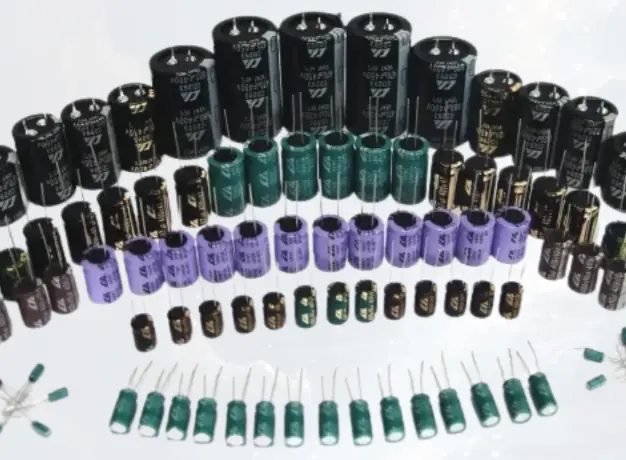
The global capacitor market is a multi-billion-dollar industry that continues to grow steadily, driven by demand from consumer electronics, automotive, renewable energy, data centers, and industrial automation. Within this market, different capacitor types serve different roles:
- MLCC (multilayer ceramic chip capacitors) – the most widely produced type, used in almost every electronic device
- Aluminum electrolytic capacitors – favored for high capacitance and power applications
- Film capacitors – known for high voltage and high reliability
- Tantalum capacitors – valued for stability in compact, high-performance circuits
- Supercapacitors – rising fast in energy storage and automotive applications
Each segment has its own leaders, and understanding these distinctions is key to answering who truly dominates the industry.
The Kings of MLCC: Ceramic Capacitor Leaders
Multilayer ceramic capacitors account for the largest share of the global capacitor market by volume, and the segment is overwhelmingly controlled by Japanese and Korean manufacturers.
Murata Manufacturing (Japan) is the undisputed global leader in MLCCs, holding roughly 30–40% of the market depending on the measurement period. With a monthly production capacity in the tens of billions of units, Murata dominates across consumer electronics, automotive electronics, and the rapidly growing AI server market, where it has also been a price leader in 2025–2026.
Samsung Electro-Mechanics (South Korea) ranks as the world's second-largest MLCC producer, capturing around 18–23% of global share. Its vertically integrated supply chain and strong position in consumer electronics make it a critical supplier for smartphones, home appliances, and automotive-grade components.
Taiyo Yuden (Japan) and TDK Corporation (Japan) follow closely, each holding approximately 10–12% of the MLCC market. TDK, together with its subsidiary EPCOS, is also a top-tier supplier of film and ceramic capacitors for industrial and automotive applications. Kyocera / AVX and Yageo (Taiwan)—which acquired KEMET in 2020—complete the top tier, with the top six manufacturers controlling around 70% of global MLCC volume.
Electrolytic and Film Capacitor Powerhouses
Beyond ceramics, aluminum electrolytic capacitors are indispensable in power supplies, inverters, and industrial drives, and here Japanese manufacturers lead the field.
Nippon Chemi-Con (Japan) is the global leader in aluminum electrolytic capacitors, commanding approximately 18% of the worldwide market with one of the industry's broadest product portfolios. Nichicon, Rubycon, and Panasonic are also major players, with Rubycon widely recognized for high-voltage, long-lifetime designs used in power supplies and LED drivers. Vishay and KEMET (now part of Yageo) round out the global leaders in electrolytic and tantalum technologies, serving automotive, aerospace, and military applications.
In the film capacitor segment—where high voltage handling and reliability are paramount—leaders such as TDK/EPCOS, Vishay, Panasonic, and a strong cluster of Chinese manufacturers supply the power electronics industry with energy storage and snubber capacitors for converters, inverters, and grid applications.
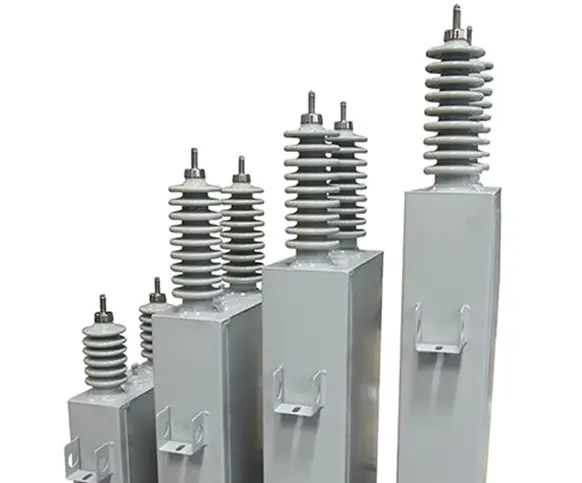
The Role of High Voltage Capacitor Manufacturers
As the world shifts toward renewable energy, electric vehicles, and high-voltage direct current (HVDC) transmission, demand for specialized high-voltage capacitors has surged. High voltage capacitor manufacturers are the specialists behind these applications, producing capacitors rated from hundreds of volts up to kilovolts for:
- Power transmission and distribution systems
- Wind and solar power inverters
- EV charging infrastructure and onboard powertrains
- Industrial motor drives and welding equipment
- High-frequency power supplies and medical devices
When selecting among high voltage capacitor manufacturers, buyers evaluate not only rated voltage and capacitance but also dielectric type, temperature stability, ripple current handling, and long-term reliability under continuous stress. The most trusted high voltage capacitor manufacturers invest heavily in materials science and rigorous testing to guarantee safety in mission-critical power systems.
The Rise of Chinese Manufacturers
While Japan, South Korea, and Taiwan dominate the top tier, Chinese manufacturers have grown rapidly and now hold significant share in the middle and high-volume segments. Companies such as Jianghai, Fenghua, and Three-Circle have expanded aggressively in aluminum electrolytic and ceramic capacitors, supported by booming domestic demand in consumer electronics, automotive, and new energy industries. For global buyers, these manufacturers offer competitive pricing alongside rapidly improving quality and certification.
How to Choose a Capacitor Manufacturer
Whether you are sourcing for a single project or building a long-term supply chain, consider these factors when comparing capacitor manufacturers:
- Technology focus – match the manufacturer's specialty (MLCC, electrolytic, film, tantalum) to your application
- Quality and certification – look for AEC-Q200 (automotive), UL, and ISO certifications
- Reliability data – review lifetime, failure rate, and temperature ratings
- Supply stability – evaluate production capacity and lead times, especially in tight markets
- Engineering support – strong technical support reduces design risk and time-to-market
- Application track record – proven performance in your industry matters more than brand size alone
For demanding power and industrial applications, partnering with experienced high voltage capacitor manufacturers with a documented track record is essential to ensuring long-term performance and safety.
Frequently Asked Questions
Q: Who is the largest capacitor manufacturer in the world? A: Murata Manufacturing is widely recognized as the world's largest capacitor manufacturer, leading the global MLCC market with roughly 30–40% share by production volume and revenue.
Q: Which country dominates capacitor manufacturing? A: Japan leads the global capacitor industry, with companies like Murata, TDK, Taiyo Yuden, Nippon Chemi-Con, and Nichicon holding top positions across multiple segments. South Korea (Samsung Electro-Mechanics) and Taiwan (Yageo) are also major players.
Q: What are the top 5 capacitor manufacturers? A: Based on 2024 market share data, the top five MLCC manufacturers are Murata, Samsung Electro-Mechanics, Taiyo Yuden, TDK, and Kyocera, which together control over 77% of the global MLCC market.
Q: What is the difference between an electrolytic and a ceramic capacitor? A: Electrolytic capacitors offer higher capacitance and are used in power and filtering applications, while ceramic capacitors (MLCCs) are smaller, more stable, and used in high-frequency circuits. They are produced by different leading manufacturers.
Q: Why do high voltage capacitor manufacturers matter? A: High-voltage applications such as power grids, EV chargers, and industrial drives require capacitors that safely handle elevated voltages under continuous stress. Specialized high voltage capacitor manufacturers provide the dielectric design, testing, and reliability assurance these systems demand.
Conclusion
The world's biggest capacitor manufacturers are a mix of Japanese, Korean, Taiwanese, American, and Chinese companies, each dominating different segments. Murata leads the overall market, Samsung Electro-Mechanics, TDK, Taiyo Yuden, and Yageo follow in ceramics, while Nippon Chemi-Con, Nichicon, Rubycon, and Panasonic power the electrolytic field. And as electrification accelerates, high voltage capacitor manufacturers are becoming increasingly central to the industry's future.
If you are looking for reliable capacitors and professional sourcing guidance for your application, our team is here to help. Visit our contact page to discuss your requirements: https://www.dgdx-elec.com/contact-us/