When people ask, “What is the largest supercapacitor in the world?” the answer is not as simple as naming one product. A supercapacitor can be described as “largest” by capacitance, rated voltage, stored energy, peak power, physical size, or the scale of the complete energy-storage system.
For this reason, there is no single supercapacitor that holds a universal title as the world’s largest in every category. The most useful approach is to understand the performance measurements behind the claim and determine which type of large supercapacitor is right for a specific application.
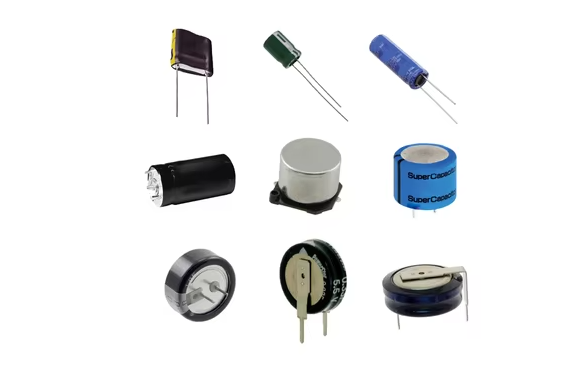
What Does “Largest” Mean for a Supercapacitor?
A supercapacitor, also called an ultracapacitor, stores electrical energy electrostatically rather than through the chemical reactions used in conventional batteries. This design allows it to charge and discharge very quickly, deliver high power, and withstand a large number of operating cycles.
However, “largest” can refer to several different specifications:
| Measurement |
What It Indicates |
| Capacitance, measured in farads (F) |
The amount of electrical charge a device can store |
| Rated voltage |
The maximum operating voltage of a cell or module |
| Stored energy, measured in watt-hours (Wh) |
The usable energy available for an application |
| Peak power |
How quickly the device can deliver or absorb energy |
| Physical dimensions |
The actual size and weight of the component or system |
| System scale |
The total capacity of a bank used in transport, industry, or infrastructure |
A single cell may have extremely high capacitance, while a multi-module installation may store far more total energy. Therefore, buyers should compare products based on the real operating requirement instead of looking only for the highest farad rating.
Why Capacitance Alone Does Not Define the Largest Supercapacitor
Capacitance is an important specification, but it does not tell the whole story. A supercapacitor with a high farad value may operate at a relatively low voltage. Another module with lower capacitance but higher voltage may store more total energy.
The basic stored-energy formula is:
Stored Energy = 1/2 x Capacitance x Voltage squared
This means voltage has a major effect on energy storage. When voltage increases, stored energy rises significantly. That is why large supercapacitor systems are often built from many cells connected in series and parallel.
- Series connections increase system voltage.
- Parallel connections increase capacitance and current capability.
- Balancing circuits help keep each cell operating within its safe voltage range.
- Thermal and mechanical design supports stable operation in demanding environments.
The largest practical supercapacitor solution is often not one oversized component. It is a carefully engineered module or bank designed around voltage, current, energy, safety, and available installation space.
Large Supercapacitor Modules and Energy Storage Systems
In industrial markets, the biggest supercapacitor installations are usually integrated systems rather than individual cells. These systems may contain many modules connected together to manage high-power events.
Typical applications include:
- Regenerative braking in rail transit and electric vehicles
- Port equipment, cranes, and heavy-duty machinery
- Short-term backup power for industrial controls
- Peak-power support in renewable-energy systems
- Fast charge and discharge applications
- Automated guided vehicles and logistics equipment
- Grid-support and voltage-stabilization projects
For example, a transportation system may use a large supercapacitor bank to capture braking energy within seconds and release it again during acceleration. This reduces energy waste and lowers the demand placed on the main power source.
What Should You Compare When Choosing a Large Supercapacitor?
When evaluating products from supercapacitor manufacturers, it is essential to compare the complete technical profile. The highest capacitance number is not automatically the best option.
Important factors include:
1. Capacitance and Energy Rating
Capacitance shows the charge-storage capability, while watt-hours show the system’s energy-storage potential. Both values should be reviewed together.
2. Operating Voltage
A module must match the voltage requirements of the electrical system. Incompatible voltage ratings can create performance limitations or require additional conversion equipment.
3. Equivalent Series Resistance
Equivalent series resistance, often called ESR, affects heat generation and high-current performance. Lower ESR is especially valuable in high-power applications where rapid charge and discharge are required.
4. Peak and Continuous Current
Some systems need short bursts of very high current, while others need stable output over longer periods. The correct product should meet both the expected peak load and continuous operating conditions.
5. Cycle Life and Reliability
One of the key benefits of supercapacitors is their ability to complete many charge-discharge cycles. Real service life still depends on temperature, voltage level, current demand, and installation quality.
6. Temperature Range
Industrial, outdoor, and vehicle applications may experience extreme temperatures. The selected module should be suitable for the actual operating environment.
7. Safety and System Integration
Large systems may require cell balancing, monitoring, protective housings, busbars, cooling methods, and control electronics. A reliable supplier should be able to provide clear documentation for safe integration.
How Super Capacitor Manufacturers Develop Large-Capacity Solutions
Leading super capacitor manufacturers do more than produce individual cells. They can support application-specific solutions that combine cells, modules, protection features, and connection designs.
A professional supplier may help customers evaluate:
- Required voltage and energy levels
- Discharge time and recharge time
- Expected load profile
- Space and weight limitations
- Installation environment
- Series and parallel configuration
- Monitoring and balancing requirements
- Long-term maintenance needs
This engineering approach is especially important for large systems. A well-designed supercapacitor bank can improve power response, capture regenerative energy, and support equipment during short power interruptions.
Is a Larger Supercapacitor Always Better?
Not necessarily. The best supercapacitor is the one that meets the application’s electrical and mechanical requirements efficiently.
An oversized system may add unnecessary cost, weight, and installation complexity. An undersized system may overheat, lose voltage too quickly, or fail to provide enough power during a critical operating event.
Instead of asking only, “What is the largest supercapacitor in the world?” it is often better to ask:
- How much energy does the application need?
- How much power is required?
- How long must the system support the load?
- What voltage range is available?
- How frequently will charging and discharging occur?
- What environmental conditions will the system face?
These questions lead to a more accurate product selection.
Conclusion
There is no single universal answer to the question of the world’s largest supercapacitor because “largest” can mean high capacitance, high voltage, high energy, high power, or a large-scale multi-module system. In real-world engineering, the most effective solution is usually a properly configured supercapacitor module or bank rather than one individual component.
When comparing super capacitor manufacturers, focus on energy, voltage, ESR, current capability, cycle life, safety features, and application support. A well-matched supercapacitor system can deliver fast power, reliable cycling performance, and measurable value across transportation, industrial, and energy-storage applications.
For supercapacitor product and application information, visit DGDX Elec.