In the world of advanced manufacturing, few techniques bridge the gap between raw strength and lightweight design as effectively as the filament matagi gaioiga. Whether we are looking at the fuel tanks of the latest hydrogen-powered vehicles or the fuselage components of next-generation aircraft, the demand for materials that can withstand immense pressure without adding bulk is skyrocketing. For engineers like Marcus in Germany, who demand absolute precision and reliability, understanding the intricacies of fila o le afi is not just academic—it is a necessity for staying competitive. This process turns simple spools of fiber into rigid, high-performance structures that define modern engineering.
What Exactly is the Filament Winding Process?
Le filament matagi gaioiga is a highly specialized fabrication technique primarily used to manufacture open (cylinders) or closed-end structures (pressure vessels). At its core, the concept is elegantly simple, though the execution requires sophisticated control. The process involves winding continuous fiber reinforcement—typically carbon fiber, fiberglass, or aramid—that has been impregnated with resin onto a Lili le Mandrel.
Imagine a spool of thread being wrapped around a spinning spool, but on a much larger, industrial scale. The alava is pulled from a creel, passed through a resin bath (in wet winding), and then guided by a specialized delivery eye or taavaletoso luga o le mandrel. Pei o le mandrel rotates, the delivery carriage moves back and forth along the axis of the mandrel. This coordinated motion allows for precise placement of the filation, building up layers of mea lelei to achieve the desired thickness and strength profile. This isn't just wrapping tape; it is a calculated application of physics where the wind angle determines the structural properties of the final product.
The Critical Role of the Mandrel in Manufacturing Composite Structures
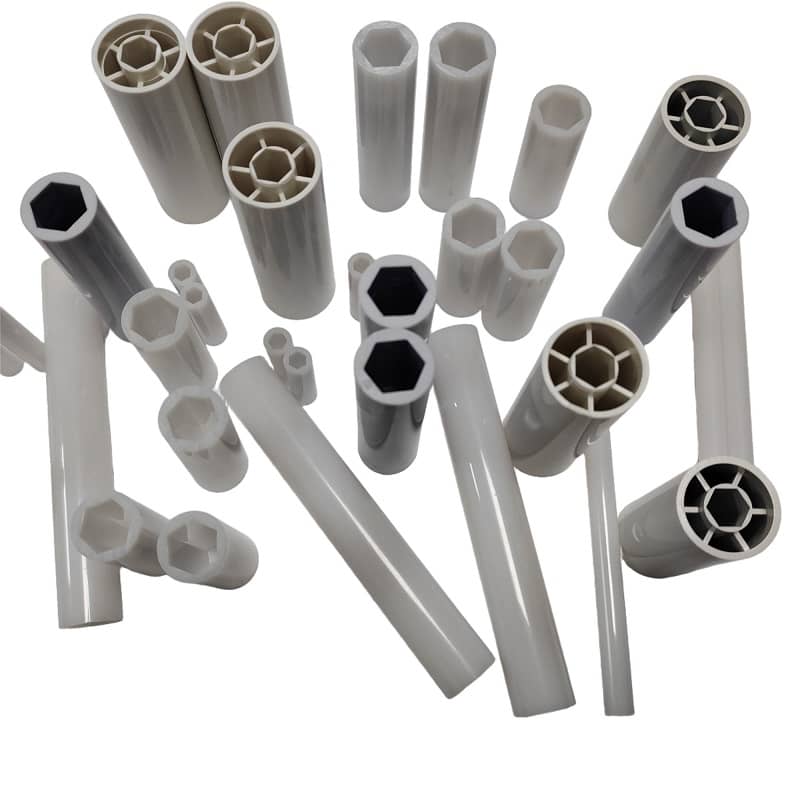
In any fila o le afi operation, the mandrel is the unsung hero. It is the passive mold that defines the internal geometry of the part. The winding mandrel determines the inner dimensions and the surface finish of the composite structure. Afai o le mandrel is flawed, the entire composite product is compromised.
At Dongxin Electronic Technology, we understand that the mandrel is more than just a steel rod. It is a precision meafaigaluega. Depending on the complexity of the part, mandrels can be simple steel shafts for pipes, or complex, collapsible structures for items like fuel tanks where the mandrel must be removed from a closed shape. For high-volume production, a steel mandrel is often used due to its durability and heat resistance during the cure cycle. However, for complex geometries, soluble salts or sand binders might be used to create a core that can be washed away after the winding is complete. The selection of the proper mandrel is the first step in ensuring the success of the filament-wound composite.
Understanding the Machinery: How Does a Filament Winding Machine Operate?
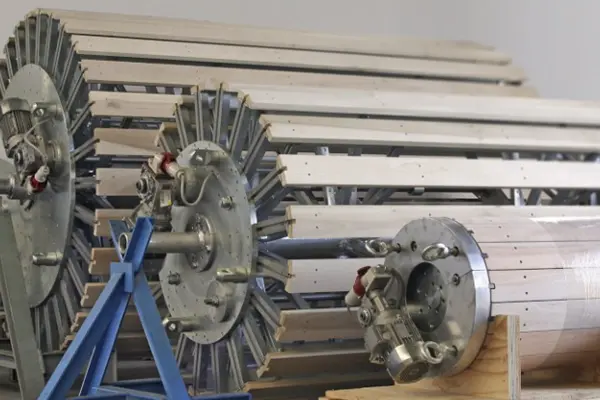
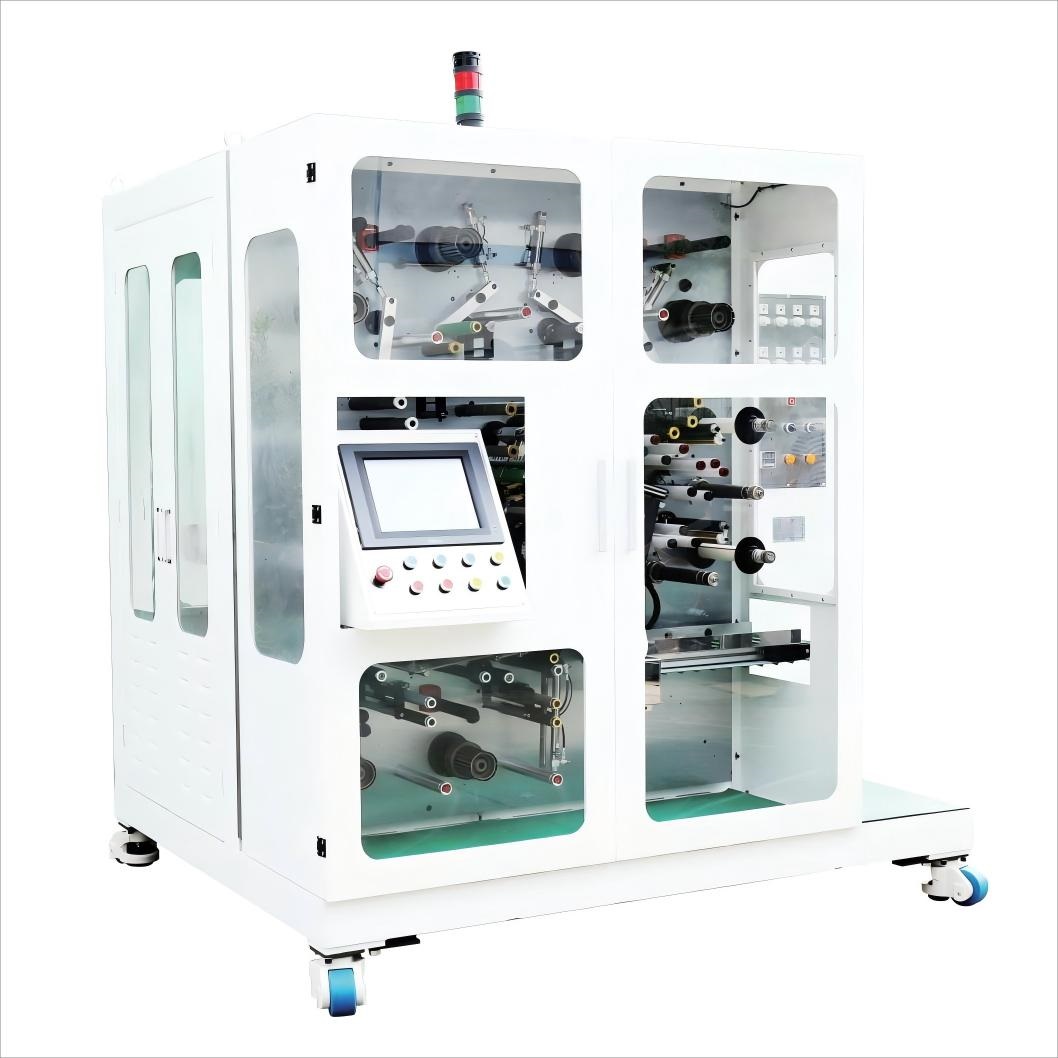
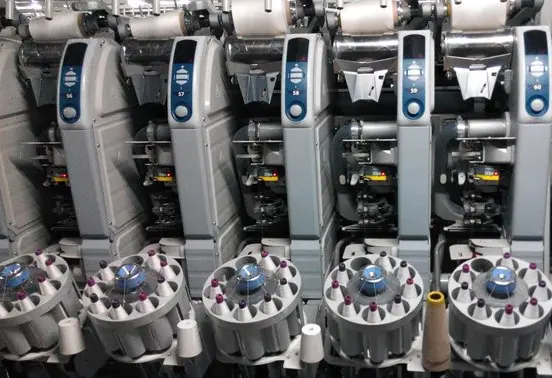
Le filament winding machine is the workhorse of this industry. Modern Faamalama meafaigaluega ranges from simple two-axis machines to complex multi-axis robotic systems. The basic function, however, remains consistent: to coordinate the rotation of the mandrel with the linear movement of the fiber delivery head.
A typical filament winding machine consists of a headstock and tailstock to hold and spin the mandrel, and a carriage that travels horizontally alongside it. The taavaletoso holds the payout eye, or copper or tungsten carbide nozzle, which guides the resin and fiber bundle onto the work surface. The synchronization is key. If the mandrel rotation speed mismatches the carriage speed, the filation will not lay down at the correct angle. Advanced otometi allows these machines to switch between hoop, helical, and polar totoga mamanu on the fly, enabling the creation of composite components with optimized mechanical properties in multiple directions.
Wet Winding vs. Dry Winding: Which Method Suits Your Fabrication Needs?
When setting up a gaosiga gaioiga, one of the first decisions is choosing between wet winding and dry winding. Wet winding is the most common and cost-effective method. Here, the dry fibers are pulled through a resin bath located on the masini just before they are wound onto the mandrel. The advantage is cost—raw fibers and bulk resin are cheaper than pre-pregs. However, it can be messy, and controlling the resin-to-fiber ratio requires strict process control.
Dry winding, on the other hand, utilizes fibers that are pre-impregnated with resin (pre-preg) at a factory. These tows are slightly tacky and are wound directly onto the mandrel without a liquid resin bath. While the material cost is higher, dry winding offers superior cleanliness, precise control over resin content, and typically higher high-performance characteristics. It is often used for advanced applications i totonu aerospace, where every gram of weight savings counts.
Why are Winding Patterns Crucial for Filament-Wound Composites?
The structural integrity of a filament-wound composite is dictated almost entirely by the totoga mamanu. Unlike isotropic materials like steel, which have the same strength in all directions, composites are anisotropic—they are strong only in the direction of the alava.
- Hoop Winding: The fibers are wound at an angle close to 90 degrees relative to the mandrel axis. This provides immense strength against internal pressure, preventing a pipe or tank from bursting.
- Helical Winding: The carriage moves faster relative to the mandrel rotation, laying fibers at lower angles (e.g., 45 degrees). This provides tensile strength along the length of the part and malo malosi.
- Polar Winding: Fibers pass over the poles (ends) of the mandrel. This is essential for O LE FAAFITAULI VAIASO domes.
By combining these layers, engineers can tuufaatasiga le composite structure to handle specific loads. For example, a drive shaft needs torque resistance (helical), while a scuba tank needs burst resistance (hoop). Filament winding allows for this specific architectural design.
What Materials are Used to Manufacture High-Performance Composite Products?
Le fila o le afi industry relies on a trifecta of reinforcement materials: fiberglass, carbon fiber, and aramid (Kevlar). Fiberglass is the workhorse, primarily used mo pipes and tanks, chemical storage, and infrastructure due to its low cost and excellent tetee resistance.
Carbon fiber is the premium choice. It offers an unrivaled tensile strength-to-weight ratio and high malo malosi. It is mainly used i totonu aerospace, high-end automotive, and sporting goods. When carbon fiber o wound around a mandrel, it creates parts that are lighter than aluminum but stronger than steel. The matrix material—the glue holding it all together—is usually a thermosetting resin like epoxy, polyester, or vinyl ester. Epoxy is the standard for high-performance parts, offering strong adhesion and mechanical properties. The combination of tioata po o carbon with the right resin system results in a composite product capable of surviving harsh environments.
From Pipes to Aerospace: What are the Key Applications of Filament Winding?
Le applications of filament winding are vast because the process is inherently scalable. We see filament-wound products in our daily lives without realizing it.
- Pressure Vessels: This is perhaps the most critical application. Firefighter oxygen tanks, CNG fuel cylinders, and hydrogen storage tanks are all made using filament winding because no other method can produce a vessel light enough to be carried or installed in a car while holding 10,000 PSI.
- Pipes and Tubes: The oil and gas industry uses miles of filament-wound pipe. These pipes and tanks resist tetee from salt water and harsh chemicals that would eat through steel in months.
- Aerospace Components: Rocket motor casings are essentially giant pressure vessels wound from carbon fiber. The fuselage sections of some modern aircraft are also produced using advanced Faasaina o Galuega.
- Power Transmission: Filament-wound drive shafts and insulator tubes are widely used in electrical and automotive systems to transmit torque or insulate high voltages.
The Curing Phase: How Do We Solidify the Composite Component?
Tasi le winding is complete, the part is not yet a solid structure; it is a soft, wet mass of fibers and resin on a heavy mandrel. The next step is the cure. The entire assembly—mandrel and all—is typically placed in a large oven.
Heat triggers a chemical reaction in the resin, causing it to crosslink and harden. This transforms the liquid or tacky resin into a solid structural matrix. Crucially, during the cure cycle, the mandrel rotates slowly. This rotation is vital to prevent the gravity-induced dripping or sagging of the resin before it sets. If the rotation stops, the resin will pool at the bottom, creating an unbalanced and defective part. The heat provided must be carefully ramped up and down to prevent thermal shock and ensure the resin is cured uniformly throughout the thickness of the laminate.
Removing the Mandrel: The Final Step in Winding Operations
Removing the mandrel is often the most challenging part of the gaosiga gaioiga. For simple cylindrical parts like pipes, powerful hydraulic extractors pull the steel mandrel out of the cured part. The smooth surface and slight taper of the mandrel aid in this release.
However, for complex shapes like bottles or fuel tanks with narrow openings, you cannot simply pull the meafaigaluega out. This necessitates collapsible mandrels or segmented metal tools that can be disassembled inside the part and removed piece by piece. Alternatively, soluble mandrels made of sand bound with water-soluble binders are washed out with hot water, leaving the hollow composite structure behind. This step highlights why mandrel design is as important as the part design itself.
Advancements in Automated Filament Winding Equipment and CNC Technology
The future of this industry lies in automated filament winding. Modern filament winding equipment is heavily integrated with Cnc (Computer Numerical Control) technology. Cnc allows for the precise control of multiple axes of motion simultaneously.
This technology enables non-cylindrical winding, such as square tubes, T-joints, or complex elbows, which were previously impossible. Software simulation allows engineers to visualize the totoga mamanu and machine path before a single strand of fiber is used, reducing waste and setup time. Automation also ensures toe fai, meaning the thousandth part produced is identical to the first. As a supplier of precision winding machine parts, we see a growing demand for components that support these high-speed, high-precision Faasaina o Galuega.
Summary: Key Factors in the Filament Winding Process
To master the production of filament-wound composites, one must appreciate the synergy between materials, machinery, and tooling. Here are the critical takeaways:
- Process Definition: Filament winding is a fabrication method that involves winding continuous fibers under tension over a Lili le Mandrel.
- Mandrel Importance: Le mandrel determines the inner diameter and is the foundation of the part's geometry; its removal strategy is critical.
- Material Strength: Composite components derive their strength from the alignment of fibers; carbon fiber ma le fiberglass are the industry standards.
- Winding Patterns: The angle at which the fibers are wound (hoop vs. helical) dictates whether the part resists burst pressure, bending, or torsion.
- Machinery: A filament winding machine uses a transiting taavaletoso to lay fiber onto a spinning workpiece, requiring precise synchronization.
- Applications: It is used to manufacture high-performance items ranging from industrial paipa ma tubes to aerospace Oloa omiga.
- Curing: The part must be heated while rotating to solidify the resin without defects.
- Otometi: Cnc technology enables complex shapes and high-volume gaosia with consistent quality.