The best automatic spooling machine is not simply the fastest machine on the market. It is the system that winds your material consistently, protects product quality, fits your production line, and delivers dependable output at a manageable operating cost.
Automatic spooling machines are used to wind wire, cable, fiber, rope, tubing, tape, and other continuous materials onto reels, spools, bobbins, coils, or packaging forms. They can improve production efficiency, reduce manual handling, control winding tension, and create more uniform finished packages.
For manufacturers, the right machine depends on material characteristics, line speed, spool dimensions, winding pattern, automation requirements, quality targets, and planned production volume.
What Is an Automatic Spooling Machine?
An automatic spooling machine is equipment that winds continuous material onto a rotating spool or reel with controlled tension and programmed traverse movement.
The machine may be used as a stand-alone unit or integrated with an extrusion line, drawing line, stranding line, braiding line, coating line, testing system, cutting station, or packaging process.
Depending on the application, an automatic spooling machine can include:
- Motorized spool drive
- Traverse mechanism
- Tension-control system
- Length counter
- Programmable control interface
- Automatic layer positioning
- Spool clamping system
- Safety guards
- Automatic spool change function
- Product detection sensors
- Data-recording or production-monitoring functions
The goal is to create a stable, orderly package that can be transported, stored, processed, or delivered without unnecessary tangling, deformation, or damage.
What Makes an Automatic Spooling Machine the Best Choice?
The best machine is one that maintains winding quality under your real operating conditions.
Material Compatibility
Start with the material being wound. Different materials behave differently under tension, bending, heat, and surface contact.
A machine designed for electrical wire may require different tension control from one used for optical fiber, textile yarn, steel wire, welding wire, plastic tubing, or flexible cable.
Before selecting equipment, define:
- Material type
- Diameter or cross-section range
- Surface sensitivity
- Tensile strength
- Required tension range
- Maximum line speed
- Acceptable bend radius
- Finished spool or reel type
- Required package weight
A machine that is suitable for rigid wire may not be suitable for soft, fragile, coated, or highly elastic material.
Tension Control Is a Core Requirement
Consistent tension is one of the most important factors in winding quality.
Too little tension can create loose layers, unstable packages, poor reel appearance, and tangling during later unwinding. Too much tension can stretch, flatten, damage, or break the material.
A high-quality automatic spooling machine should control tension throughout startup, acceleration, steady operation, deceleration, and stopping. The system should also respond appropriately when the spool diameter changes as material accumulates.
For sensitive products, buyers should discuss:
- Closed-loop or open-loop tension control
- Dancer-arm configuration
- Tension-sensor accuracy
- Brake and drive response
- Material-specific tension range
- Tension stability at changing speeds
- Alarm response for abnormal tension
Tension requirements should be tested with the actual material whenever possible.
Winding Pattern and Traverse Accuracy
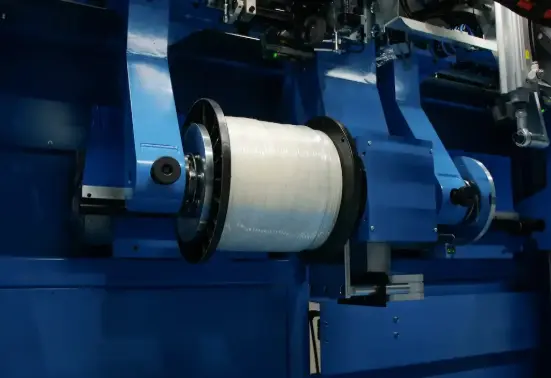
The traverse mechanism guides material across the spool width. Its performance affects layer quality, package density, and unwinding behavior.
Poor traverse control can cause:
- Material overlap
- Uneven layers
- Edge buildup
- Gaps between winding layers
- Loose package formation
- Difficult unwinding
- Increased risk of product damage
The required winding pattern may be level winding, random winding, precision winding, conical winding, or another application-specific format.
The best automatic spooling machine should allow the manufacturer to set or adjust traverse pitch, winding width, spool dimensions, line speed, and layer pattern according to the product requirement.
Production Speed Must Be Matched to Quality
High speed can improve capacity, but only when the machine maintains stable tension and accurate traverse movement.
A machine’s maximum rated speed may not represent the speed that is suitable for your material. Sensitive wire, thin cable, coated products, or large spools may require a lower operating speed to maintain quality.
When comparing machines, ask for:
| Evaluation Item | Why It Matters |
| Maximum line speed | Indicates potential output capacity |
| Stable production speed | Reflects practical operating performance |
| Acceleration and deceleration control | Helps prevent tension spikes |
| Traverse response | Supports even layer formation |
| Spool drive torque | Affects large-reel and heavy-load performance |
| Length measurement accuracy | Supports packaging and quality control |
| Changeover time | Influences effective production efficiency |
| Fault recovery process | Reduces downtime after abnormal events |
The best equipment improves total usable output, not only peak speed.
Spool Size and Load Capacity
The machine must support the intended spool, reel, bobbin, or coil dimensions.
Important specifications include:
- Minimum and maximum flange diameter
- Barrel diameter range
- Spool width range
- Maximum spool weight
- Bore or shaft requirement
- Clamping method
- Loading and unloading method
- Required reel orientation
If the spool is not centered or clamped securely, the machine may experience vibration, uneven winding, material damage, or operator-safety risks.
For heavy reels, automated lifting, loading, or handling equipment may improve production safety and reduce manual labor.
Automation Features That Add Value
Automation should solve a real production problem, not add unnecessary complexity.
Useful features may include:
Automatic Length Control
A length counter can stop winding at a predefined length. This supports consistent packaging and reduces manual measurement.
Automatic Spool Change
For continuous production lines, an automatic spool-change system can reduce downtime between reels. It may be valuable for high-volume wire, cable, and fiber production.
Recipe Storage
Recipe storage allows operators to save settings for different products, such as tension, traverse pitch, line speed, spool dimensions, and target length.
This can reduce setup time and improve repeatability across production shifts.
Alarm and Safety Functions
Sensors can detect wire breaks, material depletion, abnormal tension, spool movement, drive faults, or protective-guard status. Clear alarms help operators respond before defective output accumulates.
Integration With the Production Line
An automatic spooling machine should work smoothly with upstream and downstream equipment.
For example, it may need to synchronize with:
- Extrusion equipment
- Wire drawing machines
- Cable stranding lines
- Insulation or sheathing lines
- Cooling systems
- Printing equipment
- Spark testing systems
- Cutting or coiling units
- Packaging equipment
Integration requirements may include speed synchronization, encoder communication, start-stop coordination, product tracking, and emergency-stop logic.
Before purchase, define who is responsible for electrical integration, mechanical layout, communication protocol, installation support, and line commissioning.
Quality-Control Considerations
A spooling machine should help protect finished-product quality.
Key quality checks may include:
- Uniform winding appearance
- Stable package density
- Accurate length measurement
- Controlled tension history
- No material scratching or flattening
- Secure spool winding
- Low defect rate during unwinding
- Consistent labeling and traceability
For higher-value products, production data can support troubleshooting and quality documentation. Even a simple record of material type, spool number, length, operator, shift, and winding parameters can be useful.
Maintenance and Service Support
Long-term reliability depends on maintenance as well as machine design.
Before buying, ask about:
- Drive-motor service requirements
- Traverse-system lubrication
- Belt, gear, screw, or guide maintenance
- Sensor calibration
- Spare-parts availability
- Electrical component documentation
- Remote troubleshooting options
- On-site commissioning support
- Operator-training availability
A lower-cost machine may become expensive if it has frequent stoppages, difficult adjustments, limited spare parts, or poor technical support.
How to Choose the Right Automatic Spooling Machine
A clear purchase brief should include:
- Material type and size range
- Required line speed
- Tension-control requirement
- Target spool or reel dimensions
- Maximum loaded spool weight
- Required winding pattern
- Target length per package
- Required automation level
- Production-shift schedule
- Available installation space
- Power and control-interface requirements
- Operator and maintenance capabilities
Sharing real product samples, spool drawings, line-layout information, and expected output requirements with the equipment supplier can lead to a more accurate machine recommendation.
Conclusion
The best automatic spooling machine is one that delivers stable tension, accurate traverse movement, reliable spool handling, practical automation, and easy integration with your production process.
When evaluating an automatic spooling machine, focus on the entire winding result: material protection, package quality, usable production speed, changeover efficiency, maintenance needs, and long-term service support. A well-matched system can reduce waste, improve consistency, and strengthen production reliability.
For automatic spooling machine specifications, customized winding solutions, and technical application support, please contact our team.
FAQ
What materials can an automatic spooling machine wind?
Automatic spooling machines can be designed for wire, cable, fiber, rope, tubing, tape, yarn, welding wire, and other continuous materials. The correct configuration depends on material size, flexibility, tension requirement, and spool type.
Why is tension control important in spooling?
Tension control helps create an even, stable package. Excessive tension may damage material, while insufficient tension can create loose layers, tangling, and poor unwinding performance.
Can an automatic spooling machine change spools automatically?
Some models include automatic spool-change systems. This feature can be valuable for continuous, high-volume production where manual reel changes would create significant downtime.
How do I choose the correct spool size?
Confirm the spool’s flange diameter, barrel diameter, width, bore size, weight, and clamping method. The machine must support the complete spool specification safely and accurately.
Is the highest winding speed always the best choice?
No. The best operating speed is the one that maintains stable tension, accurate winding, and acceptable product quality. Peak speed alone does not guarantee effective production output.