A variable capacitor is an absolute game-changer for precision engineering and advanced circuit assembly. In this comprehensive guide, we will uncover how to optimize a capacitor for complex industrial applications, discover exactly how variable capacitors work, and learn how to test a variable capacitor effectively to ensure zero downtime on your production floor. For professionals demanding low total cost of ownership and absolute micron-level precision, understanding these dynamic components is non-negotiable.
What Is a Variable Capacitor, and How Do Variable Capacitors Work?
To lay the groundwork, a variable capacitor is a capacitor that allows you to intentionally change its internal energy storage values. In highly technical terms, a standard capacitor is a capacitor whose physical parameters are generally static and fixed at the factory. However, a dynamic variable capacitor is a capacitor whose capacitance can be adjusted on demand by the user or the circuit itself. Think of it as a highly precise dial that controls the flow and filtering of electrical energy.
How exactly do variable capacitors work on a fundamental physical level? They alter their physical dimensions to change their electrical properties. Variable capacitors exploit this relationship by physically altering the overlap area between conductive metal plates or by changing the microscopic distance between them. As the surface area changes, the total capacitance changes.
Plis mechanical variable capacitors use a set of movable plates to achieve this. You manually or mechanically turn a rotating shaft, ak la rotor plates slide smoothly in and out of the stationary fixed plate assembly. The central moving part is the rotor. This precise mechanical movement directly changes the internal capacitance value. If you want a precise frequency, you simply adjust the capacitance. When you tune this component, you instantly tune the circuit's overall behavior. A well-built capacitor like this is a mechanical marvel that requires extreme manufacturing tolerances.
Which Type of Variable Capacitor Suits Your Need?
There is no universal capacitor design. Finding the right variable capacitor heavily depends on your unique industrial setup and reliability requirements. Are you looking at fixed and variable component options for a hybrid board? A fixed capacitor gives a set, unchanging value, which is great for bulk filtering. A variable capacitor, however, provides absolute flexibility. What type of variable capacitor should you ultimately pick? The choices range from standard mechanical versions to advanced voltage-controlled capacitors.
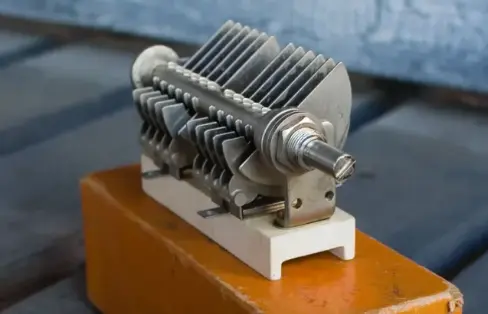
For instance, voltage-controlled variable units, more commonly known as varactor diodes (or just a varactor), dynamically change values based on applied voltage. This allows for instantaneous electronic tuning instead of manual mechanical tuning. Other times, engineers might choose a rugged coaxial variable design for harsh applications where vibration is a major concern. When evaluating any type of variable capacitor, you must always rigorously check its capacitance range and maximum voltage rating. A quality capacitor must withstand operational stress without drifting.
How Does a Trimmer Capacitor Differ From Other Types?
Let us talk specifically about the trimmer capacitor. Youn trimmer capacitor is a small, highly specialized variable capacitor. Trimmer capacitors allow technicians to meticulously fine-tune a circuit board during the initial factory setup or calibration phase. You set it once using a small, non-conductive screwdriver, and you generally leave it alone for the lifespan of the device.
Because of this specific use case, a trimmer capacitor is perfect for baseline calibration. It helps you adjust capacitance precisely to hit a specific resonant frequency. You will often see a trimmer capacitor used directly alongside a fixed capacitor to compensate for minute manufacturing tolerances in complex electronic systems. We demand that precise tuning for high-performance industrial builds. It is a capacitor meant for perfectionists who refuse to compromise on signal integrity. When you tune it on the assembly line, it must stay perfectly aligned.
Where Are Applications of Variable Capacitors Most Critical?
The sheer applications of variable capacitors are vast and incredibly varied across the global electronics sector. Where do we most commonly use variable capacitors? They shine brightly in applications like frequency tuning and advanced signal filtering. Variable capacitors include robust designs that handle intense industrial RF loads. Therefore, variable capacitors are used heavily in commercial broadcasting and telecommunications equipment.
Variable capacitors are often found inside classic radio receivers to help properly select stations. In modern, high-stakes setups, variable capacitors are mainly utilized for their unmatched temperature stability and precise control. We see variable capacitors are commonly used nan rf systems because a variable capacitor allows pou continuous tuning without breaking the circuit. A variable capacitor gives operators the unparalleled power to tune into the exact radio frequency they need. A good capacitor handles the basic electrical stress, but a great variable capacitor ensures the signal is always perfectly clear.
How Can You Effectively Test a Variable Capacitor?
Knowing exactly how to test a variable capacitor is crucial for stringent quality control and minimizing line stoppages. A single faulty capacitor can ruin a whole motherboard and lead to expensive recalls. First, safely discharge the capacitor. Then, isolate the variable capacitor completely from the active circuit. Use a calibrated digital multimeter or LCR meter set specifically to measure capacitance. As you turn the physical dial or slowly adjust the applied voltage, the capacitance reading should change smoothly across its entire capacitance range.
If the reading jumps erratically, your variable capacitor likely has dirty metal plates or a bad mechanical contact. To properly test a variable capacitor, also check for electrical shorts between the rotor plates and stator. It is quite simple: the performance of a variable capacitor relies entirely on clean, unobstructed internal movement. An accurate capacitance reading means you are fully ready to tune up your system. You just tune the dial, verify the output, and confidently move to the next assembly step.
Why Do RF Circuits Rely Heavily on a Variable Capacitor?
In demanding rf circuits, absolute precision is everything. An rf setup desperately needs to isolate specific signals from a noisy, cluttered electromagnetic environment. This is exactly why specialized rf applications demand high-q variable capacitors. Variable capacitors provide the extreme low-loss performance required to build an efficient, narrow-band filter. A tunable capacitor positioned carefully in an rf filter actively helps block out unwanted background noise and harmonics.
When you build delicate radio tuning circuits, you often rely on electronic types of capacitors instead of traditional mechanical ones. For example, a varactor responds almost instantly to microsecond changes in a voltage signal, allowing for immediate real-time tuning. This is absolutely vital when you need to tune an active rf path on the fly. Modern rf mems (Micro-Electromechanical Systems) are taking this concept even further, shrinking the variable capacitor down to microscopic levels for next-generation rf gear. You must tune these micro-components with exceptional accuracy to maintain signal integrity.
How Does a Variable Capacitor Tune an Antenna?
Yon antenna works optimally when its electrical length perfectly matches the transmitter's operating frequency. This is where a trusty variable capacitor boldly steps in. By strategically adding a variable capacitor nan yon antenna circuit, you can mathematically tune the antenna to the desired wave. Antenna tuners rely heavily on this critical component for vital impedance matching. Proper impedance matching ensures maximum power transfer straight from the radio amplifier to the antenna, preventing dangerous signal reflections.
You simply adjust the capacitance to drastically change the resonant frequency nan la antenna system. If atmospheric conditions change or you swap frequencies, you simply tune it again. A classic tuning capacitor in a radio does exactly this job. In complex antenna matching networks, the variable capacitor works closely alongside high-power inductors. You tune the capacitor repeatedly until the antenna radiates energy effectively. A properly installed capacitor makes all the difference in achieving global communication reach.
What Role Does a Variable Capacitor Play in an Oscillator?
Yon oscillator generates a continuous, repeating electronic waveform used for timing and signal generation. To precisely control this waveform, you undoubtedly need a high-quality variable capacitor. In many complex oscillator circuits, the exact oscillation frequency is determined by a carefully calculated LC tank—a combination of an inductor and a capacitor. By smoothly turning a variable capacitor, you can shift the frequency control parameters instantly without swapping parts.
For instance, in a high-end commercial receiver, a local oscillator cleverly uses a variable capacitor to mix incoming signals and tune in the correct broadcast station. Varactor diodes are especially popular in modern oscillator designs because they seamlessly allow microcontrollers to handle the intricate frequency tuning automatically via software. Changing the capacitance shifts the oscillator output instantly. A stable variable capacitor asire a receiver does not suffer from thermal drift, maintaining a remarkably clear signal. You tune the signal once, and it stays perfectly locked.
Can a Capacitor Design Influence Capacitance Precision?
Absolutely. The physical capacitor design heavily influences the final capacitance and overall system stability. Let's look closely at the raw materials involved. Some standard capacitors use plain plastics or basic ceramics, but high-end variable capacitors use specialized, highly stable materials. Using pure air as the dielectric is a common practice for high-power models because it radically minimizes signal loss. The chosen dielectric material directly impacts the maximum attainable capacitance and voltage limits.
Unlike fixed capacitors, a variable capacitor must maintain flawless electrical performance while its internal parts are actively moving. Mechanical stability is absolutely vital for maintaining a consistent capacitance value. When you deliberately tune a circuit, you want it to stay securely tuned! A well-designed variable capacitor offers incredibly reliable variable capacitance without thermal drift.
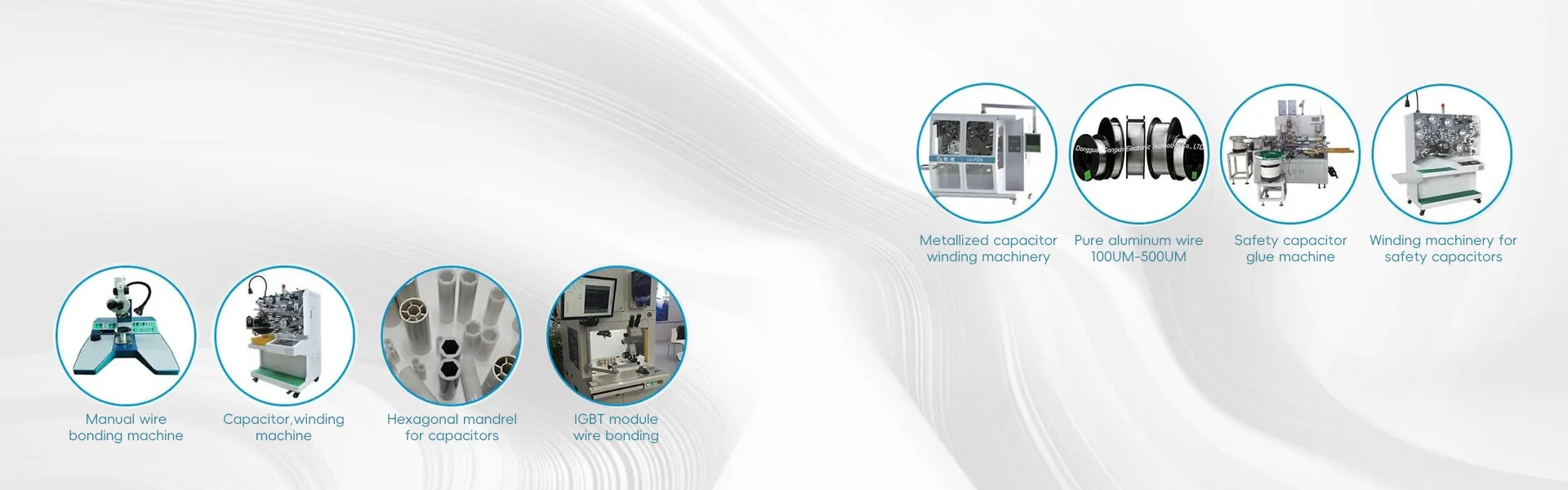
For instance, the manufacturing of the components themselves dictates this precision. Using a high-precision Creole detantè mandrin pou CAPACITOR oswa machin likidasyon batri during the manufacturing of fixed counterparts ensures tight tolerances that can be complemented perfectly by a variable capacitor later in the assembly line. Furthermore, specialized tooling, such as a tungsten carbide nozzel for capacitor or battery coiling winding machine, guarantees that the underlying capacitor structures are built to exacting standards. When you tune a circuit built with these parts, you rely on this capacitor technology to be flawless.
What Does the Future Hold for Variable Capacitor Technology?
The bright future of capacitor technology is getting noticeably smaller and significantly smarter. The rapid evolution of the variable capacitor is deeply tied to advanced circuit design. As consumer and industrial devices shrink, the engineering demand for compact variable capacitors grows exponentially. We are slowly moving away from bulky metal plates toward highly sophisticated, integrated semiconductor solutions and MEMS technology.
In the coming years, we will witness a massive leap in how we intuitively tune our devices. Advanced capacitor solutions will utilize smart materials for automatic frequency tuning. Whether it is a tiny trimmer capacitor hidden inside a smartwatch or a massive, high-voltage variable capacitor installed at a commercial radar station, the core physical principle remains.
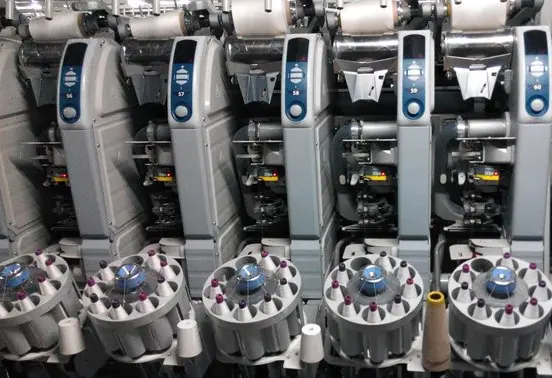
To support this future, assembly lines will require top-tier machinery. Partnering with a trusted winding machine parts manufacturer in china with low price high quality ensures that as capacitor designs evolve, your production capabilities scale effortlessly. Equipment like the LV-KS seri otomatik machin likidasyon represents the pinnacle of this manufacturing evolution.
The fundamental ability to dynamically adjust capacitance or intelligently shift capacitance will always be essential in electronics. We will always need to tune the frequencies that connect us, control our automated systems, and power our vehicles. A capacitor whose capacitance changes on command is forever indispensable in the toolkit of any serious process engineer. You tune the component, and you conquer the frequency.
- Precision is Non-Negotiable: A variable capacitor provides the exact tuning capabilities required for high-fidelity RF and oscillator circuits.
- Materyèl zafè: The choice of dielectric (from air to advanced ceramics) directly impacts the capacitance stability and voltage handling.
- Mechanical Integrity: Proper manufacturing ensures that moving plates do not cause micro-shorts or erratic value jumps during operation.
- Electronic Evolution: Varactors and MEMS are replacing traditional mechanical types for automated, high-speed applications.
- Testing Saves Time: Always verify smooth value transitions across the full mechanical or voltage range before final assembly to guarantee yield.