In the intricate world of industrial electronics and power management, few components are as ubiquitous yet as critical as the capacitor. For process engineers and manufacturing heads like Marcus in Germany, the reliability of a single component can determine the yield of an entire production line. Among the vast array of passive components, the CBB capacitor—known formally as the metallized polypropylene film capacitor—stands out as a champion of stability, low loss, and durability. But what makes this specific type of capacitor indispensable in everything from AC motor drives to high-fidelity audio systems?
This article delves deep into the architecture, manufacturing nuances, and critical applications of the CBB capacitor. As a manufacturer of the high-precision machinery that winds these components at Dongxin Electronic Technology, I have seen firsthand how the quality of the winding process dictates the final performance of the ibilbide. We will explore why engineers trust the polypropylene film capacitor for their most demanding high voltage eta high frequency needs.
What Exactly is a CBB Capacitor?
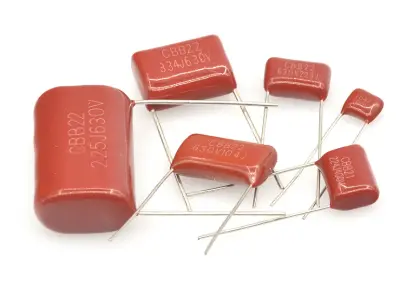
The term "CBB capacitor" is widely recognized in the industry, yet its naming convention often sparks questions. In the Chinese standardization system, "C" stands for capacitor, the first "B" stands for a non-polar organic film, and the second "B" specifically denotes polypropylene as the dielectric material. Therefore, a CBB capacitor is essentially a non-inductive metallized polypropylene film capacitor.
Unlike electrolytic capacitors that use a liquid electrolyte and have polarity, the CBB capacitor is non-polar. This means it can be connected in a ibilbide without regard to positive or negative terminals, making it ideal for AC applications. Inside the plastic or aluminum shell, you will find two very long strips of metallized polypropylene film wound tightly together. The "metallization" refers to a microscopic layer of aluminum or zinc vacuum-deposited directly onto the plastic film. This construction allows for self-healing properties: if a breakdown occurs due to overvoltage, the metal layer around the fault creates a tiny fuse-like action, vaporizing and isolating the defect, allowing the capacitor to continue functioning.
The Science Inside: Why Use Polypropylene Film as the Dielectric?
The heart of any capacitor bere da dielectric-T insulating material that sits between the two plates. Aukera dielectric dictates the capacitor's behavior. Engineers use polypropylene film because it offers a distinct set of advantages over other materials like polyester (CL capacitors).
Polypropylene film as the dielectric is characterized by extremely low dielectric loss and a minimal rise in internal temperature. This leads to a very low dissipation factor (DF), often less than 0.001 at 1 kHz. For a ibilbide designer, this means the capacitor generates very little heat, even when handling high ripple current. Furthermore, polypropylene has high insulation resistance, meaning it does not leak charge easily. This makes it an excellent choice for coupling and storage applications where maintaining charge integrity is vital. The temperature coefficient of polypropylene is also negative and relatively linear, providing stability across a wide range of operating temperatures. This material science is why CBB capacitors are the standard for high voltage and high current scenarios where reliability is non-negotiable.
Decoding the Variants: The CBB61 Capacitor and Motor Control
One of the most normalean erabiltzen da variants in the family is the CBB61 capacitor. If you have ever taken apart a ceiling fan, an exhaust fan, or a small AC motor, you have likely seen a small, rectangular black box. That is the CBB61.
-A CBB61 is encased in a flame-retardant square plastic shell and sealed with epoxy resin. This encapsulation protects the wound element from moisture and vibration. Its primary function is as a running capacitor -entzat single-phase AC motors. It provides the phase shift necessary to create a rotating magnetic field, allowing the motor to start and run efficiently. Because these motors often run for hours or days continuously, the high reliability eta low loss characteristics of the CBB61 are essential. A failure here doesn't just stop a ibilbide; it stops the physical movement of the machine. At Dongxin, our CBB61 metalezko zinema kondentsadorearen makina ensures that these critical components are wound with consistent tension to prevent premature failure.
The Powerhouse: Applications of the CBB60 in Single-Phase Motors
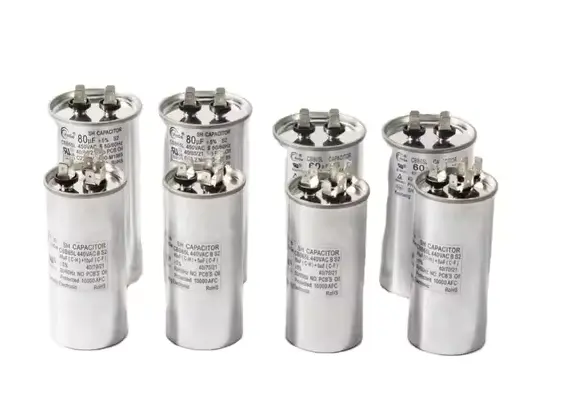
Moving up in size and power handling, we encounter the CBB60 capacitor. While similar in function to the CBB61 (starting and running AC motors), the CBB60 typically features a cylindrical shape and is designed for higher power applications, such as washing machines, water pumps, and air compressors.
-A CBB60 utilizes a heavy-edge metallized polypropylene film. This design enhancement allows it to withstand higher surge currents. Like its smaller cousin, it is sealed with epoxy or oil to ensure high insulation and thermal stability. The self-healing capability is particularly crucial here because pumps and compressors often experience voltage spikes during startup. A motor capacitor like the CBB60 must absorb these spikes without failing. The cylindrical design also aids in thermal management, allowing heat to dissipate more uniformly.
High Voltage Mastery: Inside CBB81 Capacitors
When the voltage climbs and the frequency increases, standard capacitors begin to struggle. This is the territory of CBB81 capacitors. These are specifically designed for high voltage, high frequency, eta high pulse currents. You will frequently find them in electronic ballasts, power supplies, and horizontal resonance circuits in displays.
Structurally, the CBB81 differs from standard metallized polypropylene film capacitors. It often employs an internal series connection structure using aluminum foil and polypropylene film. This hybrid construction drastically reduces the series resistance and inductance, allowing the capacitor to handle rapid pulses without overheating. The CBB81 excels in Maiztasun handiko filter and resonance circuits where low dissipation is critical. For engineers designing inverter circuits or power electronic systems, the CBB81 is often the go-to component for the "snubber" role—protecting semiconductor switches (like IGBTs) from voltage spikes.
Safety Standards: The Critical Role of the X2 Capacitor
Safety is paramount in modern electronics. -A X2 capacitor is a specific safety-rated version of the CBB capacitor. These are designed to be connected directly across the AC mains line (Line-to-Line). Their primary role is electromagnetic interference (EMI) suppression.
Why is the "X2" rating important? If a standard capacitor fails while connected to the mains, it might short circuit and cause a fire. An X2 capacitor, however, is designed to fail "safe"—usually in an open ibilbide mode—and can withstand massive overvoltage spikes (up to 2.5kV) without catching fire. They utilize a specialized metallized polypropylene film and are encased in a rigorously tested plastic shell eta epoxy resin. Every power supply, from your laptop charger to industrial power supplies, relies on X2 capacitors to filter out noise and keep the device compliant with global safety regulations.
Beyond the Basics: CBB82 and High-Current Applications
While less common than the CBB22 or CBB81, the CBB82 represents a further evolution for specific needs. CBB82 capacitors are often optimized for high voltage eta goi-korronte pulse applications. They share the high reliability eta low loss traits of the family but are engineered for even more robust performance in Maiztasun handiko AC eta DC circuits.
These are often found in specialized lighting circuits, ignition systems, and instrumentation where precision and durability are required. The key to the CBB82's performance lies in the metallization pattern and the connection between the film and the external leads (sprayed metal ends). A robust connection ensures low ESR (Equivalent Series Resistance), which is vital for minimizing energy loss in goi-korronte scenarios.
Applications of Polypropylene Film Capacitors in Modern Circuits
-A applications of polypropylene capacitors extend far beyond motors. Because of their excellent frequency characteristics eta low distortion, they are prized in the audio industry. In high-end audio amplifiers and crossovers, CBB capacitors are used for signal coupling and filtering. Unlike ceramic capacitors, which can introduce microphonic noise and distortion, polypropylene is acoustically neutral.
In power electronics, specifically in inverter eta converter designs, these capacitors are commonly used for DC-Link filtering and snubbing. They act as energy buffers, smoothing out the ripple on the DC voltage bus. Their ability to handle high ripple current without significant heating allows designers to build compact, efficient power modules for Electric Vehicles (EVs) and renewable energy systems. Additionally, in analog circuits such as integrators and sample-and-hold circuits, the high insulation resistance of the CBB capacitor ensures that the stored charge does not leak away, preserving signal accuracy.
Manufacturing Precision: How Winding Affects Reliability
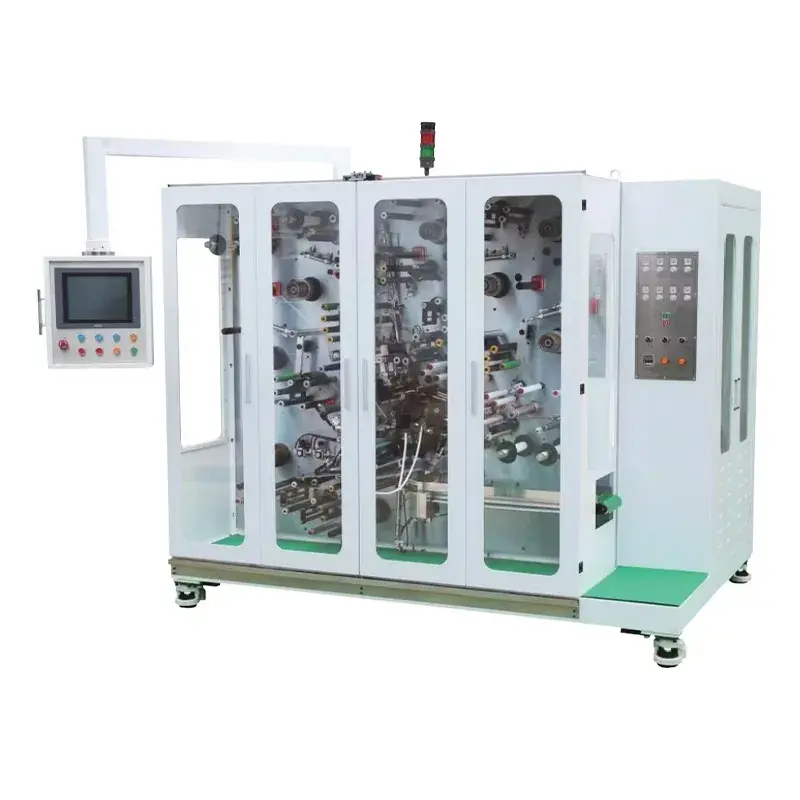
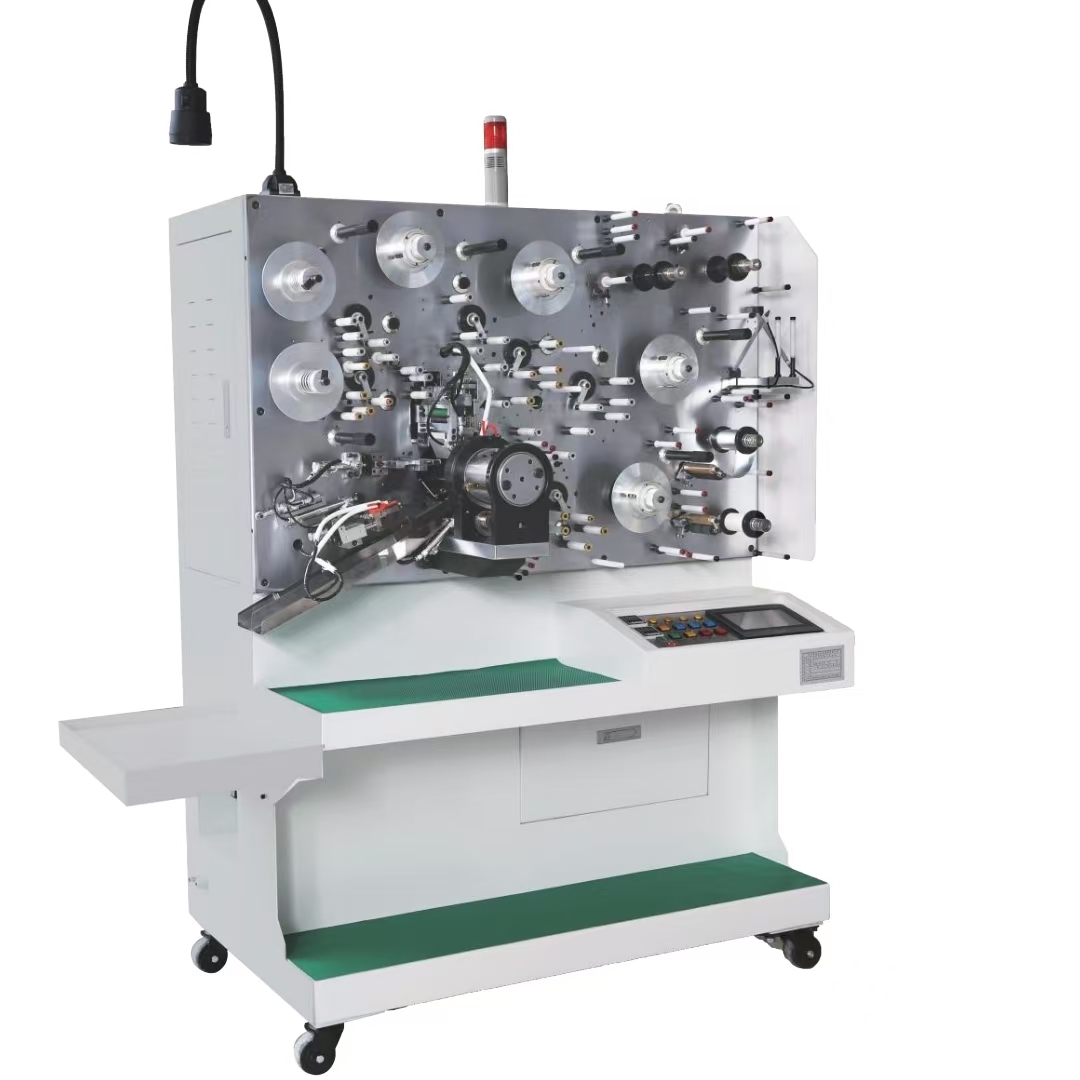
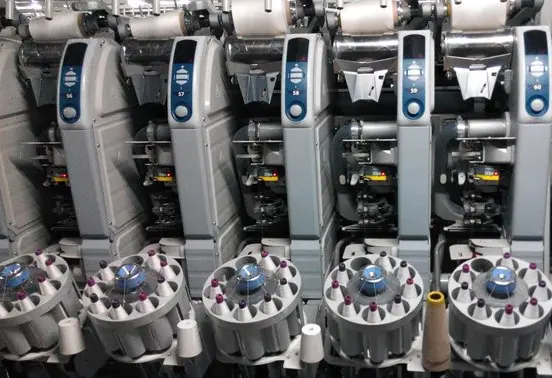
As a manufacturer of winding machine for metallized film capacitors, I often explain to clients like Marcus that the quality of a capacitor is determined long before it is sealed in epoxy. The critical step is the winding.
The tension of the metallized polypropylene film as it is wound onto the mandrel must be perfectly controlled. If it is too loose, air gaps remain, leading to ionization (corona effect) and premature breakdown under high voltage. If it is too tight, the film stretches, altering the dielectric thickness and reducing the breakdown voltage. Our LV-S serie makina automatikoko makina utilizes advanced tension control systems to ensure that every CBB capacitor produced has uniform density and capacitance. Furthermore, the quality of the "spray metal" process—where zinc or tin is sprayed onto the ends of the wound roll to connect the layers—is vital for goi-korronte handling. A poor connection here creates high resistance and heat, the enemy of any capacitor.
How to Choose the Right Capacitor for Your Design
Hautatzea right capacitor involves more than just matching the capacitance value (measured in microfarads, µF). An engineer must consider:
- Rated Voltage: Always choose a capacitor a voltage rating higher than the maximum peak voltage in your ibilbide. For AC applications, check the AC voltage rating specifically.
- Frequency: If using in a Maiztasun handiko circuit (like a switching power supply), utilize CBB81 or similar low-loss types rather than standard generic CBBs.
- Pulse Handling: For circuits with sharp voltage spikes (dv/dt), ensure the capacitor datasheet specifies a high pulse rise time capability.
- Environment: Consider temperature and humidity. Epoxy resin sealed capacitors offer good protection, but extreme environments might require hermetically sealed units.
By understanding the specific characteristics of CBB61, CBB60, CBB81, eta X2 capacitors, engineers can ensure high reliability and longevity in their designs.
Takeaways gakoak
-A CBB capacitor is a cornerstone of modern electronics, offering a balance of performance and durability that few other components can match.
- Material Superiority: Polypropylene film as the dielectric provides low loss, high insulation, eta self-healing capabilities.
- Versatility: From the CBB61 in your desk fan to the CBB81 in a high-voltage inverter, there is a variant for every need.
- Safety: X2 capacitors are essential for mains filtering and safety compliance.
- Reliability: -A winding process is critical; precise tension and material handling determine the lifespan of the component.
- Performance: Excellent for high frequency, high current, eta coupling applications due to low ESR eta low distortion.
For those involved in the manufacturing of these vital components, ensuring you have the best metallized composite films and precision winding equipment is the first step toward building a superior product.