The honest answer: there is no single "best" brand of AC capacitor. The right capacitor for your air conditioner, fan motor or compressor is decided by specifications, application and manufacturing quality — not by the name printed on the case. A well-built capacitor from a lesser-known manufacturer will outperform a famous-brand part that was mis-specified for the job.
What actually separates good capacitors from bad ones is a short list of technical facts: capacitance tolerance, rated voltage, dielectric film quality, safety certifications and consistent factory QC. This guide explains how to judge an AC capacitor like a professional, and what to look for in ac capacitor manufacturers when you buy at scale.
What an AC Capacitor Does
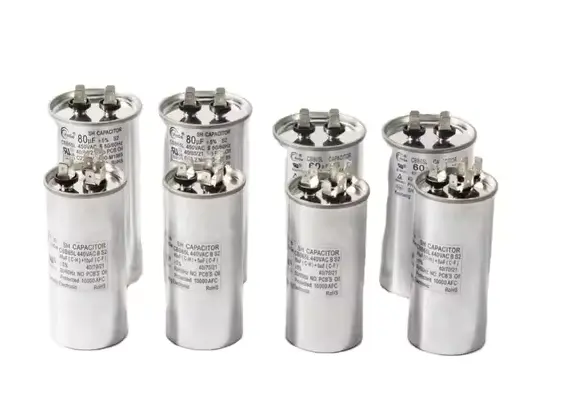
An AC capacitor stores and releases electrical energy to help single-phase AC motors start and run efficiently. In everyday equipment, three families dominate:
- CBB60 — round motor-run capacitors for pumps, compressors and general motors;
- CBB61 — compact fan capacitors used in ceiling fans, exhaust fans and HVAC blowers;
- CBB65 — round oil-filled run/start capacitors for air-conditioner compressors, typically rated 370 VAC or 440 VAC.
All three use metallized polypropylene film as the dielectric, which gives the self-healing property that lets a capacitor survive minor internal faults instead of failing outright.
There are two functional roles:
- Run capacitors stay in the circuit during operation, improving motor efficiency and torque;
- Start capacitors provide a high-torque boost for a moment during startup, then drop out of the circuit.
Matching the correct type, capacitance (µF) and voltage (VAC) is the first rule of capacitor selection — a "better brand" capacitor with the wrong rating will still fail or damage the motor.
Why "Best Brand" Depends on the Application
Ask an HVAC technician, an appliance OEM and a capacitor importer which brand is best, and you will get three different answers — because they are solving different problems:
- Homeowners and HVAC technicians care about reliable replacement parts with good warranty support; established HVAC capacitor brands such as Genteq (part of Regal Rexnord) have earned their reputation in this role through consistent quality and testing.
- Appliance and motor manufacturers (OEMs) qualify capacitors by engineering tests, not logos. They select manufacturers that meet capacitance tolerance, life and safety requirements at the right price.
- Importers and distributors care about consistency across thousands of units, certifications and supply reliability — which is a manufacturer question, not a brand question.
So the practical answer is: for a one-off replacement, choose a reputable HVAC brand with the exact same µF and VAC rating; for production and volume supply, choose a manufacturer you can qualify — the brand on the label matters far less than the factory behind it.
The Difference Between a Brand and a Manufacturer
Many well-known capacitor "brands" do not make capacitors at all — they buy from manufacturers and put their own label on the product. Meanwhile, the same factories often supply private-label brands, OEM products and their own brands simultaneously.
This matters for one reason: when you buy an AC capacitor at volume, you are really buying the manufacturer's quality system — film quality, winding precision, sealing, testing and consistency. The same manufacturer behind several "different brands" can produce excellent capacitors under one label and mediocre ones under another, depending on the specification and price agreed.
That is why professional buyers evaluate ac capacitor manufacturers directly rather than choosing by brand name. The manufacturer is the decision; the brand is just the packaging.
What Separates a Good AC Capacitor From a Bad One
Judge any AC capacitor — regardless of brand — by these factors:
| Factor | What to check |
| Capacitance (µF) | Must match the motor spec; tolerance usually ±5% |
| Voltage rating (VAC) | 370 V and 440 V are the common HVAC ratings; never undersize |
| Dielectric | Metallized polypropylene film — the industry standard dielectric |
| Design life | Quality film capacitors are engineered for 10,000+ hours of operation |
| Safety features | Overpressure protection / discharge resistor / safety vent |
| Temperature rating | Rated operating temperature must fit the application |
| Certifications | UL, TÜV, CB, CE — proof of third-party safety testing |
Two capacitors can look identical from the outside and differ enormously inside: film thickness and purity, winding tension, end-spray quality, sealing and internal pressure protection determine whether a capacitor lasts five years or fails after one hot summer.
Certifications That Matter
Certifications are the fastest way to separate a serious manufacturer from a workshop. For AC capacitors, look for:
- UL — widely required for North American HVAC and appliance markets;
- TÜV / CB — common evidence of safety compliance for export markets;
- CE — required for sale within the EU;
- Test reports — ask the supplier for the certification documents and batch test data, not just the logo.
A capacitor with documented certifications has passed third-party testing for electrical, thermal and safety performance. A capacitor that only has the logo printed on it has passed nothing.
How to Evaluate AC Capacitor Manufacturers
When you buy capacitors in quantity, evaluate the manufacturer the same way an OEM would:
- Factory and equipment — capacitor production runs on precision winding, spraying and assembly lines; ask which machines and process controls the factory uses.
- Quality control — do they test every batch? Are capacitance, dissipation factor, withstand voltage and leakage checked?
- Specification accuracy — does the datasheet state tolerance, temperature range, life and standards clearly?
- Consistency — can they hold the same spec across large production runs and repeat orders?
- Customization — can they make non-standard µF values, lead configurations, sizes and printing for OEM programs?
- Support and delivery — lead times, packaging, documentation and after-sales responsiveness.
China is home to major AC capacitor manufacturing clusters in Guangdong, Zhejiang and Anhui, where thousands of factories supply CBB60, CBB61 and CBB65 capacitors to global HVAC and appliance markets. The cluster gives buyers a huge range of price and quality levels — which is precisely why checking the factory, not the brand, is the only reliable selection method.
Serving the Capacitor Industry: Dongxin Electronic
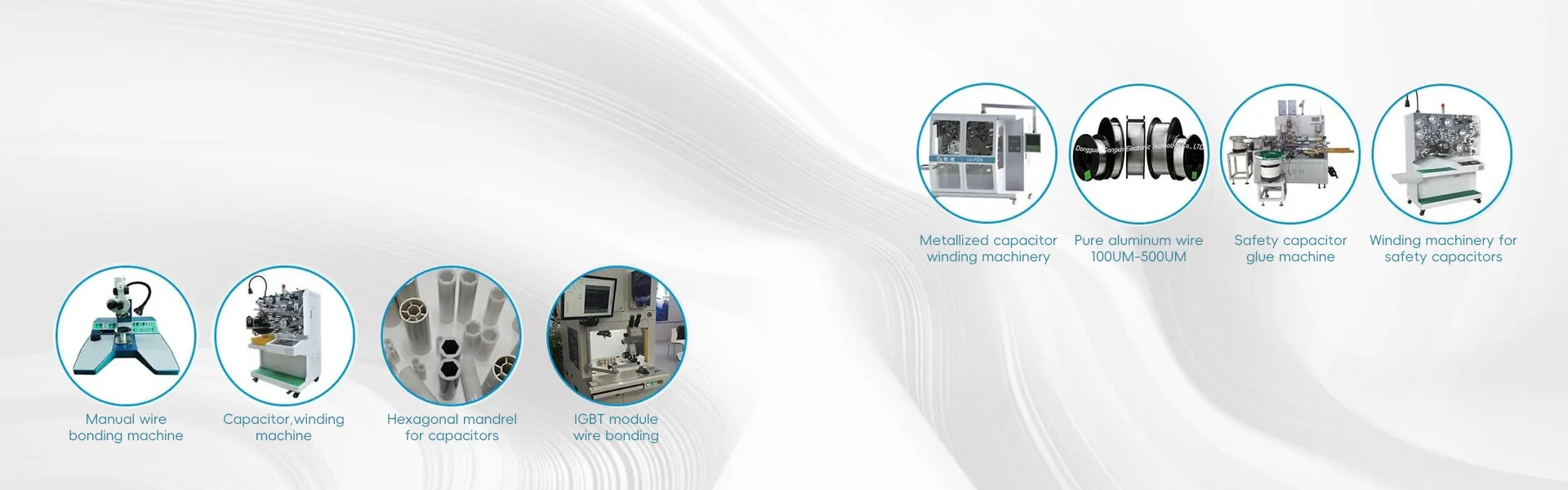
For buyers who work inside the capacitor industry — capacitor manufacturers themselves — the choice of production equipment is as critical as the choice of capacitor brand. The winding machine determines the quality of the capacitor core: consistent tension, accurate winding count and repeatable parameters across every unit.
Dongxin Electronic Technology Co., Ltd., based in Dalang Town, Dongguan City, Guangdong Province, is a manufacturer of automatic capacitor winding machines and capacitor production parts. Under the DOXO Machinery brand, the company supplies automatic capacitor winding machines and winding machines controlled by Siemens PLC and touch-screen systems, with built-in functions for capacity calculation, parameter storage and parameter reading for humanized operation. Its product range also includes wedge tools for binding machines and PC/PBT capacitor mandrels — the precision parts that capacitor manufacturers need on the production floor.
If you are an AC capacitor manufacturer or a buyer evaluating ac capacitor manufacturers and need reliable winding machines, mandrels or production tooling, our team can help. Contact Dongxin Electronic to discuss your requirements —
contact us for specifications and quotations.
Conclusion
Which brand of AC capacitor is best? There is no universal answer — the best capacitor is the one that matches the motor's µF and voltage rating, is built to a verified quality standard, and comes from a manufacturer you can trust. For one-off replacements, stick with established HVAC brands; for production and volume supply, qualify the manufacturer, check certifications and test reports, and buy the factory — not the label.
Frequently Asked Questions
Which brand of AC capacitor is best?
No single brand is best for every job. For HVAC replacements, reputable brands with strong testing and warranty support are a safe choice; for volume supply, the manufacturer's quality system matters more than the brand label.
What AC capacitor should I use for my air conditioner?
Match the exact capacitance (µF) and voltage rating (370 V or 440 VAC) of the original part, and use the correct family — typically a CBB65 run capacitor for the compressor. Never substitute a lower voltage rating.
Are Chinese AC capacitors good?
China's Guangdong, Zhejiang and Anhui clusters produce the majority of the world's CBB-series AC capacitors, from commodity parts to high-end certified products. Quality varies by manufacturer, so evaluate the factory, certifications and test data rather than the country of origin.
What certifications should an AC capacitor have?
For export HVAC and appliance use, look for UL, TÜV, CB and CE certification documents, plus batch test reports — not just logos printed on the case.
What is the difference between a run capacitor and a start capacitor?
A run capacitor stays in the circuit during operation to improve efficiency and torque; a start capacitor provides a high-torque boost at startup and then drops out of the circuit.