As a manufacturer deeply embedded in the micro-electronics and automation sectors here at Dongxin Electronic Technology, I often find myself in deep technical discussions with engineers like Marcus from Germany. Marcus is the type of professional who doesn't just look at the spec sheet; he looks at the microscope. He knows that in high-speed manufacturing, the difference between a profitable run and a line stoppage often comes down to a single, tiny component. In the world of inductive component manufacturing, that critical component is the tungsten carbide coil winding nozzle.
A coil winding machine is a marvel of modern engineering, capable of spinning thousands of revolutions per minute. Yet, the entire process relies on the nozzle—the final interface that guides the fil elektrik onto the bobbin or armature. If this accessory fails, wears prematurely, or has a microscopic burr, the insulation strips, the fil elektrik breaks, and production halts. This article will explore why tungsten carbide has become the gold standard for these components, how we customize them for extreme precision, and why the hardness de HRC90 is non-negotiable for your process.
What Defines a High-Performance Tungsten Carbide Coil Winding Nozzle?
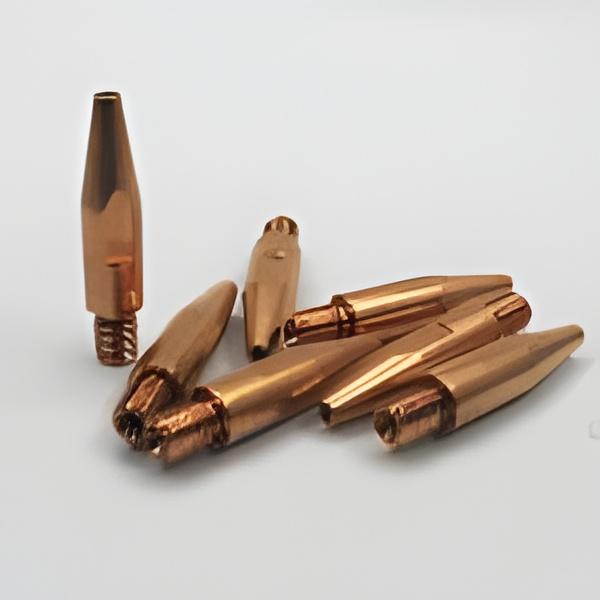
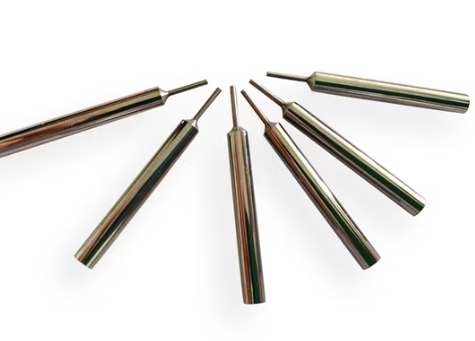
A tungsten carbide coil winding nozzle is a tubular guide, often resembling a needle, used to direct fil elektrik from the tensioner to the winding point with extreme positional accuracy. Unlike softer materials, a carbide coil winding nozzle is engineered from cemented carbide—a composite of tungsten carbide particles aggregated by metallic cobalt or nickel. This creates a hard alloy capable of withstanding the immense friction generated by high-speed wire travel.
Nan yon cnc automatic coil winding machine, the nozzle moves rapidly along multiple axes. It must possess high rigidity to prevent deflection (bending) under tension, and it must be incredibly hard to resist the abrasive nature of enameled wire. Even a soft copper wire acts like a saw blade when moving at high speeds over a stationary surface. A tungsten carbide nozzle serves as the primary defense against this wear, ensuring that the wire guide path remains dimensionally stable over millions of cycles.
Why is Hardness HRC90 Critical for a Winding Machine Accessory?
When we talk about hardness tungsten carbide nozzle specifications, you will often see the metric HRC90 (Rockwell Hardness C-scale) or specific Vickers hardness numbers. Why is this level of hardness necessary? The answer lies in the sifas of the wire. Modern enameled wire is coated with tough insulation polymers. While necessary for the final product, this insulation is abrasive.
If a nozzle coil winding tip is made of standard steel, the fil elektrik will quickly cut a groove into the exit radius. Once this groove forms, it strips the insulation off the wire, causing short circuits in the final transformer or motor. Tungsten carbide, with its high hardness, resists this grooving effect significantly longer than tool steel. By maintaining a pristine surface, the tungsten carbide coil winding nozzle ensures that the fil elektrik slides smoothly without damage. This is why hard alloy materials are the standard for any high-volume factory.
The Art of Precision Grinding: How Do We Achieve a Mirror Surface?
The material is only half the battle. As a fabrikan, we know that the processing of the material is equally vital. A raw tungsten carbide tube is rough. To make it suitable for a nozzle, we must employ precision grinding. We grind the internal bore and the external radii to micron-level tolerances.
However, the most critical step is polishing. We aim for a mirror surface treatment on both the inlet and outlet radii, as well as the inner bore. Ideally, the surface roughness should be Ra 0.025 or better. This mirror finish provides low friction resistance. When the fil elektrik travels through a mirror-polished nozzle, the drag is minimized. This is essential for maintaining stable wire tension. If the surface is rough, the tension fluctuates, leading to loose windings or snapped wires. Our Copper oswa tengstèn carbure nozzel pou condensateur oswa batri roulo machin likidasyon exemplifies this dedication to surface quality.
Tungsten Carbide vs. Ruby and Ceramic: Which Nozzle Material Wins?
Engineers often ask about the difference between tungsten carbide, ruby nozzle tips, and ceramic guides. Each material has its place in the industry.
| Patikilarite | Tungsten Carbide Nozzle | Ruby Nozzle | Ceramic Nozzle | Stainless Steel Nozzle |
| Hardness | Very High (HRC 88-92) | Extremely High (Mohs 9) | Wo | Moderate |
| Toughness | High (Resists impact) | Brittle (Can chip) | Brittle | High (Bends before breaking) |
| Friction | Low (with polishing) | Very Low | Low | Moderate |
| Cost | Moderate | Wo | Moderate | Low |
| Best Use | General high-speed winding, heavy wire | Ultra-fine wire, extreme precision | Special chemical environments | Low volume, simple coils |
While a ruby nozzle offers incredible hardness, it is brittle. If a machine crashes or a tool hits the nozzle, ruby will shatter. Tungsten carbide offers the best balance of hardness and toughness, making it the robust choice for the majority of cnc winding applications.
How Does Nozzle Geometry Affect Wire Tension and Breakage?
Geometry is the hidden science of the nozzle product. A bore diameter must be carefully selected relative to the fil elektrik diameter. If the bore is too tight, friction increases, and the wire jams. If it's too loose, the fil elektrik vibrates inside the nozzle, leading to poor layering on the coil.
Anplis de sa, la angle of the inlet and outlet cones is critical. A smooth transition is needed to guide the fil elektrik from the tensioner into the needle and then onto the coil. We design our nozzle for cnc automatic machines with calculated exit radii. This curvature ensures that even if the fil elektrik exits at a 90 degree angle (which happens during corner winding on rectangular bobbins), it flows over a smooth curve rather than a sharp edge. This geometric precision prevents the fil elektrik from experiencing stress concentrations that cause breakage.
Can You Customize a Carbide Nozzle for Specific CNC Automatic Machines?
Absolutely. In fact, customization is often required. Every coil winding machine—whether it's for a tiny motor nozzle or a massive transformer—has different clearance requirements. Some setups require a long, thin needle to reach deep into a stator slot. Others need a flattened nozzle to fit between tight laminations.
We utilize CNC machining and electrical discharge machining (EDM) to customize the external profile of the tungsten carbide coil winding nozzle. We can alter the length, the tip profile, and the mounting shank to fit machines from Nittoku, Tanac, Meteor, and others. The nozzle for cnc automatic coil winding is rarely a "one size fits all" product. We often work with customers to create needles super hard alloy specifications that solve unique clearance or winding pattern issues.
What Role Do Wire Guides and Tensioners Play Alongside the Nozzle?
A nozzle is just the tip of the spear. The entire fil elektrik path matters. Before the fil elektrik reaches the nozzle, it passes through a wire guide ou wire guide tube. These components must also be made of low-friction materials to prevent pre-damage to the insulation. We supply high-precision Gid fil assemblies to ensure smooth delivery.
Controlling the tension is equally vital. A coil winding tensioner, such as a magnetic tensioner oswa yon servo tensioner, regulates the force applied to the fil elektrik. If the tension meter reads too high, the nozzle will wear out faster. If it's too low, the coil will be loose. A servo system actively adjusts tension in real-time, working in harmony with the low friction resistance of our carbide nozzle for cnc automatic machines to produce perfect coils.
Why is the Exit Radius the Most Critical Measurement?
If you were to inspect a failed nozzle under a microscope, the damage is almost always at the tip—specifically the exit radius. This is where the fil elektrik bends as it wraps around the bobbin. The radius determines the bending stress on the fil elektrik.
A "sharp" nozzle (small radius) allows for very precise layering, allowing you to get the wire right into the corner of the bobbin. However, it places high stress on the fil elektrik. A "large" radius is gentler on the wire but makes it harder to wind tight corners. Finding the perfect radius—often tailored to the specific fil elektrik gauge—is part of the engineering support we provide. Our wire guide nozzles are inspected using optical systems to ensure the exit curvature is perfectly symmetrical and polished to a mirror finish.
Finding a Reliable Supplier: What Should You Look for in a Factory?
For a buyer like Marcus in Germany, sourcing from China is about trust and capability. When looking for a supplier ou factory pou coil winding nozzle products, look for these indicators:
- Material Verification: Can they prove the grade of tungsten carbide used? (e.g., grain size, cobalt content).
- Processing Capability: Do they have the CNC grinding and EDM equipment to achieve high precision?
- Quality Control: Do they measure the bore concentricity and surface roughness of every nozzle product?
- Portfolio: Do they offer related parts like Top bon jan kalite likidasyon machin zegwi founisè ki soti nan Lachin, pulley systems, or air nipper blades?
A reliable fabrikan understands that a $50 nozzle protects a $500,000 cnc automatic coil winding machine.
Maintenance and ROI: How Long Should a Hard Alloy Nozzle Last?
A tungsten carbide nozzle for cnc winding is an investment. While more expensive than steel, the ROI is driven by longevity. A standard steel nozzle might last a week in high-volume production before grooving affects tension. Youn tungsten carbide nozzle can last months or even years, depending on the wire type and speed.
Maintenance involves regular cleaning to remove built-up insulation wax and visual inspection of the tip. If a groove is detected, the nozzle must be replaced immediately. Continuing to run with a grooved nozzle will damage the wire stripping tools or the wire itself. By using hard alloy coil winding nozzles, you significantly reduce machine downtime for changeovers. This reliability is why tungsten carbide is the standard material pou la industry.
Takeaways kle
A tungsten carbide coil winding nozzle is a small component with a massive impact on your production quality. Here is what you need to remember:
- Materyèl zafè: Tungsten carbide (cemented carbide) offers the best balance of hardness (HRC90) and toughness for coil winding.
- Surface Finish is Key: A mirror polished bore ak radius reduces friction, ensuring stable wire tension and protecting insulation.
- Geometry Controls Quality: The exit radius ak bore size must be matched to your fil elektrik gauge to prevent breakage and ensure precise layering.
- Customization is Available: We can customize the shape and dimensions of the needle to fit specific CNC machine constraints.
- Systemic Approach: A nozzle works in conjunction with wire guides, pulleys, ak la servo tensioner to deliver a flawless product.
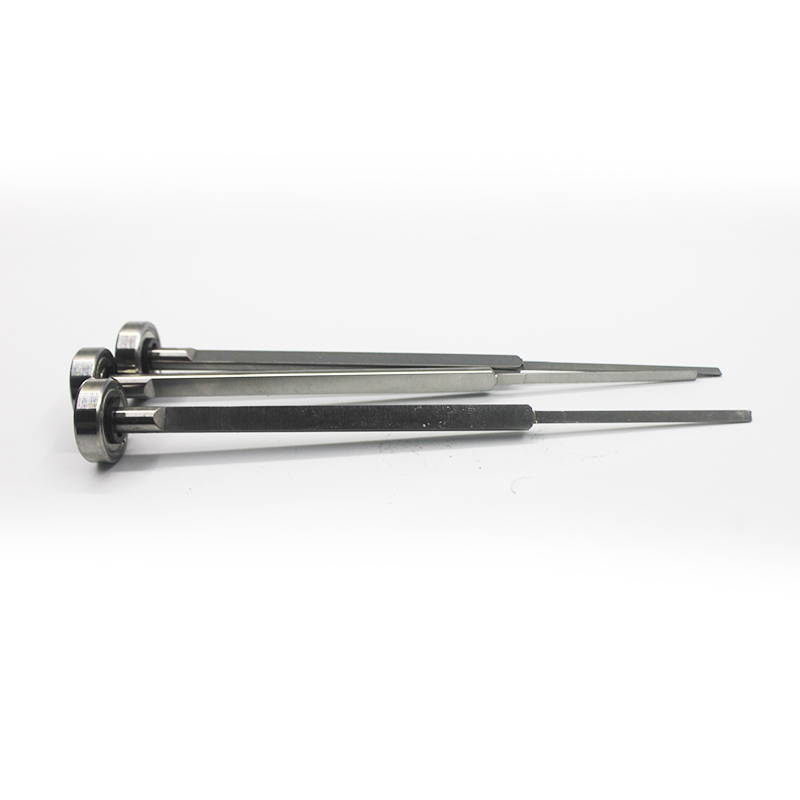
At Dongxin, we specialize in these precision parts. Whether you need a standard carbide alloy tip or a fully customized solution for a complex motor nozzle, we have the grinding expertise to deliver. Check out our range of Mandrel Rod, baton, anplwaye, zegwi pou endistriyèl ak fim kondansateur likidasyon ekipman yo and other accessories to see how we can support your production line.